Re-sanding, releveling, replacement & edges
Sunken, Heaved or Loose Pavers, Fixed From the Base Up
A low spot that holds water, an edge row drifting into the lawn, joints gone empty and full of weeds. We re-sand joints with polymeric sand, lift and reset sunken or heaved pavers on a corrected base, replace broken ones and put shifted edges back in line. Every repair is quoted from your photos or an on-site look.
Free written estimate within 24 hours Zero travel fees
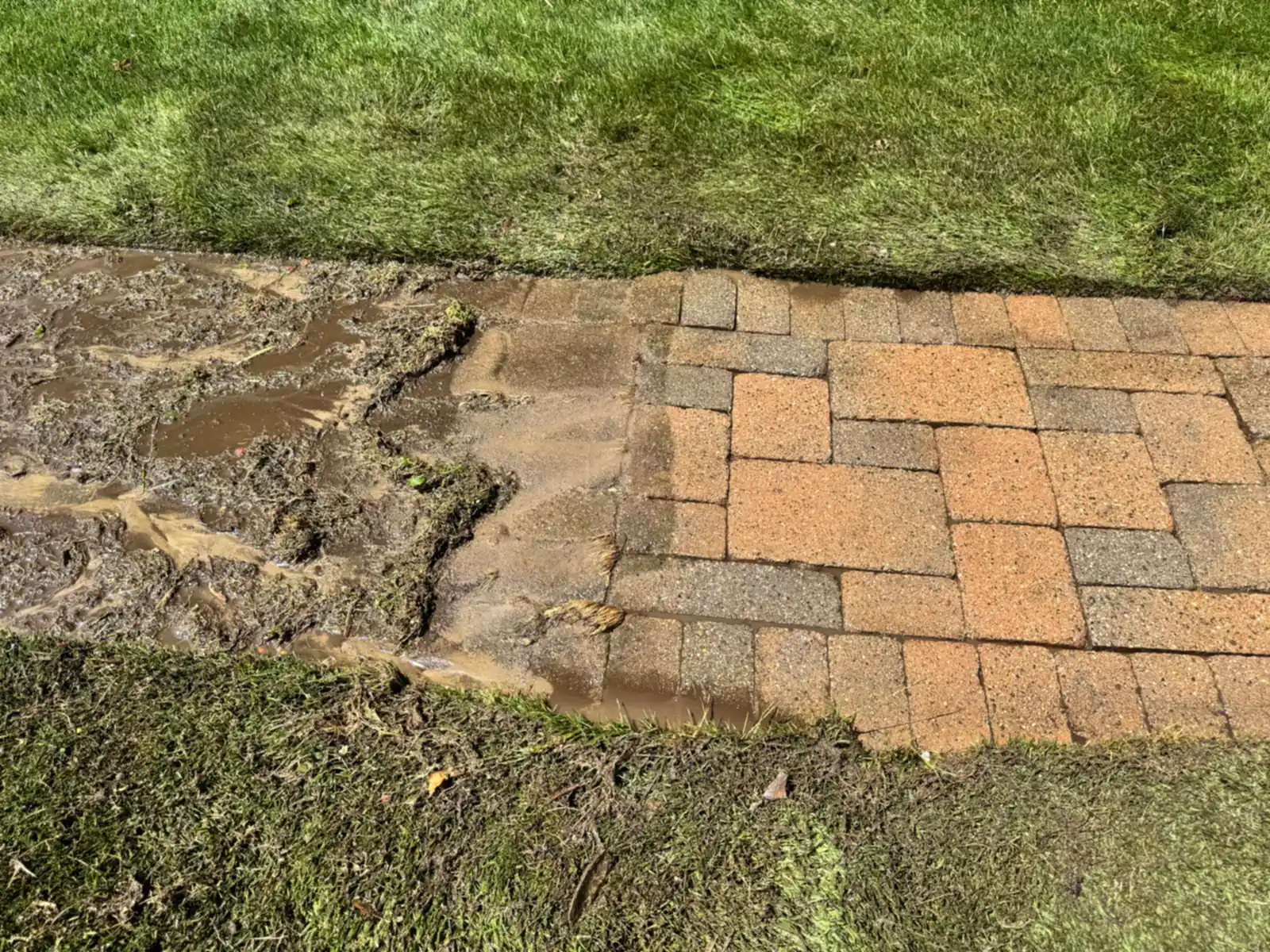
Paver walkwayOvergrown turf and soil washed off a brick paver walk
- 4.9 from 177 Google reviews
- 1,200+ projects since June 2022
- $2M insured, plus workers' comp
- 24h to a free, written, line-item quote
Pavers Show What Failed Underneath Them
An interlocking paver surface works in layers. The joint sand passes loads from one paver to the next and keeps the field locked together. The bedding sand and compacted base below carry the weight, and an edge restraint along the perimeter keeps the pavers from spreading under traffic and freeze-thaw. When one layer gives, the pavers on top show it: a dip that holds a puddle, an edge paver that tips, joints that open wider along the edge.
So we find the cause before we fix the surface. A low spot usually means the base or the soil under it settled, often from poor compaction, or that the bedding sand was laid too thick or washed out. Heave is most often frost lifting wet, frost-susceptible soil. Joints lose sand to rain, wind, runoff from downspouts and roof edges, and hard cleaning. Each calls for a different repair, and packing extra bedding sand under a low spot is not one of them: the unevenness shows through again.
Paver repair is its own service. Brick paver restoration is the appearance package of deep cleaning, polymeric re-sanding and sealing. Repair fixes what is loose, sunken, heaved, broken or shifted, and it includes re-sanding joints on their own when that is all a surface needs. The two can be booked together: repairs go first, then the cleaning, sand and sealer go over a sound surface.
Six Paver Problems, Fixed at the Cause
- Empty or weedy joints — old sand cleared out to at least 1½ inches, then refilled to full depth with polymeric sand, compacted and activated
- Sunken pavers — lifted, the low base built back up with compacted base material, fresh bedding screeded and the pavers reset level
- Heaved pavers — taken up once the ground has thawed, the base corrected underneath and the pavers relaid in their pattern
- Cracked or broken pavers — taken out and replaced, the joints refilled and the patch compacted back into the field
- Shifted edges — edge rows that spread or tipped are lifted, re-bedded and set back in line with the pattern
- Failed edge restraints — loose, broken or missing restraint repaired or replaced; a restraint holds only when it sits on and anchors into the base, not the soil
Lift, Correct the Base, Reset
A sunken or heaved section comes up one paver at a time. The first is lifted with a paver extractor or pried out between two flat tools, and every paver is cleaned and stacked so it can go back into its own place in the pattern. Reusing the originals means the patch is made of the same weathered pavers as the field around it.
With the pavers up, the layer that moved gets fixed. A low base is built back up with compacted base material, because bedding sand cannot make up for a low base. Fresh bedding sand is screeded over it, and the pavers are relaid in their original pattern along string lines. The patch is compacted at least twice, overlapping onto the undisturbed pavers, and sand is swept in and compacted until the joints take no more. It finishes 1/16 to 1/8 inch above its neighbors, the allowance CMHA gives for further settling.
Two limits are worth knowing up front. Base work never goes onto frozen ground, so heaved areas wait for the thaw. And resetting a frost-heaved section levels it without changing the soil that froze under it, so heave can return in a later winter. Tree roots and drainage problems are outside the work we do; if one is behind the movement, the estimate says so.
Re-Sanding Joints in the Right Order
Repair, Then Dry Out
Sunken, heaved and broken pavers and failed edging are fixed first. The paver tops, sides and joints then have to be fully dry, because polymeric sand sticks to a damp surface and can leave a haze.
Clear, Fill, Compact
Old sand comes out to at least 1½ inches without disturbing the bedding. Polymeric sand is swept in, compacted, topped up and compacted again, and finished about 1/8 inch below the paver tops.
Clean, Then Activate
Every trace of dust is blown off the paver faces before the joints are watered. A light, shower-style watering from the low point sets the binder, and a probe confirms it set deep, not just a crust on top.
Weather First, Then Time to Cure
Each polymeric sand label sets its own weather window. One major maker calls for temperatures above 32°F for 48 hours after installation; another calls for an average above 35°F over 48 hours with no rain for 12 hours. Sprinklers stay off through the cure. We schedule a re-sand around the forecast and follow the label of the sand going into your joints.
The National Weather Service office in Detroit counts October as the month Southeast Michigan's growing season ends, so late-fall re-sanding depends on the forecast more than the calendar. Base and edge work only needs ground that isn't frozen; if the joints get polymeric sand afterward, that part waits for the right weather.
Once the joints are in, the cure takes 24 hours or longer depending on temperature and humidity, and the label sets when cars can go back on. One maker says to keep pressure washers off new joints for 30 days. If you want the surface sealed, the sand's label also sets the wait before sealer, anywhere from a day or two to several weeks. After we seal pavers, foot traffic stays off for 48 hours and vehicles for 72 hours, longer if the label or cold, damp weather calls for it.
Questions, answered
Paver Repair FAQs
Still wondering about something? Call (586) 284-3810, Mon–Sat, 8am–10pm.
See all frequently asked questionsHow much does paver repair cost?
We don't publish a price for paver repair, because two repairs rarely involve the same work. The estimate depends on how many pavers come up, what the base needs, how much joint sand has to be cleared and replaced, and how many feet of edge or restraint need resetting. Send photos with your estimate request (a wide shot of the area and close-ups of the problem spots) or have us look in person, and you get a written estimate within 24 hours. Brick paver restoration, the clean, re-sand and seal package, is priced on its own page.
Can you fix just a few pavers?
Yes. One sunken spot by the steps, a single cracked paver or a short run of loose edge can be repaired on its own. The pavers around the patch are compacted along with it, so the repair ties back into the field. If the joints across the rest of the surface are low, re-sanding them can be added to the same estimate.
Will replacement pavers match the rest of my patio?
Not exactly, and we won't promise that they will. Traffic and weather wear the surface of pavers in service and shift their color, so a new paver from the same product line looks different from ones that have been outside for years. Even spares saved from the original install look different from the weathered ones, and some colors are discontinued. When we relevel, we reset your original pavers wherever they come up whole. When several pavers need replacing, spreading the new ones out instead of grouping them helps them blend in.
Do I need to reseal after a repair?
Only if you want the sealed look. Sealer doesn't hold pavers in place or fix a failed base, so repairs and re-sanding always come first. The joint sand's label then sets how long to wait before sealing, from a day or two to several weeks depending on the product. After we seal, foot traffic stays off for 48 hours and vehicles for 72 hours, longer if the label or cold, damp weather calls for it. Sealing is part of our brick paver restoration package.
Why are the pavers sinking by my garage?
A dip where you park or where water collects usually means the base or the soil under it settled, often because it wasn't compacted well when it was built. A base that stays wet, bedding sand laid too thick, or bedding that washed out from below can do the same, and a loose edge restraint lets the pavers spread so the edge rows tip and settle. The repair starts the same way each time: lift the section, correct the base with compacted base material and reset the pavers on fresh bedding, repairing or replacing a failed restraint at the same time. If water from a downspout keeps washing the area out, we'll point that out, since drainage work is outside what we do.
What about ants and weeds in the joints?
Weeds in paver joints grow from windblown seed caught in the joint sand; they don't come up through the base. CMHA's maintenance guide lists weeds and ants in the joints as a problem that stabilized joint sand helps with. When we re-sand, the old sand comes out to at least 1½ inches and polymeric sand fills the full depth. We don't promise it keeps out every weed or ant.
When is the best time to repair pavers in Michigan?
Any time the ground isn't frozen, with re-sanding saved for dry days. Base work and releveling need thawed ground, and polymeric sand needs dry pavers and 48 hours above freezing, so late-fall re-sanding depends on the forecast. Pavers standing more than 1/8 inch above their neighbors are worth fixing before snow season, since shovels and plows catch raised edges. Heaved areas are best judged after the thaw, because frost-lifted ground can settle back as it thaws. A walk around the surface each spring, during or after a rain, and again in late summer shows what needs attention.
Can I just top up the joints with polymeric sand?
Not over old sand. Techniseal, Alliance Gator and SEK-Surebond all call for joints cleared to at least 1½ inches and filled to full depth. Techniseal and SEK-Surebond say never to mix polymeric sand with other sand, and Alliance Gator warns that polymeric sand laid over partly filled joints peels and flakes. CMHA's maintenance guide doesn't recommend polymeric sand for topping up; it tops up plain-sand joints with dry masonry sand once the sand drops more than 1/2 inch below the paver tops. So it's one material at full depth: plain sand topped up, or polymeric sand from the bottom of a cleared joint.
What Neighbors Say About Our Work
Live from our Google Business Profile — 4.9 stars across 177+ reviews, nothing filtered out.
Questions about paver repair, answered
How long should I wait to seal new pavers?
Wait 60 to 90 days before sealing new concrete pavers, and longer if white efflorescence is still blooming, which can last up to a year. Polymeric…
Read the guide → Concrete & HardscapeHow do I get polymeric sand haze off my pavers?
Scrub polymeric sand haze off pavers with hot water near 180°F and a nonmetallic brush, or with vinegar, the two methods the Brick Industry…
Read the guide → Seasonal & CommercialWhat ice melt is safe for concrete, stamped concrete and pavers?
Rock salt (sodium chloride) is the least damaging common ice melt for concrete and concrete pavers, according to the Concrete Masonry and Hardscapes…
Read the guide → Concrete & HardscapeWhy are weeds growing through my polymeric sand?
Weeds grow through polymeric sand when joints are filled too shallow, never compacted, washed out by pressure or opened by freeze-thaw, or when seeds…
Read the guide → Concrete & HardscapeIs sealing my paver patio worth it, or is it a waste of money?
Sealing a paver patio in Macomb or Oakland County is worth it where road salt, shade or joint washout hit it: a breathable, joint-stabilizing sealer…
Read the guide → Concrete & HardscapeThe Ultimate Guide to Restoring Faded Brick Pavers
Most "faded" pavers are not faded at all — the color is hidden under a film of algae, efflorescence and embedded grime. Restoration is three steps…
Read the guide →Services that pair well with paver repair
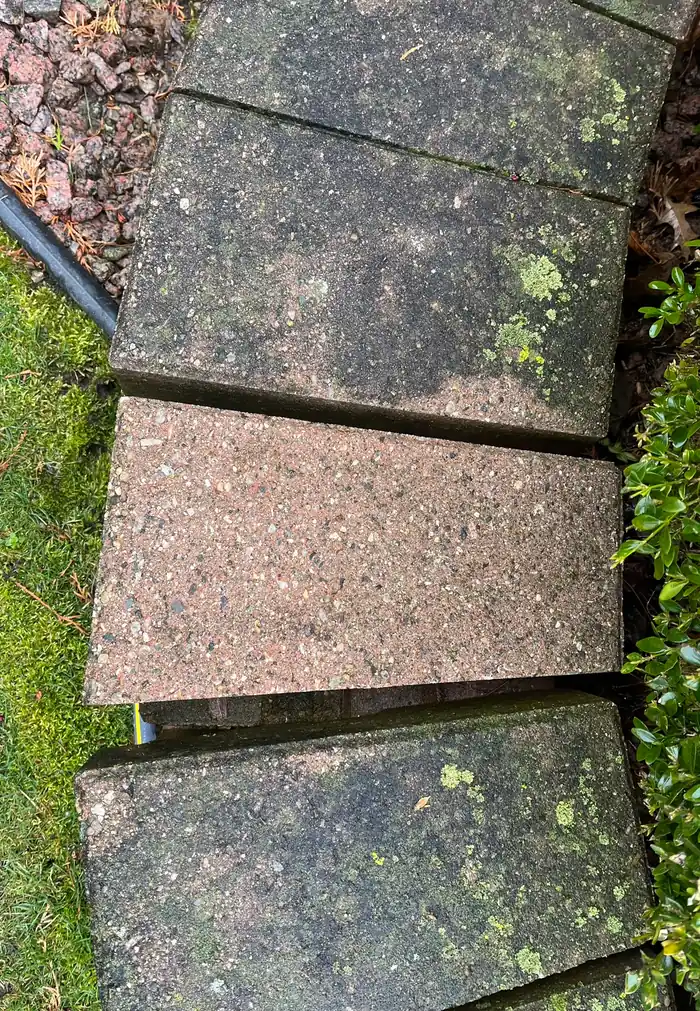
Brick Paver Restoration
Don't replace your pavers — restore them. Deep cleaning, polymeric re-sanding, and sealing bring weathered patios and walkways back to installation day.
Explore Paver Restoration →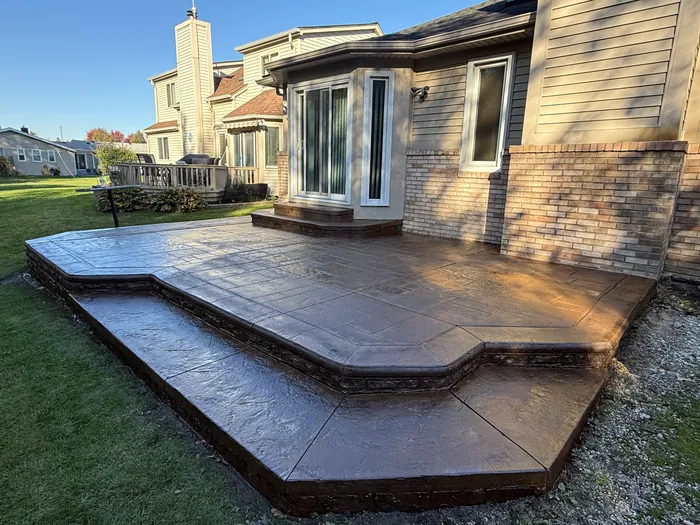
Concrete Staining & Sealing
Seal out Michigan winters and stains — or go further with decorative staining that turns plain concrete into a finished design feature.
Explore Staining & Sealing →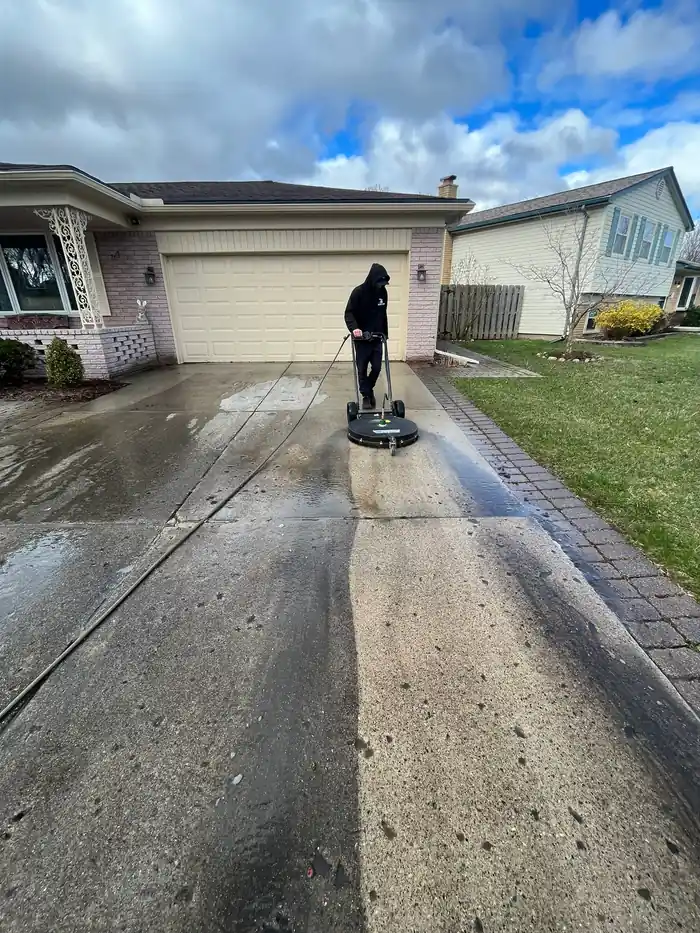
Concrete Cleaning
Surface-cleaner technology and hot water restore concrete to its original color — no zebra stripes, no etching, no missed edges.
Explore Concrete Cleaning →Where we work
Paver Repair & Re-Sanding across Macomb, Oakland & St. Clair Counties
We bring paver repair to all 86 residential communities we serve — zero travel fees in all three counties. Find your town below for local details, or call and we'll confirm your address on the spot.
Macomb County & the Pointes
Oakland County
Troy & the Northeast
Woodward Corridor & South Oakland
Bloomfield & the Lake Belt
West Oakland & the Lakes Area
The Rural North
St. Clair County
Port Huron & the Blue Water Area
The St. Clair River Towns
Inland & Anchor Bay Side
Free estimate
Show Us the Problem Spots
Send photos of the low spot, the loose edge or the empty joints, or have us look in person. Every repair gets a written estimate within 24 hours.
- Written quoteWithin 24 hours
- Shop21366 Hall Rd,
Clinton Township - Insurance$2M + workers' comp