Paver Repair & Re-Sanding — Independence Township, Michigan
Paver Repair & Re-Sanding in Independence Township
Independence Township's hills put many walks, drives and walkout patios on a grade. Where those are laid in pavers, water carries joint sand to the low end and can leave the base saturated where it collects, while tires climbing and braking on a drive pull the pattern out of line. We find where the water goes before we reset anything.
Free written estimate within 24 hours Zero travel fees
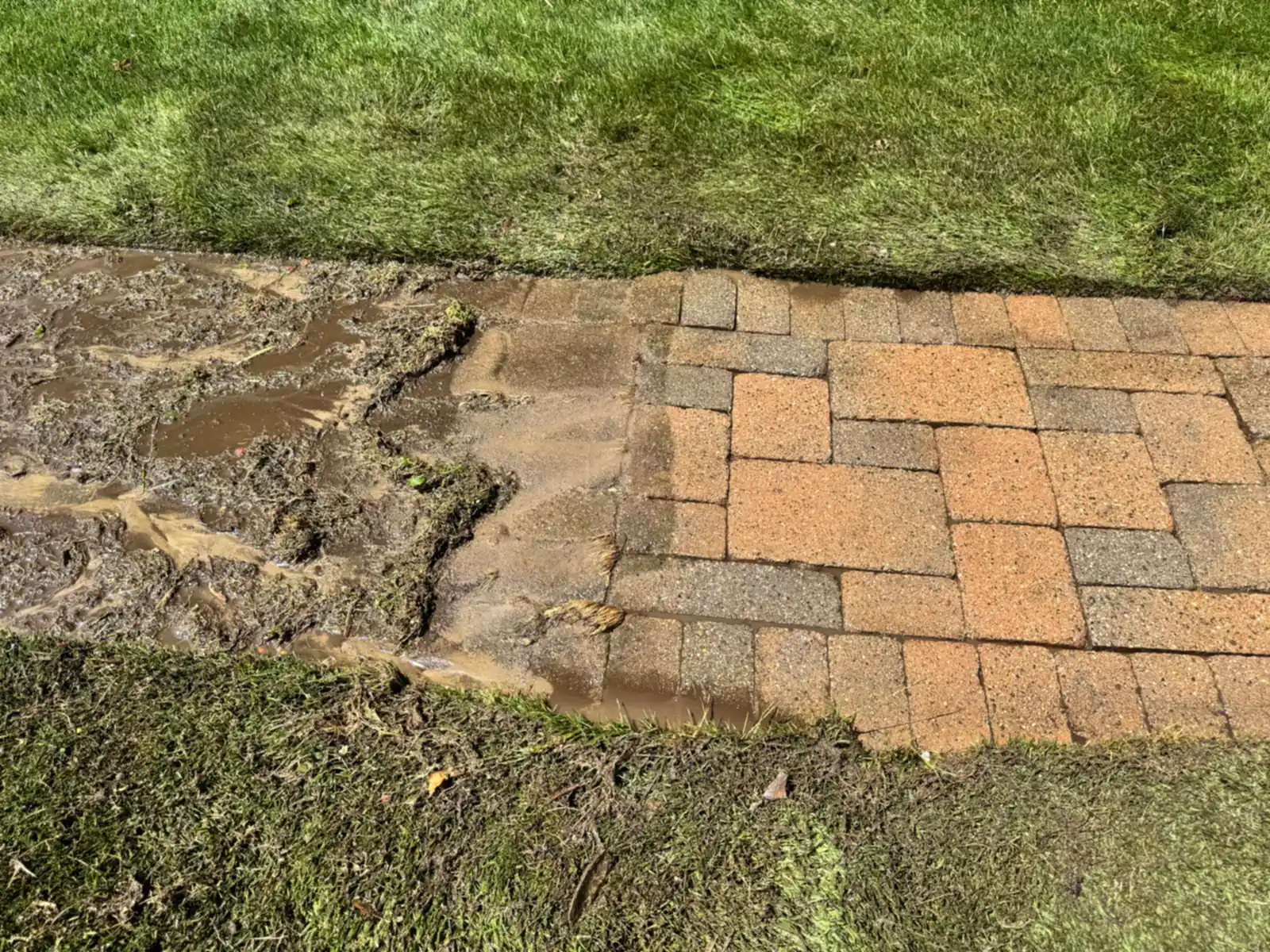
Paver walkwayOvergrown turf and soil washed off a brick paver walk
- 4.9 from 177 Google reviews
- 1,200+ projects since June 2022
- $2M insured, plus workers' comp
- 24h to a free, written, line-item quote
Paver repair & re-sanding in Independence Township carries no travel fee, and every job gets a written, line-by-line quote within 24 hours.
| Service | Paver Repair & Re-Sanding |
|---|---|
| Area | Independence Township, Oakland County, Michigan |
| Price | Quoted per job, from photos or in person |
| Travel fee | None |
| Written quote | Within 24 hours |
| Call or text | (586) 284-3810 |
In Independence Township
This is ski-hill country, and the grades that carry Pine Knob Ski Resort run through the neighborhoods too. From the lake subdivisions near Deer Lake to the wooded lots off Clarkston Rd and Sashabaw Rd, the ground is rarely flat. A front walk steps down from the drive, a paver drive may climb from the road, and a walkout patio sits at the foot of the lot, on the shaded back of the house. Each gets the water from everything above it. The Concrete Masonry & Hardscapes Association (CMHA) recommends stabilized joint sand on slopes steeper than 7 percent and wherever water concentrates, as it does below downspouts and along eaves, because moving water carries plain sand out of the joints.
The foot of the slope takes the most water. A walkout patio collects runoff from the slope, and out of the sun its joints are slow to dry. CMHA names a saturated base among the causes of sunken areas, and saturated bedding sand can pump out through the joints under traffic; stains on the pavers are one sign of it. Resetting those pavers without correcting the base only rebuilds the low spot. If a downspout empties onto the patio, we will point it out, though moving it is drainage work, which this service does not include.
Driveways bring a different failure, which CMHA calls horizontal creep: tires that brake, accelerate and turn on the same pavers push the pattern along until straight courses develop a wave. A drive that climbs a hill gets braking on the way down and acceleration on the way up every day.
How we work
Follow the Water, Then Reset
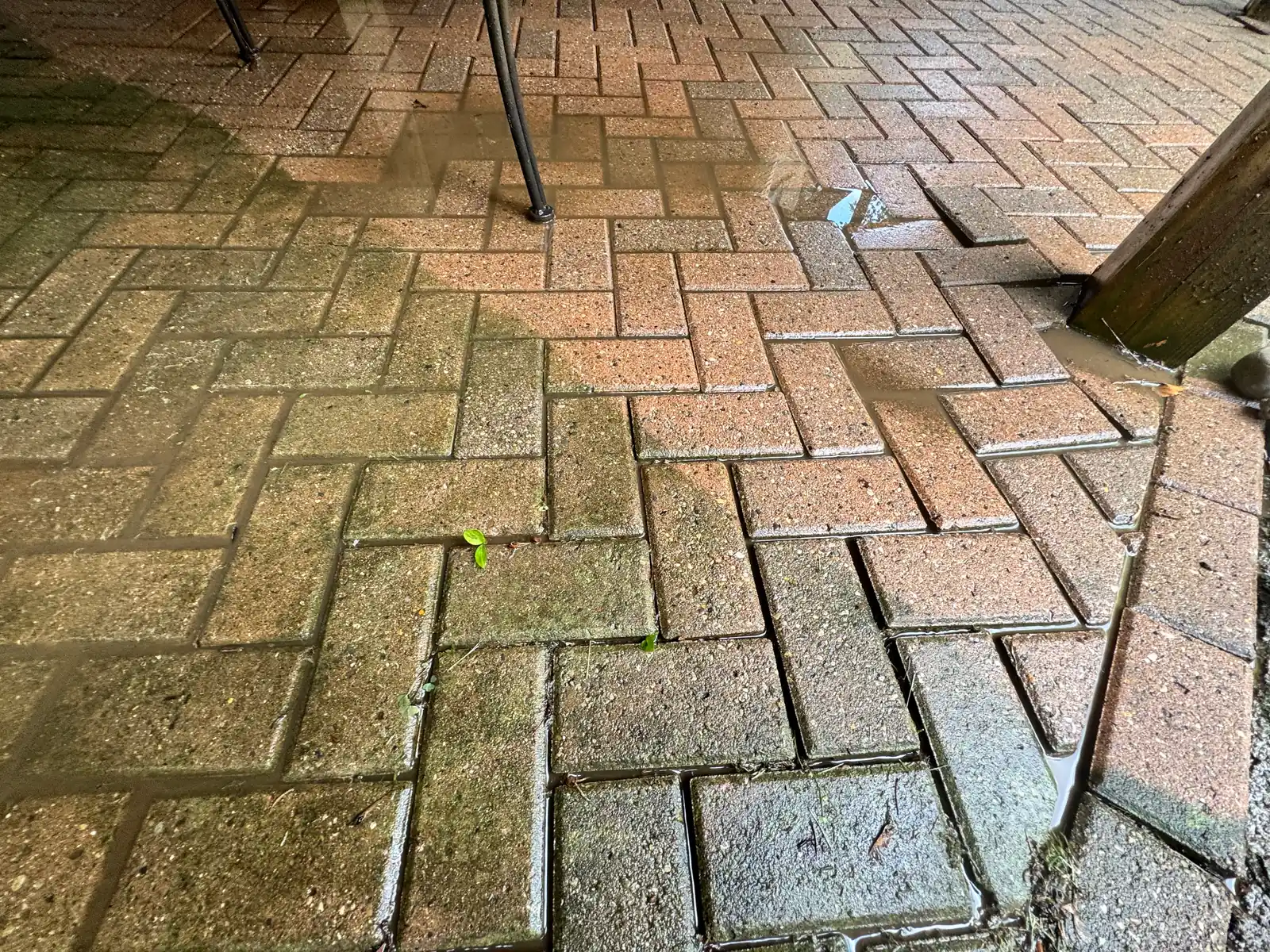
We start at the low end, where the water ends up, and trace where it enters and leaves the paving, then check the surface with a string line. Pavers in a sunken or crept section come out and are stacked in order, and the cause is found in the bedding, the base or the soil below. A low base gets compacted base material, never extra bedding sand, and no base work happens on frozen ground. Fresh bedding is screeded, and the pavers are relaid along string lines and compacted at least twice, with passes that overlap pavers that were never disturbed. Re-sanding comes last: old sand cleared to 1½ inches, polymeric sand swept in and compacted on a fully dry surface, finished about 1/8 inch below the paver tops, dust blown off, then wetted starting from the lowest point.
Repairs That Wash Out on a Grade
Sweeping plain sand into the joints of a steep walk only refills what moving water will carry off again. Laying polymeric sand over joints that still hold old sand leaves a shallow layer that peels and flakes. Wetting the joints before every trace of dust is off the surface leaves a haze that is hard to lift once it cures; our haze removal guide covers the cleanup. Packing extra bedding under a sunken patio corner does not hold, because the low base shows back through. And polymeric sand is not structural. Stabilizers add no strength and cannot hold a failing base or a loose edge together.
When to Book Paver Repair & Re-Sanding in Independence Township
Spring is the time to look, during or right after a rain, when runoff paths and puddles show where the slope is sending water. Heaves noticed in March are judged after the ground has thawed, since frost-lifted ground can settle back. Base work waits for unfrozen ground, and polymeric sand needs a dry surface and two days above freezing, so fall repairs have to beat the cold. Pavers standing more than 1/8 inch proud should be reset before the first plowing or shoveling, which catches raised edges.
Questions, answered
Paver Repair & Re-Sanding in Independence Township: FAQs
Will polymeric sand hold on our sloped front walk?
It resists washout better than plain sand, which is why CMHA recommends it on slopes over 7 percent. It still needs joints cleared to at least 1½ inches, a dry install and a full set. It does not fix pavers that have already moved, and it adds no structural strength, so any sunken or loose sections are reset before the sand goes in.
The pattern on our paver driveway has gone wavy. What happened?
A wave in the pattern is what CMHA calls horizontal creep: tires braking, accelerating and turning shift the pavers along the drive. A failed edge restraint lets pavers spread apart as well. The repair is to lift the affected rows, check the base and the restraint, relay the pavers in their original pattern, and compact and re-sand them.
Our walkout patio stays wet and the pavers have sunk. Can you fix it?
That is the kind of repair this service covers: lift the sunken area, correct the base and relay the same pavers. If water keeps arriving from a downspout or the slope above, though, the base can stay saturated and the patio can settle again, so the source has to be addressed. We do not do drainage work, but the estimate will say so if water is behind the movement.
How is paver repair priced in Independence Township?
Each repair is quoted on its own, since the price depends on how much area has moved, how deep the base problem goes and how many joints need re-sanding. Send photos of the slope and the problem spots, or we can come look. A written estimate follows within 24 hours, and the 42-minute drive from our Clinton Township shop carries no travel fee.
More in Independence Township
Service overviews
What Neighbors Say About Our Work
Live from our Google Business Profile — 4.9 stars across 177+ reviews, nothing filtered out.
Free estimate
Book Paver Repair & Re-Sanding in Independence Township
Send photos of the low spot, the loose edge or the empty joints, or have us look in person. Every repair gets a written estimate within 24 hours.
- Written quoteWithin 24 hours
- Shop21366 Hall Rd,
Clinton Township - Insurance$2M + workers' comp