Irrigation, fertilizer & metal rust
Sprinkler Arcs and Fertilizer Rust, Dissolved Instead of Blasted
Rust is iron bonded into the surface, and water alone typically leaves it behind. We find where it came from, test a cleaner made for that surface on a hidden spot, then dissolve the stain from concrete, brick, pavers or siding and rinse it clean. Every job is quoted from your photos, satellite images or an on-site look.
Free written estimate within 24 hours Zero travel fees
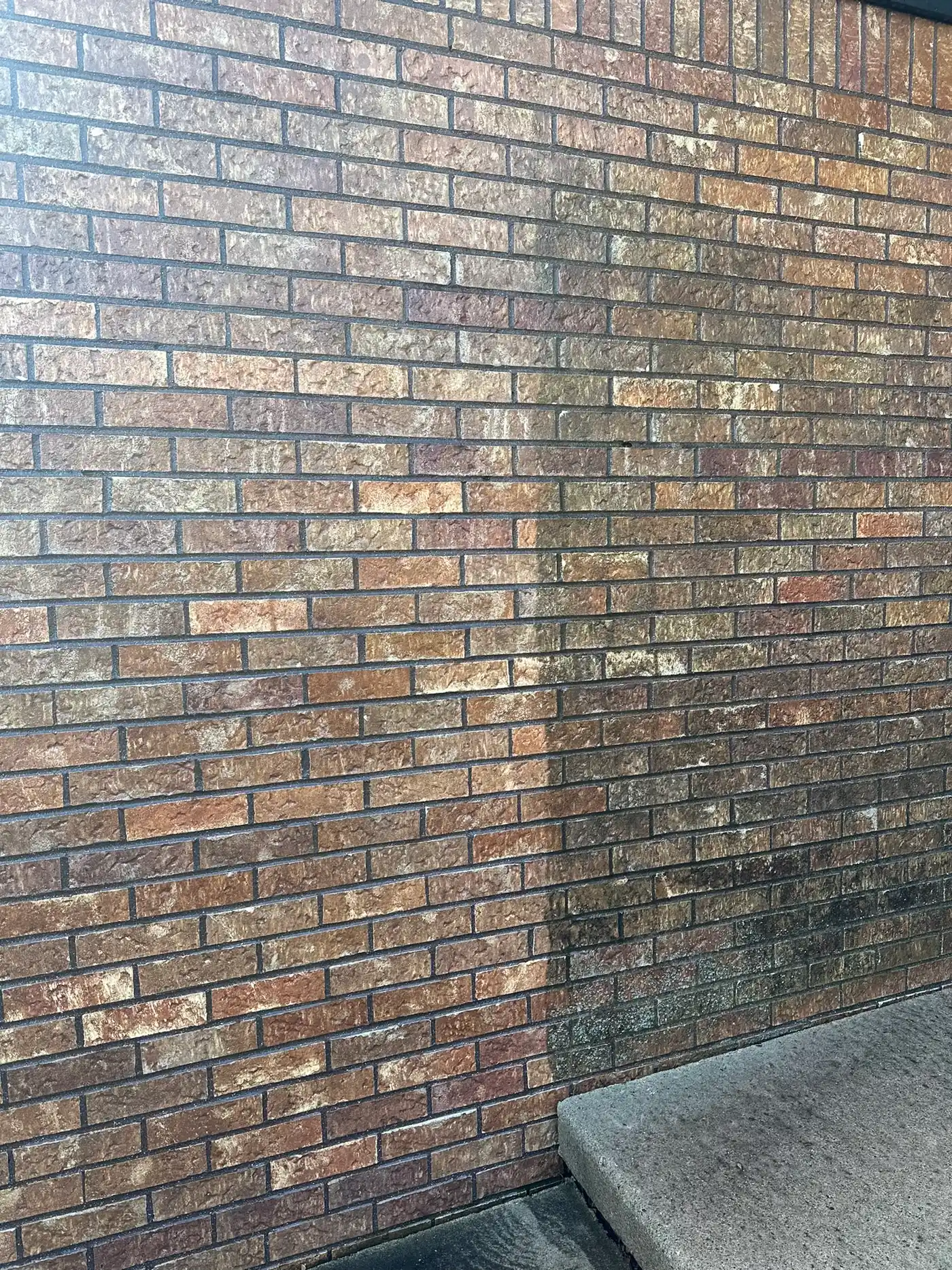
Masonry cleaningA brick wall partway through cleaning, dark staining still on the lower right
- 4.9 from 177 Google reviews
- 1,200+ projects since June 2022
- $2M insured, plus workers' comp
- 24h to a free, written, line-item quote
Every Rust Stain Has an Iron Source
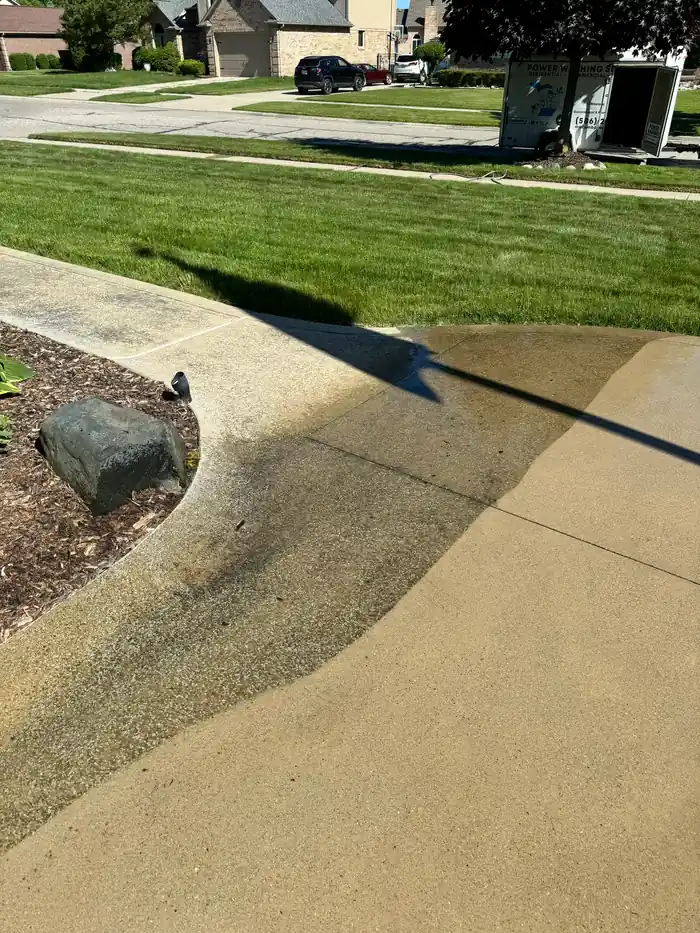
A rust stain is iron that oxidized where it landed, and it reaches a property in a few common ways. Well water run through a lawn system can carry dissolved iron, and the U.S. EPA notes that iron above 0.3 milligrams per liter can cause reddish or orange staining; the same water can carry manganese, which can leave black to brown marks above 0.05 milligrams per liter. Granular lawn fertilizer that contains iron can leave rust-colored specks where pellets sat on a damp walk. Steel leaves rust wherever it touches or drips: chair legs, planters, railings, grates and fasteners. And steel inside concrete can rust from within, which is a different problem, covered below.
The shape of a stain usually names its source. A fan or arc that matches a sprinkler's throw is irrigation water. A scatter of orange dots along a lawn edge is fertilizer. A ring is a chair leg or a pot, and a streak that starts at a bolt or a railing post is the metal above it. We read that pattern before choosing a cleaner, because it also tells you whether the stain will come back.
Rust needs its own chemistry. The cleaning in a concrete cleaning or a house wash takes off dirt and growth, not iron, so rust gets its own treatment and its own line on the estimate. Oil is a third chemistry again, handled by oil stain removal. We treat rust at homes, HOA entrances and common walks, apartment and condo communities, retail plazas and office parks across Macomb County, on its own or on the same visit as a wash.
Rust Stains by Source and Surface
- Sprinkler arcs — orange fans across walks, drives, foundation block and brick where well-fed irrigation dries
- Black or brown arcs — manganese from the same water, treated with a cleaner labeled for it
- Fertilizer rust — orange specks along lawn edges, walks and drives after an iron-containing product
- Metal rust — rings under furniture and planters, streaks below railings, grates, bollards and fasteners
- Concrete and clay pavers — a remover made for that paver type, then an even rinse across the field
- Vinyl siding and fences — a product whose label lists vinyl, tested on a hidden spot first
Water Moves Dirt. It Does Not Dissolve Iron.
The orange in a sprinkler stain is not a layer of grime sitting on the slab. It is iron oxide lodged in the surface pores, so a stream of water passes over it the way rain does. The National Park Service's guidance on cleaning historic concrete says water and steam methods are typically not effective at removing staining, and that high-pressure water can erode the concrete surface. The Brick Industry Association tells cleaners to depend on the chemical reaction of the cleaner rather than brush scrubbing or sprayer pressure, and warns that high-pressure water can etch mortar joints and strip the outer face of brick for good.
So turning the pressure up removes the wrong material. The cement paste or brick face around the stain can wear away before the rust does, leaving a rougher, lighter spot with orange still in it. Rust comes out when a cleaner made for iron dissolves it, and the rinse that follows is gentle. On brick, BIA sets the limit at 400 psi measured at the nozzle tip unless the brick maker permits more.
Source, Test, Dissolve, Rinse
Find the Source
We match each stain to a sprinkler head, a fertilizer edge or a piece of metal. Rust bleeding from a crack or a spalled patch can mean corroding steel inside the concrete, which needs repair rather than cleaning, and we point it out.
Test a Hidden Spot
The chosen cleaner goes on a hidden spot first, so the dilution and dwell are proven on your surface before the visible stain is treated. If the test shows a stain will only lighten, you hear that before the job goes ahead.
Pre-Wet and Dissolve
The surface and nearby plants are wet with clean water. The cleaner goes on at low pressure, stays wet for its labeled dwell and never dries in place. A stubborn stain gets a second application, not more force.
Rinse for Even Color
Each treated spot and the surface around it are flushed thoroughly and neutralized, so the area blends with the rest. Rinse water is kept out of storm drains and away from septic drain fields.
The Right Cleaner at the Right Strength
Many rust removers are acidic. Oxalic acid is the one in the Portland Cement Association's rust method for concrete, and extension guidance warns that it is poisonous and corrosive; NIOSH lists eye burns among its hazards and calls for preventing skin and eye contact. The Brick Industry Association prefers proprietary cleaners made for iron stains over site-mixed solutions, because they are generally safer, easier to control and more consistent. Paver-care brands sell rust removers made without muriatic acid, and one brand's directions call for goggles and rubber gloves, a two-to-three-minute soak, a hard bristle brush and a thorough rinse, repeated until the stain dissolves.
The acid to keep off a property is unbuffered muriatic (hydrochloric) acid. BIA says it tends to cause further stains and damage mortar joints, and the National Park Service says strong acids such as hydrochloric and hydrofluoric damage concrete and are harmful to people, animals, site features and the environment. An acid cleaner is never mixed with bleach or ammonia.
The surroundings get as much attention as the stain. BIA notes that acid cleaners can pit metal frames and stain limestone or cast stone trim, and that cleaning chemicals can damage plants and grass, so nearby metal, glass and trim are covered and beds are soaked with clean water before and after. Stamped, colored or sealed concrete and natural stone get extra testing, since chemical treatments can bleach concrete, remove surface paste or etch aggregate. Clay brick pavers need their own product: BIA warns that some cleaners sold for polymeric sand haze are unbuffered muriatic acid and should not be used on clay pavers.
Quoted From Photos, Satellite Images or a Visit
Rust removal has no published price, because the work depends on the stain more than the square footage. The quote reflects how many stains there are and how large, the surface under them, how long they have been building, how many applications the test spot suggests, and whether the surrounding concrete or pavers should be washed so the treated areas match. Send a wide photo, a close-up and a shot of the nearest sprinkler head or metal fixture, or have us look in person; larger commercial sites can be measured from satellite images. Either way, a written, line-item estimate arrives within 24 hours, with no travel fee anywhere we serve.
Homes are scheduled Monday through Saturday. For plazas, restaurants, offices and apartment communities, crews work into the evening until 10pm, and overnight work is available, so walks can be treated while a business is closed. MPWS is insured for general liability and carries workers' compensation, and commercial clients get certificates of insurance before work begins. Rust work can ride along with a commercial wash, dumpster pad cleaning or paver restoration on the same visit.
Stop the Source or the Orange Returns
A treated stain stays gone only if the iron stops landing there. PROSOCO's rust guidance says to adjust irrigation heads that spray across concrete and to sweep fertilizer off concrete before it dissolves, and extension advice says the same about sweeping iron fertilizer pellets off concrete after an application. For a home or business on a drinking water well, the Macomb County Health Department collects water samples at no cost (lab fees apply), and its partial chemical panel includes iron. Metal furniture and planters can simply be moved.
We point out the heads and fixtures behind the stain while we are there. Re-aiming a head or changing the watering schedule is work for you or your irrigation contractor, and an iron filter is work for a water treatment contractor. Our guides go further on prevention: hard water and sprinkler rust on brick, orange and black sprinkler stains on vinyl and oil and rust stains on driveways.
Questions, answered
Rust Stain Removal FAQs
Still wondering about something? Call (586) 284-3810, Mon–Sat, 8am–10pm.
See all frequently asked questionsHow much does rust stain removal cost?
We don't publish a price for rust removal, because two jobs rarely involve the same work. One arc across a driveway and a season of fertilizer specks along an HOA's common walks take different amounts of product, testing and rinsing. Send photos (a wide shot, a close-up and the nearest sprinkler head) or have us look in person, and you get a written, line-item estimate within 24 hours. If the surrounding surface needs a wash so the treated area matches, that shows as its own line.
Are rust stains permanent?
Usually not. Rust from irrigation water, fertilizer and metal sits in the outer surface, and paver rust remover directions call for repeat applications until it dissolves. Extension advice notes that fertilizer stains can also fade over time. Two cases differ. A stain that has built up for many years may lighten without disappearing, and we say so after the test spot. Rust staining near steel inside the concrete is a sign the steel is corroding, and the National Park Service calls it often a precursor to spalling; cleaning the surface does not stop that corrosion, which is a repair job.
Can you take sprinkler rust off brick without damaging it?
Yes, with chemistry and low pressure instead of force. Following the Brick Industry Association's cleaning note, the wall and the brick below it are soaked with clean water first so the cleaner stays at the surface, and a cleaner made for iron stains is proven on a hidden spot. BIA keeps any pressurized rinse at or under 400 psi at the nozzle unless the brick maker permits more, and calls for checking that the wall and the runoff are back to neutral pH. Our guide to sprinkler rust on brick covers the white hard-water haze that often shares the same wall.
Will the rust remover hurt my lawn or plants?
It can if it's applied carelessly. BIA notes that cleaning chemicals may damage plants and grass, and extension guidance warns that oxalic acid can burn plants. Beds and lawn edges are soaked with clean water before the cleaner goes on and rinsed again after, the product goes on the stain rather than across the open surface, and rinse water is kept out of storm drains and away from septic drain fields. Keep pets and children off the area until the final rinse.
Do you remove fertilizer rust from commercial walks and HOA common areas?
Yes. Fertilizer specks show up where a spreader throws pellets onto walks, entrance drives and parking-lot curbs, and extension advice is to sweep pellets off concrete after each application. We treat the specks across the affected walks and rinse the full runs so the color stays even, working in sections or after hours so entrances stay open. Asking the lawn crew to blow granules back onto the turf after every round helps keep the next batch from forming. On commercial sites, rinse water is recovered when the site or local rules require it, and otherwise kept out of storm drains.
Why is the sprinkler stain on my house black instead of orange?
Black or dark brown arcs usually mean manganese in the water rather than iron. The EPA ties manganese above 0.05 milligrams per liter to black staining. It needs a cleaner labeled for manganese, and on brick the timing matters: BIA warns that unbuffered acid, or any cleaner put on dry brick, can bring out manganese and vanadium stains of its own. Our vinyl sprinkler stain guide explains how to tell manganese from mildew.
When can rust stains be removed in Michigan?
Any dry day above freezing, and warmer is better: BIA notes chemical cleaners work more effectively at 50°F and above and should not be used when freezing weather is expected. Sprinkler arcs are worth treating once the heads are re-aimed or the system is shut down for the season, so a new arc doesn't start the next morning. Fertilizer specks are worth treating after the year's last application.
What Neighbors Say After We've Done This Work
Live from our Google Business Profile — 4.9 stars across 177+ reviews, nothing filtered out.
Questions about rust stain removal, answered
How do I get orange or black sprinkler stains off vinyl siding and a vinyl fence?
Orange sprinkler stains on vinyl siding or fencing are iron, and black or brown ones are usually manganese, both left behind as well water dries…
Read the guide → Concrete & HardscapeHow to Remove Stubborn Oil and Rust Stains from Your Driveway
Oil does not sit on concrete. It soaks into the pore structure, which is why pressure washing alone rarely removes it. Oil needs a degreaser plus hot…
Read the guide →Services that pair well with rust stain removal
Concrete Cleaning
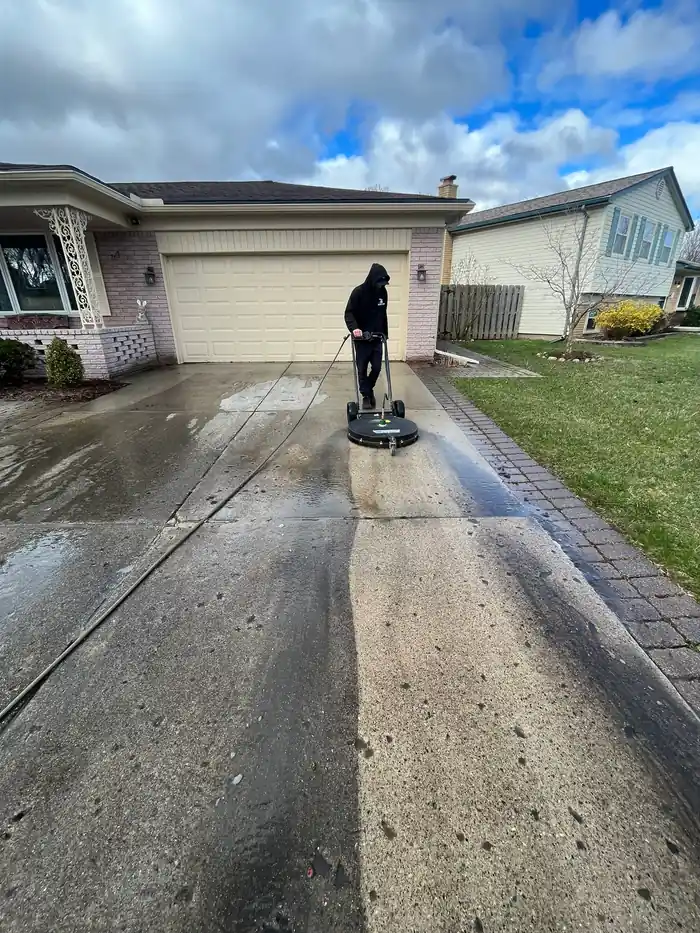
Surface-cleaner technology and hot water restore concrete to its original color — no zebra stripes, no etching, no missed edges.
Explore Concrete Cleaning →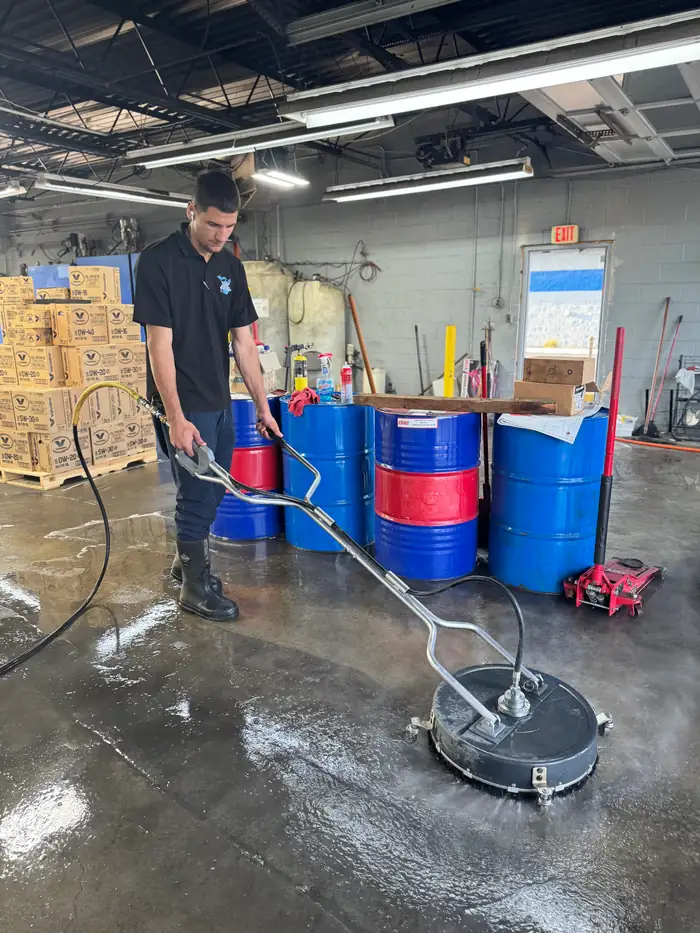
Oil Stain Removal
That black blotch where the car parks doesn't have to be permanent. Hot water, degreasers, and poultice treatments pull oil out of the pores.
Explore Oil Stain Removal →
Brick Paver Restoration
Don't replace your pavers — restore them. Deep cleaning, polymeric re-sanding, and sealing bring weathered patios and walkways back to installation day.
Explore Paver Restoration →Where we work
Rust & Sprinkler Stain Removal across Macomb, Oakland & St. Clair Counties
We bring rust stain removal to all 87 communities we serve — zero travel fees in all three counties. Find your city below for local details, or call and we'll confirm your address on the spot.
Macomb County & the Pointes
Oakland County
Troy & the Northeast
Woodward Corridor & South Oakland
Bloomfield & the Lake Belt
West Oakland & the Lakes Area
The Rural North
St. Clair County
Port Huron & the Blue Water Area
The St. Clair River Towns
Inland & Anchor Bay Side
Free estimate
Show Us the Stain and Where It Starts
Send a wide photo, a close-up and the nearest sprinkler head or metal fixture, or ask for an on-site look. Every rust job gets a written estimate within 24 hours.
- Written quoteWithin 24 hours
- Shop21366 Hall Rd,
Clinton Township - Insurance$2M + workers' comp