Paver Repair & Re-Sanding — East China Township, Michigan
Paver Repair & Re-Sanding in East China Township
East China Township's master plan describes most of its soil as poorly to very poorly drained clay or loamy sand over clay, on flat to gently rolling ground with a seasonally high water table. Pavers on wet ground show it as dips that hold puddles, joints that lose sand and sections that shift with the frost, so a repair here starts by finding the water.
Free written estimate within 24 hours Zero travel fees
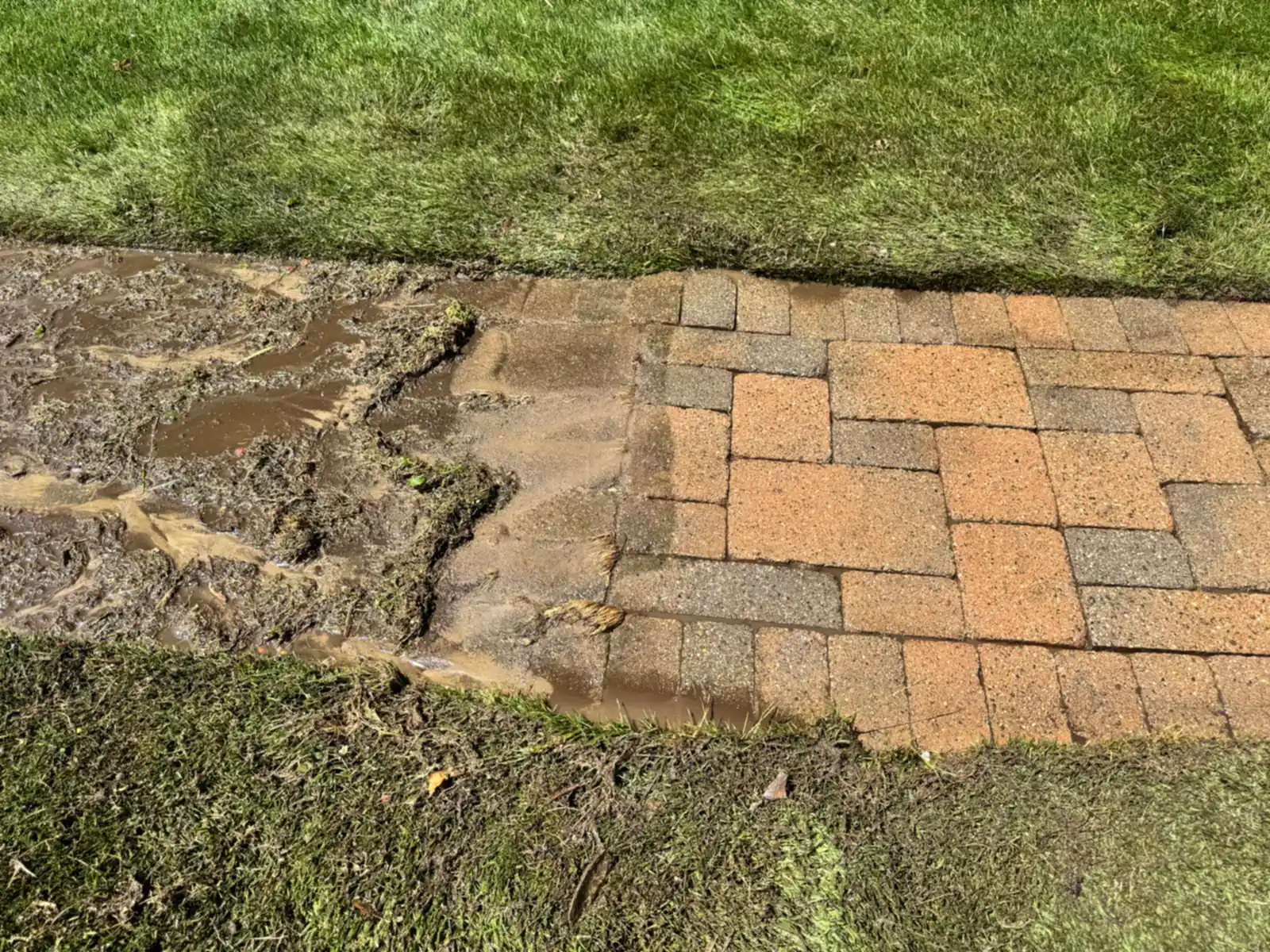
Paver walkwayOvergrown turf and soil washed off a brick paver walk
- 4.9 from 177 Google reviews
- 1,200+ projects since June 2022
- $2M insured, plus workers' comp
- 24h to a free, written, line-item quote
Paver repair & re-sanding in East China Township carries no travel fee, and every job gets a written, line-by-line quote within 24 hours.
| Service | Paver Repair & Re-Sanding |
|---|---|
| Area | East China Township, St. Clair County, Michigan |
| Price | Quoted per job, from photos or in person |
| Travel fee | None |
| Written quote | Within 24 hours |
| Call or text | (586) 284-3810 |
In East China Township
Water sits behind much of what goes wrong under pavers. CMHA, the trade association for concrete pavers, lists a saturated base among the causes of a depression, and bedding sand that stays wet can pump out through the joints under traffic. Frost adds a second effect. Heave takes three ingredients at once: ground cold enough to freeze, a soil prone to frost, and a steady source of water, which builds ice lenses as it is drawn up toward the frozen layer. Silts, loams and very fine sands heave worst and clay less, so clay alone is not the culprit; a seasonally high water table can keep the water supply close. The damage comes from uneven lift.
That shapes what a repair can promise. Releveling lifts the pavers, corrects the base under them with compacted base material, rebeds and relays them, which addresses a dip where the base settled or the bedding washed out. CMHA's answer to heave itself is a frost-resistant subbase, and its construction guide recommends drain pipe under vehicle areas on clay or slow-draining soils. We do not install drainage, and where standing water is behind a problem, a reset by itself is not the cure.
Much of the housing sits by water: deep riverfront lots east of M-29 along the St. Clair River, many of them former cottages now lived in year-round, and canal-front plats on Kraft Haven Canal and Baker Canal. On those lots, old joint sand, weeds and rinse water from a repair stay out of the water. Inland, FEMA maps an extensive floodway along the Belle River.
How we work
Proving the Dip, Then Rebuilding Under It
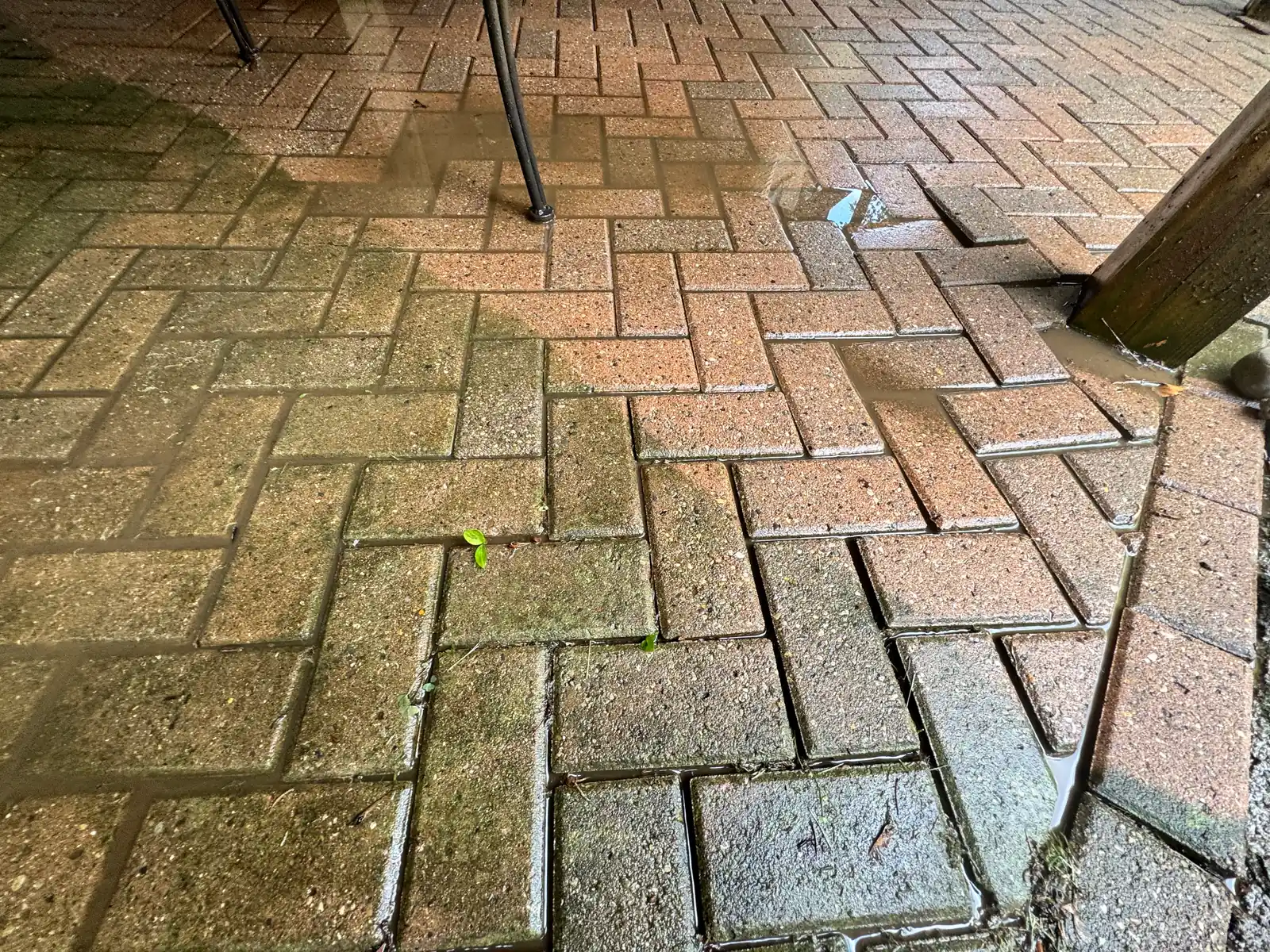
A low spot is confirmed before anything comes up. Standing water after a rain marks the area, and a string line across it shows how deep the dip runs, since shade can make a shallow one look worse. The pavers are lifted, scraped clean and stacked aside. If the bedding is wet or has pumped out through the joints, the base below it gets checked, and a low base is built back up with compacted base material; spreading more bedding sand into the hollow never works, because the hollow shows through again. Fresh bedding of concrete sand, about an inch, never stone dust or screenings, is screeded smooth, the pavers go back in pattern slightly above their neighbors, and the plate compactor runs over them at least twice. Joints are sanded and compacted until they take no more.
Repairs That Ignore the Water
Filling a puddled dip with extra bedding sand lifts the surface and leaves the wet, low base under it. Bedding pavers on stone dust or screenings uses a material CMHA rules out, since it compacts unevenly and can trap moisture in the bedding. Re-sanding a patio still damp from rain or a heavy dew makes polymeric sand cling to the faces and haze, and overwatering it during activation is a step its makers warn against. A coat of sealer over a section that pumps sand does nothing for the base. Resetting on ground that is still frozen puts the pavers on a surface that can drop when it thaws.
When to Book Paver Repair & Re-Sanding in East China Township
Dry joints are the rule for polymeric sand. Paver faces, edges and joints all have to be dry, which means at least a day's wait after rain, with sprinklers shut off and two days of above-freezing weather to follow. Humid weather or damp pavers can leave a haze, and white residue after watering in can be efflorescence rather than sand. Spring rain is the time to see where water pools and late summer the time for a second look, both on CMHA's inspection calendar. A heaved section is assessed after the thaw, since lifted ground can settle, and base work ends for the year once the ground freezes.
Questions, answered
Paver Repair & Re-Sanding in East China Township: FAQs
Will releveling stop our patio from heaving again?
We do not promise that. Releveling corrects the base under a section and resets the pavers, which deals with a dip where the base settled. Heave comes from frost acting on wet, frost-susceptible ground, and CMHA's fix for it is a frost-resistant subbase. The written estimate lists what the base correction includes.
Water stands on our walk after rain. Does that mean it sank?
It points to a low spot. CMHA's maintenance guide treats puddles after rain as the sign to look closer, then confirms a dip with a string line pulled tight across it, since shading makes dips look deeper than they are. A photo taken while the water still stands, with the line in the frame, shows how deep it runs.
We live on a canal. Where do the old sand and rinse water go?
Not into the canal. Old joint sand, weeds and debris are swept up, and rinse water is kept out of the canals and the St. Clair River. That matters on Kraft Haven Canal and Baker Canal, which the township treats for aquatic weeds under a special assessment, and on the river, where dumping leaves is illegal under state law.
How is paver repair quoted in East China Township?
Each repair is quoted on its own, because a relevel on wet ground, a heaved walk and a re-sand take different work, so there is no published price. Send photos or book a visit, and the written estimate comes within 24 hours. The trip up from Clinton Township costs nothing extra.
More in East China Township
Service overviews
What Neighbors Say About Our Work
Live from our Google Business Profile — 4.9 stars across 177+ reviews, nothing filtered out.
Free estimate
Book Paver Repair & Re-Sanding in East China Township
Send photos of the low spot, the loose edge or the empty joints, or have us look in person. Every repair gets a written estimate within 24 hours.
- Written quoteWithin 24 hours
- Shop21366 Hall Rd,
Clinton Township - Insurance$2M + workers' comp