Paver Repair & Re-Sanding — Washington Township, Michigan
Paver Repair & Re-Sanding in Washington Township
A long paver walk or a big patio on a Washington Township lot has a lot of edge: where it meets lawn, where it meets a stamped concrete drive, where it steps down a slope. Edges are where pavers loosen first when a restraint gives way. Shifted edges get a proper restraint and are reset, sunken pavers are relaid on a corrected base, cracked ones are swapped and joints are refilled.
Free written estimate within 24 hours Zero travel fees
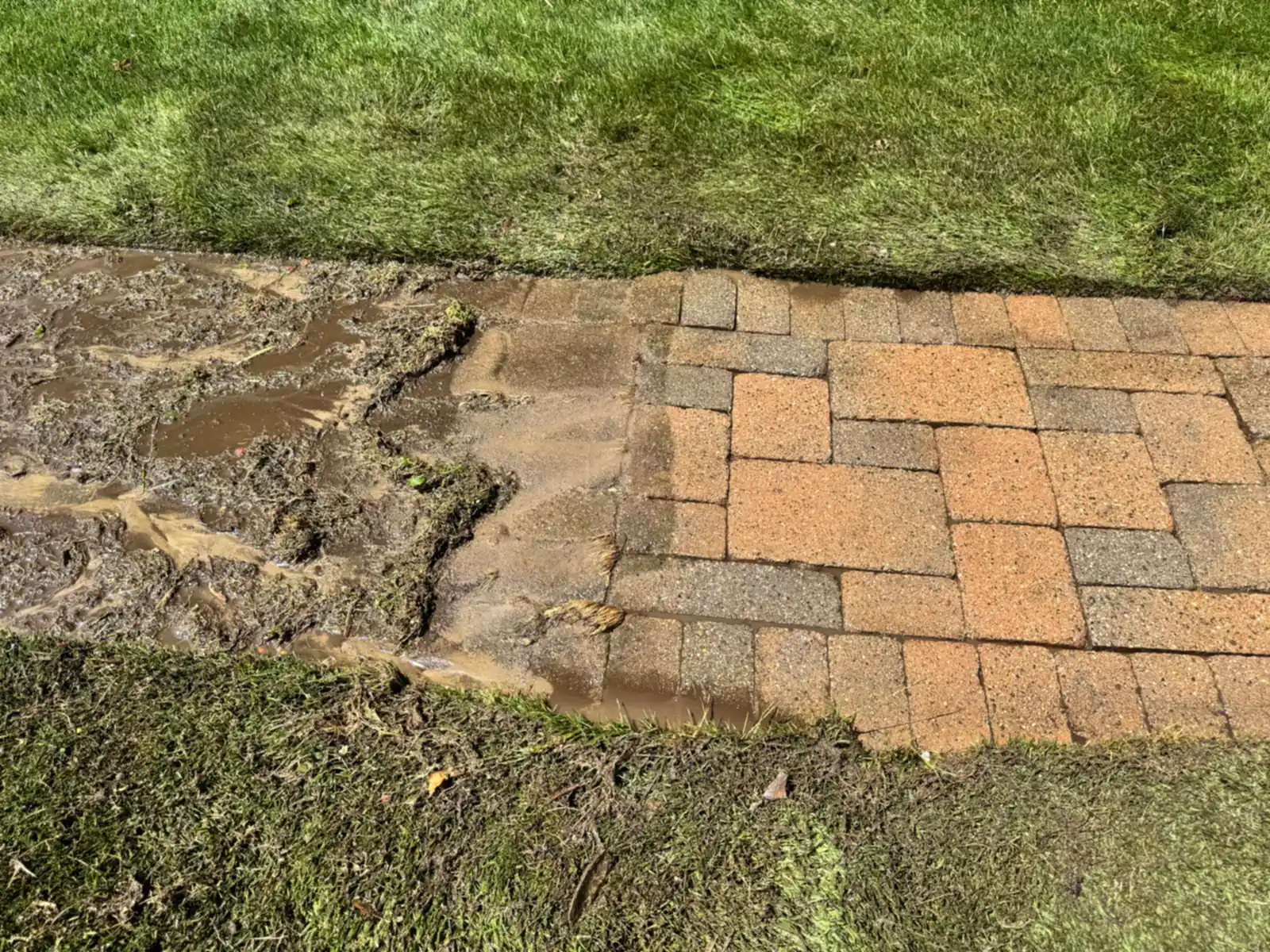
Paver walkwayOvergrown turf and soil washed off a brick paver walk
- 4.9 from 177 Google reviews
- 1,200+ projects since June 2022
- $2M insured, plus workers' comp
- 24h to a free, written, line-item quote
Paver repair & re-sanding in Washington Township carries no travel fee, and every job gets a written, line-by-line quote within 24 hours.
| Service | Paver Repair & Re-Sanding |
|---|---|
| Area | Washington Township, Macomb County, Michigan |
| Price | Quoted per job, from photos or in person |
| Travel fee | None |
| Written quote | Within 24 hours |
| Call or text | (586) 284-3810 |
In Washington Township
Drives, walks and patios here carry extensive stamped and decorative concrete. Where pavers are part of the mix, on the newer homes built on former orchard and farm ground or the rolling, wooded acreage toward Stony Creek Metropark, they meet that concrete as a border, a garage apron or a walk to the front door. Each of those meeting lines is a transition, and the Concrete Masonry and Hardscapes Association (CMHA) requires a restraint wherever paving ends and wherever one paving material gives way to another.
When a restraint lets go, the trouble sits in the outermost one to two feet of paving: joints wider than the rest, edge pavers tipping outward or settling, and sand escaping. CMHA's accepted restraints include precast concrete or cut-stone edging, plastic or aluminum edging made for pavers, and poured concrete curbs. Flat landscape edging from a flower bed is not one, and CMHA advises against timber because it warps and eventually rots. Spikes belong in compacted base, never in soil, and the base should extend beyond the restraint by at least the base's own thickness.
Slope is the next factor. The rolling hills between 26 Mile Rd and Romeo drain faster than southern Macomb's lake-plain clay, but CMHA advises stabilizing the joint sand wherever a paved slope tops 7 percent and wherever water concentrates, such as a downspout outlet or an eave drip line.
Where a paver apron carries cars, turning tires add one more distress: horizontal creep, a slow wave in the pattern. CMHA's repair is to lift the pavers and relay them in the original pattern. On well-drained soil, CMHA's minimum is 6 inches of compacted base under a driveway and 4 under a patio, more in cold climates, so a sinking apron gets its base checked first.
How we work
Edge First, Then the Field
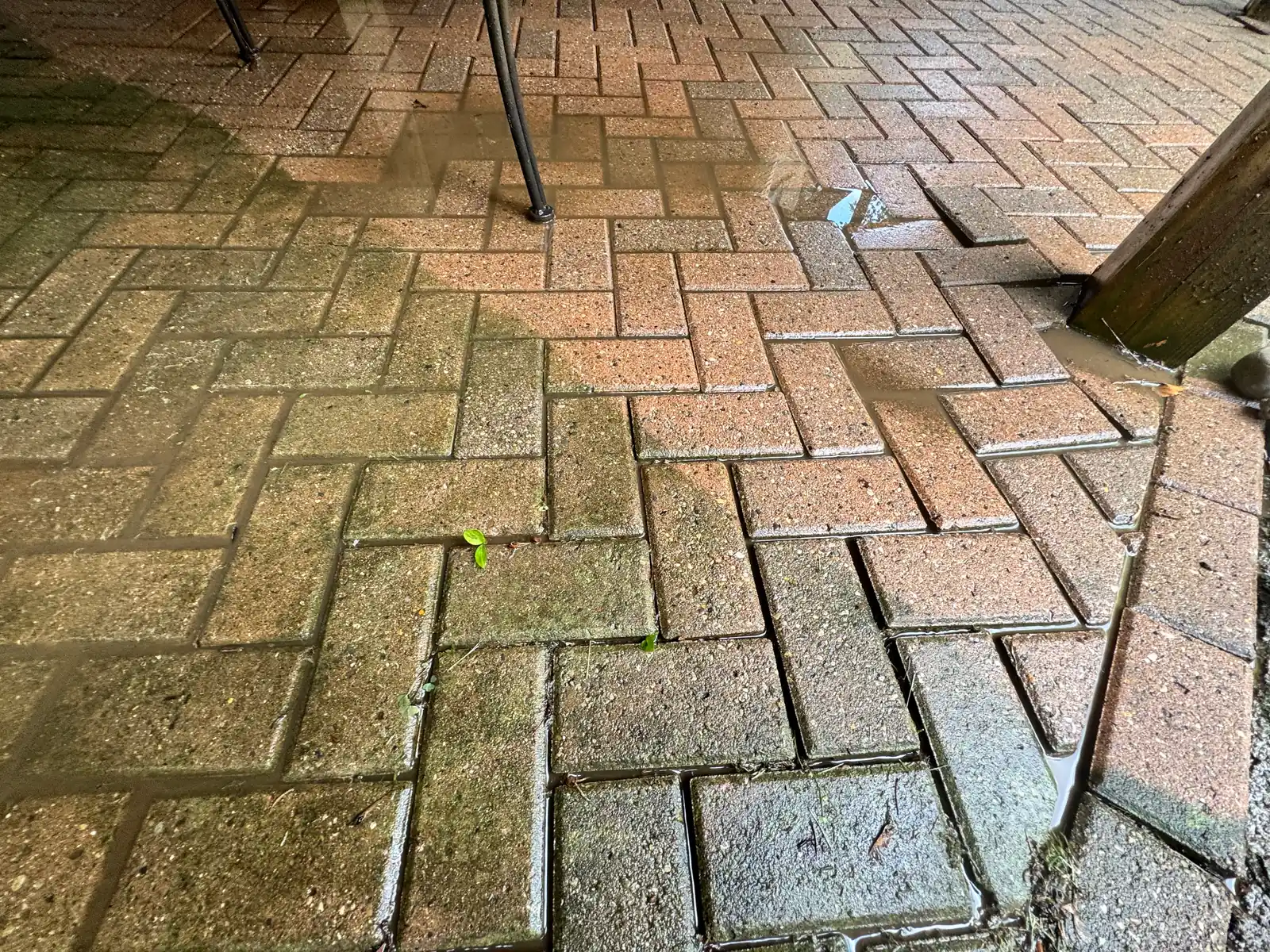
Work starts at the failed edge: the failed run of restraint comes off, the edge pavers and a few courses behind them are lifted in order, and the base along that line is compacted and extended where it stops short. A restraint of a CMHA-listed type goes back on the base, spiked into aggregate. Sunken areas in the field are opened, the low base built back with compacted material, and fresh bedding is screeded over it. On a slope, the pavers are relaid from the low end uphill along string lines, given two or more plate-compactor passes, and finished with polymeric sand compacted into the joints until they hold no more.
Edge Repairs That Let Go Again
Re-sanding a patio whose edge has spread only fills joints that are already too wide; CMHA's order is to find why the joints moved, fix that and reset the pavers to proper joint widths first. Topping old sand on a sloped walk with a thin layer of polymeric leaves a crust that peels, and the makers ask for joints cleared to at least 1½ inches. Sealing comes after repairs, too: SEK's sealing checklist puts sunken, heaved and cracked pavers and failed edging first.
When to Book Paver Repair & Re-Sanding in Washington Township
Edge and base work needs unfrozen ground, and the re-sand that finishes it needs a dry stretch: pavers dry through, no rain for at least 12 hours, about 48 hours above freezing, and the sprinklers off. Shaded patios under the Stony Creek canopy take longest to dry. CMHA says to fix pavers standing more than 1/8 inch high before winter, since plow and shovel blades catch and chip raised edges.
Questions, answered
Paver Repair & Re-Sanding in Washington Township: FAQs
The paver border along our stamped drive is pulling away. Why?
A border like that is a transition, and it needs restraint on its outer side. When that fails, the joints along the border widen and the edge pavers tip or sink. We check what holds that outer side and whether its spikes reach base or only soil, then lift the border, correct the base under it, set a restraint of a type CMHA lists and relay the pavers.
Should the patio be sealed after a repair?
Optional. CMHA notes that once a repair is done, it may make sense to clean and possibly seal the repaired area along with the pavers around it. If you want that, it is part of our brick paver restoration service, and it waits until the polymeric sand has dried: 24 to 48 hours by SEK's count, longer for some products, as the sealing-wait guide explains. After we seal, keep foot traffic off for 48 hours and vehicles off for 72.
We are on a well. Do we still need to shut the sprinklers off?
Yes, well or city water alike. The polymeric sand makers call for sprinklers off while the sand sets, and the cure runs a day or more depending on heat and humidity; the product label sets the exact wait. Leave the system off until then, and hold off pressure washing the new joints for 30 days.
Can you price a big patio on an acreage lot from photos?
Often. A wide shot, close-ups of the failing edge or low spots and a note on how far the problem runs usually support a written estimate within 24 hours; a large or sloped area may get a visit first. The drive up Van Dyke from the shop in Clinton Township costs nothing extra, even past 31 Mile Rd.
What Neighbors Say About Our Work
Live from our Google Business Profile — 4.9 stars across 177+ reviews, nothing filtered out.
Free estimate
Book Paver Repair & Re-Sanding in Washington Township
Send photos of the low spot, the loose edge or the empty joints, or have us look in person. Every repair gets a written estimate within 24 hours.
- Written quoteWithin 24 hours
- Shop21366 Hall Rd,
Clinton Township - Insurance$2M + workers' comp