Brick, block, concrete & stone for businesses, schools & HOAs
Take the Tag Down Before the Paint Cures and the Next One Arrives
Fresh spray paint hasn't finished hardening, and a wall that gets cleaned quickly gives taggers little reason to return. We test the remover on your brick, block or concrete first, then dissolve the paint and rinse it at low pressure instead of cutting it out with a high-pressure jet.
Free written estimate within 24 hours Zero travel fees
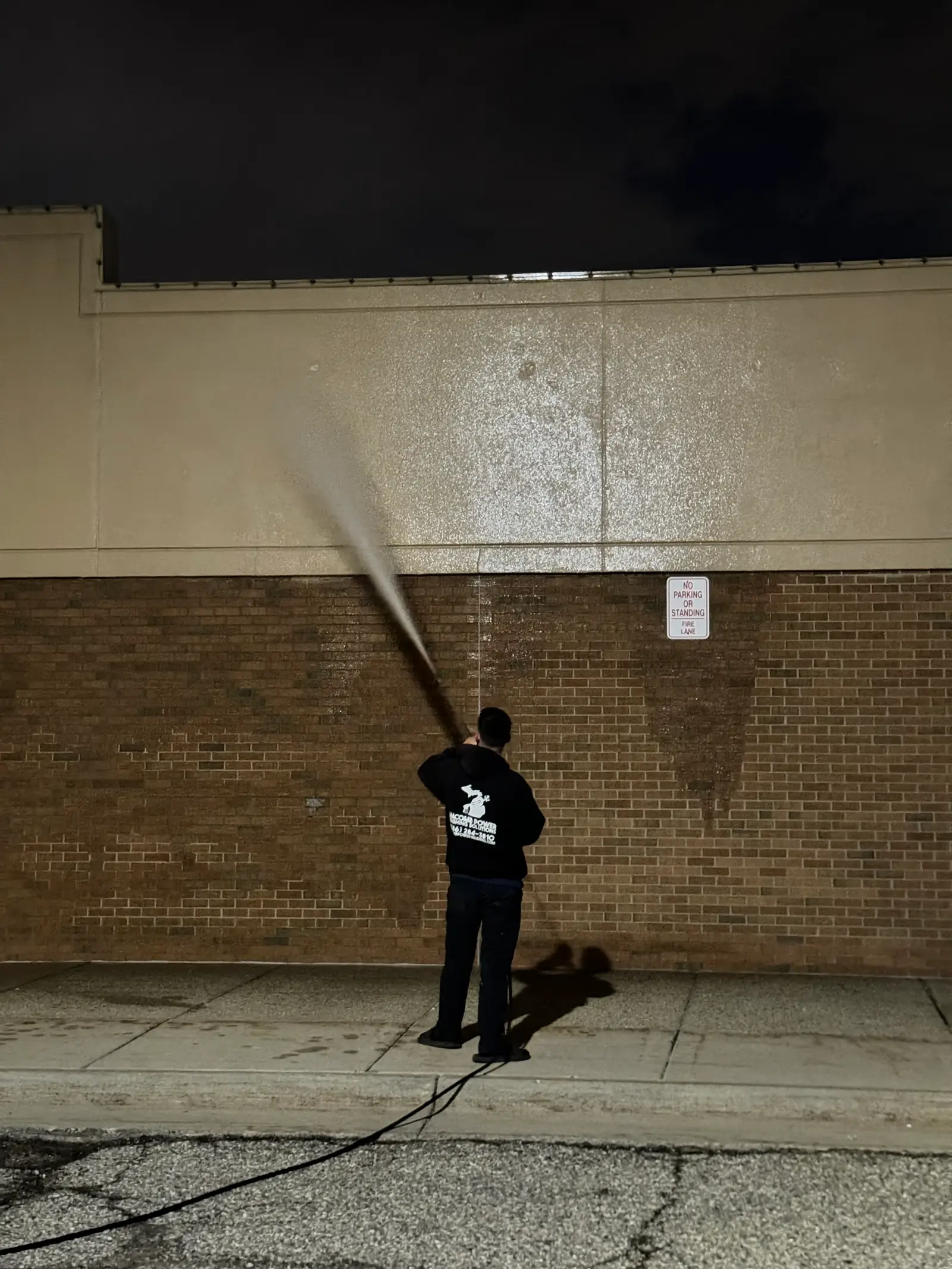
CommercialWashing a brick and stucco commercial wall at night
- 4.9 from 177 Google reviews
- 1,200+ projects since June 2022
- $2M insured, plus workers' comp
- 24h to a free, written, line-item quote
The First Few Days Decide How Hard a Tag Is to Remove
A tag on the back wall of a plaza, a dumpster enclosure, a school sign or a subdivision entrance wall often doesn't stay alone for long. The National Park Service's Preservation Brief 38, its guide to removing graffiti from historic masonry, says graffiti left in place tends to draw more, and that people who paint walls are discouraged where their work disappears fast. Arizona State University's Center for Problem-Oriented Policing reports that rapid removal has been shown to reduce graffiti, and that many jurisdictions try to clear it within 24 to 48 hours.
The paint is on a clock too. According to that brief, most paints that have sat on a surface for several weeks or months have likely finished hardening or nearly so, and they dissolve less readily as a result. A water-based marker tag a day or two old can sometimes be washed off with water and a neutral detergent. A tag left through a winter is harder to dissolve and can take a longer dwell time and more than one application.
Macomb Power Washing Solutions provides graffiti removal across Macomb County, taking spray paint and marker off brick, smooth and split-face block, poured concrete and stone. We lift what chemistry and a controlled rinse can lift. The service is removal: we don't paint over tags or apply anti-graffiti coatings. Before anyone starts, you hear which areas are likely to leave a shadow and which surfaces would need a painter's paint-out instead of a wash.
Identify, Test, Dissolve, Rinse Low
Read the Wall and the Paint
Brick, block, concrete and stone differ in porosity and in how they react to acids and alkalis. Spray paint, permanent marker and water-based marker each answer to different products, and many tags mix them, with a marker outline filled in with spray paint, so one wall can need two treatments.
Run a Test Patch
Before the tag itself is treated, we try the remover on a small, low-visibility spot that matches the rest of the wall and check the result. One remover maker says to test each type of surface, paint and graffiti, and to let the test dry before judging it.
Dissolve, Don't Blast
The work is done by chemistry matched to the paint and by hot water where it helps, not by the force of the jet. Preservation Brief 38 recommends holding solvents against masonry in a poultice, and for graffiti that has soaked in, the Brick Industry Association recommends a poultice, paste or gel that clings to the masonry, so the solvent stays at the stain instead of soaking deeper.
Rinse Low and Clean
The rinse stays at low pressure. Preservation Brief 38 says to rinse cleaning agents off starting at the bottom of the wall and moving up, so they don't run down and stain the surface below, and one remover maker gives the same direction.
Why a High-Pressure Jet Makes Graffiti Permanent
Blasting a tag off with a narrow, high-pressure tip can strip the face of the brick or block along with the paint. Preservation Brief 38 groups high-pressure water with sandblasting and grinding as methods that damage masonry, and says that in untrained hands they usually etch the outline of the graffiti into the wall for good. That outline is a change in the surface itself, so no remover can take it out later. The brief also warns that some historic masonry can be damaged by pressure washing even at low to moderate pressures of 100 to 400 psi, and it counts concrete, cast stone and mortar as masonry alongside brick and stone, all porous and sensitive to abrasion to some degree. Concrete walls and block get the same restraint.
Brick has a published ceiling. The Brick Industry Association's Technical Note 20 says not to exceed 400 psi measured at the nozzle tip unless the brick maker allows more, with a 25- to 50-degree fan tip held at least 12 inches from the wall, and it calls high-pressure cleaning above 800 psi inappropriate for brick. Mortar joints respond differently from the units around them and can need their own material or method, and the BIA says to judge a trial area on the mortar as well as the brick. Our explainer on how pressure damages brick and mortar covers the mechanics.
What Can Be Left Behind, and What Limits It
- Why ghosts happen: paint is pigment held in a binder, and each can sink into the pores to a different depth, so removing one can leave the other
- The stubborn colors: Preservation Brief 38 singles out red paint and the fine black pigment used in spray paint
- No bright rectangles: the brief advises cleaning each whole brick or block out to its mortar joints, then feathering the cleaning outward so the spot doesn't stand out
- Second passes: a ghost left after a first remover pass may need a poultice treatment
- Some fade on their own: the dyes in some paints and markers fade with time, so a faint ghost can become less noticeable
- Knowing when to stop: if the last trace would only come out with the face of the masonry, the brief says leaving it may be preferable, and carefully matched paint can sometimes conceal it
Painted Doors, Metal, Glass and the Plants Below
Graffiti often crosses more than one material: a tag that starts on a block wall can run onto a painted steel door, a downspout or a window. One masonry graffiti remover's maker warns that its product can damage painted surfaces, some metal finishes and glass, and Preservation Brief 38 notes that masonry-cleaning chemicals can harm nearby metal, glass, paint and vegetation. So we protect what isn't being cleaned, wet down planting beds with clean water first, and test each surface the tag crosses on its own.
A painted surface is the hard case, because the tag and the finish under it are both paint. A remover strong enough to dissolve the graffiti can soften the coat beneath it. Where that is the risk, the quote says so, and that section is listed as needing a paint-out instead of a wash. Paint-outs are work for a painter; we don't do them.
Owners of walls that get hit again and again sometimes ask about anti-graffiti coatings. We don't apply them, but the trade-offs are worth knowing before anyone does. Preservation Brief 38 lists the trade-offs: a possible gloss or color change, reduced breathability, yellowing, and patchy failure when a coating isn't maintained. It says to try any coating on a hidden area and evaluate it over time before a wall is covered.
What the Quote Covers
- Every tagged area on its own line, with the surface and the method planned
- An early read on results: what should lift, where a ghost is likely and what would need a painter instead
- Quoted your way: from photos, satellite imagery or a visit, with the written estimate inside 24 hours
- No travel fee anywhere in our service area
- Insurance paperwork: general liability and workers' compensation certificates before work starts
- Before and after photos of each area for your file
- Rinse water recovered when the site or local rules require it, and otherwise kept out of storm drains, ditches, canals, the river and the lake
- Other work on the same visit: a dumpster pad, a parking garage or a full commercial wash
After Hours, Overnight, and Around the Weather
Storefronts and restaurants often want the work done while the lot is empty. Our crews run until 10pm Monday through Saturday, and overnight scheduling is available for commercial properties. The rig carries its own water and hot-water equipment, so we don't need a spigot or an outlet on site. Tags high on a facade or parking structure are scoped at the estimate, with a lift where the height calls for one.
Michigan winters set the other limit. The Brick Industry Association recommends water cleaning brick only when the air will stay at 40°F or above until the wall dries, and notes that chemical cleaners generally work better at 50°F and up. One remover maker says not to apply its product below 40°F. A tag that shows up in January may have to wait for a thaw; in the meantime, Preservation Brief 38 describes a temporary, breathable cover paint made to hide graffiti until it can be taken off, though applying it is painter's work we don't offer.
For the method in more depth, read our guide on removing graffiti from brick without a ghost. The same walls often need other upkeep too: see dumpster pad cleaning, parking garage cleaning and our commercial power washing programs.
Questions, answered
Graffiti Removal FAQs
Still wondering about something? Call (586) 284-3810, Mon–Sat, 8am–10pm.
See all frequently asked questionsDo you just pressure wash the graffiti off?
No. A narrow, high-pressure jet strong enough to cut through cured spray paint can also cut into the brick face, and the outline of the tag can end up etched into the wall. We dissolve the paint first with a remover tested on your wall, then rinse at low pressure. For brick, the Brick Industry Association says not to exceed 400 psi at the nozzle unless the brick maker allows more.
How quickly can you get to a fresh tag?
Send photos and the address. The written estimate comes back within 24 hours, and the removal is scheduled from there, in the evening or overnight if the site needs it. Speed pays off on the wall itself: paint that hasn't finished hardening tends to dissolve more readily than a tag left for weeks or months.
Will there be a shadow where the graffiti was?
Sometimes. Preservation Brief 38 names red paint and the fine black pigment in spray paint as ghosts that can be particularly hard to remove from porous masonry. A follow-up poultice treatment may lighten a ghost, and some fade further with time. We point out likely ghost areas up front, before the full job starts, so the result is not a surprise.
Can you remove graffiti from a painted wall or a metal door?
It depends on the finish, so each surface gets its own test before anything is promised. One remover maker warns that its product can damage painted surfaces, some metal finishes and glass. On painted block or a painted door, the remover can soften the finish under the tag, and if the test shows that, we tell you the section needs a paint-out instead. That is work for a painter; we don't do paint-outs.
Do you remove graffiti in the winter?
When the weather allows. The Brick Industry Association prefers water cleaning brick only when the air will stay at 40°F or above until the wall dries, and Preservation Brief 38 notes that most paint removers don't work in very cold air. A mild stretch can open a window; in a deep freeze, a tag may have to wait for the next thaw, and the estimate can be done in the meantime.
Do you work with HOAs, schools and property managers?
Yes. Entrance monuments, perimeter screen walls, school signs, plaza rear walls and dumpster enclosures each get their own line on the quote. Certificates of insurance go out before work starts, and dated before and after photos give a board or a facilities office a record of what was done and when. See our HOA and apartment and school and public property programs.
How is graffiti removal priced?
By the job, because the surface, the type of paint, the age of the tag and its size all change the work. There is no set rate. We quote from photos, satellite images or a visit, and the written, line-item estimate arrives within 24 hours with each tagged area listed separately.
What Clients Say About This Work
Live from our Google Business Profile — 4.9 stars across 177+ reviews, nothing filtered out.
Questions about graffiti removal, answered
How do you remove graffiti from brick or concrete without leaving a ghost?
Remove graffiti from brick by starting with the gentlest method that works: test in a hidden spot, try water and a neutral detergent, then a paint…
Read the guide → Seasonal & CommercialWhat should a property manager require from a commercial pressure washing contractor before they start work?
Before a commercial pressure washing contractor starts in Macomb or Oakland County, a property manager should collect a certificate of insurance…
Read the guide → Washing & Soft WashCan Pressure Washing Damage Brick? Yes — Here's How It Happens
Yes, but the brick face is rarely the first casualty. High pressure erodes mortar joints, which are softer than the brick by design, and it can blow…
Read the guide →Services that pair well with graffiti removal
Commercial Power Washing
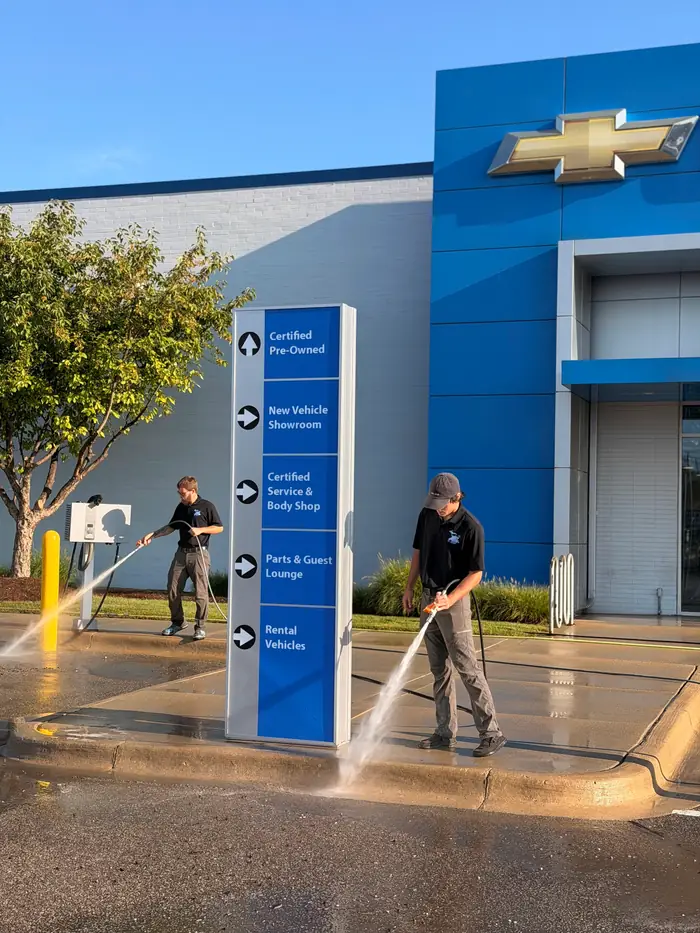
The crew national brands trust: storefronts, fleets, parking structures, and multi-site contracts handled with commercial-grade equipment and zero disruption.
Explore Commercial Services →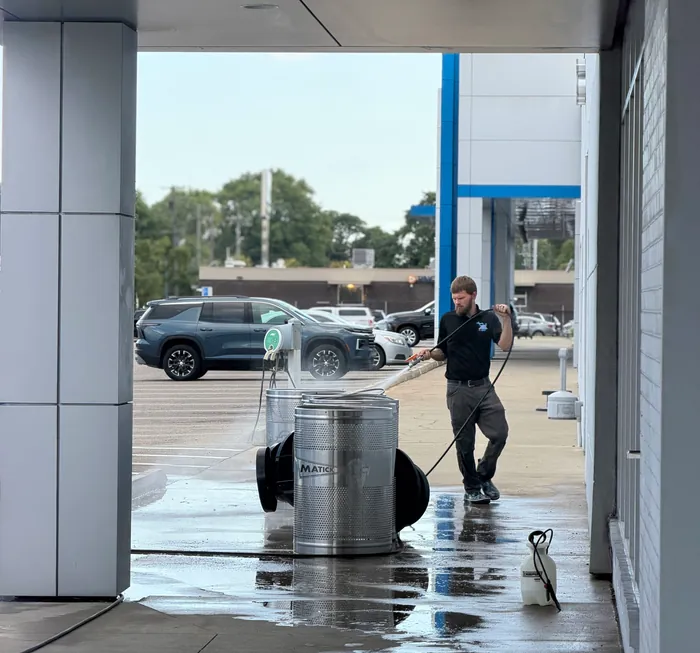
Dumpster Pad Cleaning
Grease, leachate and food waste lifted off the pad with hot water and degreaser, enclosure walls and gates washed, then the area sanitized and deodorized, after close.
Explore Dumpster Pad Cleaning →
Parking Garage Cleaning
Oil drips, tire marks and a winter of road-salt residue washed off decks, ramps and stair towers, at the pressure your deck coating allows.
Explore Parking Garage Cleaning →Where we work
Graffiti Removal across Macomb, Oakland & St. Clair Counties
We bring graffiti removal to all 87 communities we serve — zero travel fees in all three counties. Find your city below for local details, or call and we'll confirm your address on the spot.
Macomb County & the Pointes
Oakland County
Troy & the Northeast
Woodward Corridor & South Oakland
Bloomfield & the Lake Belt
West Oakland & the Lakes Area
The Rural North
St. Clair County
Port Huron & the Blue Water Area
The St. Clair River Towns
Inland & Anchor Bay Side
Free estimate
Send Us a Photo of the Tag
Share a few photos and the address. You get a written, line-item estimate within 24 hours, and removal can run after hours or overnight.
- Written quoteWithin 24 hours
- Shop21366 Hall Rd,
Clinton Township - Insurance$2M + workers' comp