Paver Repair & Re-Sanding — Lake Angelus, Michigan
Paver Repair & Re-Sanding in Lake Angelus
Mature plantings and long drives shape paver repair in Lake Angelus. Roots can lift a walk from below, and when part of a long drive sinks or rises, that stretch can come up, have the base under it corrected, and go back down with the same pavers.
Free written estimate within 24 hours Zero travel fees
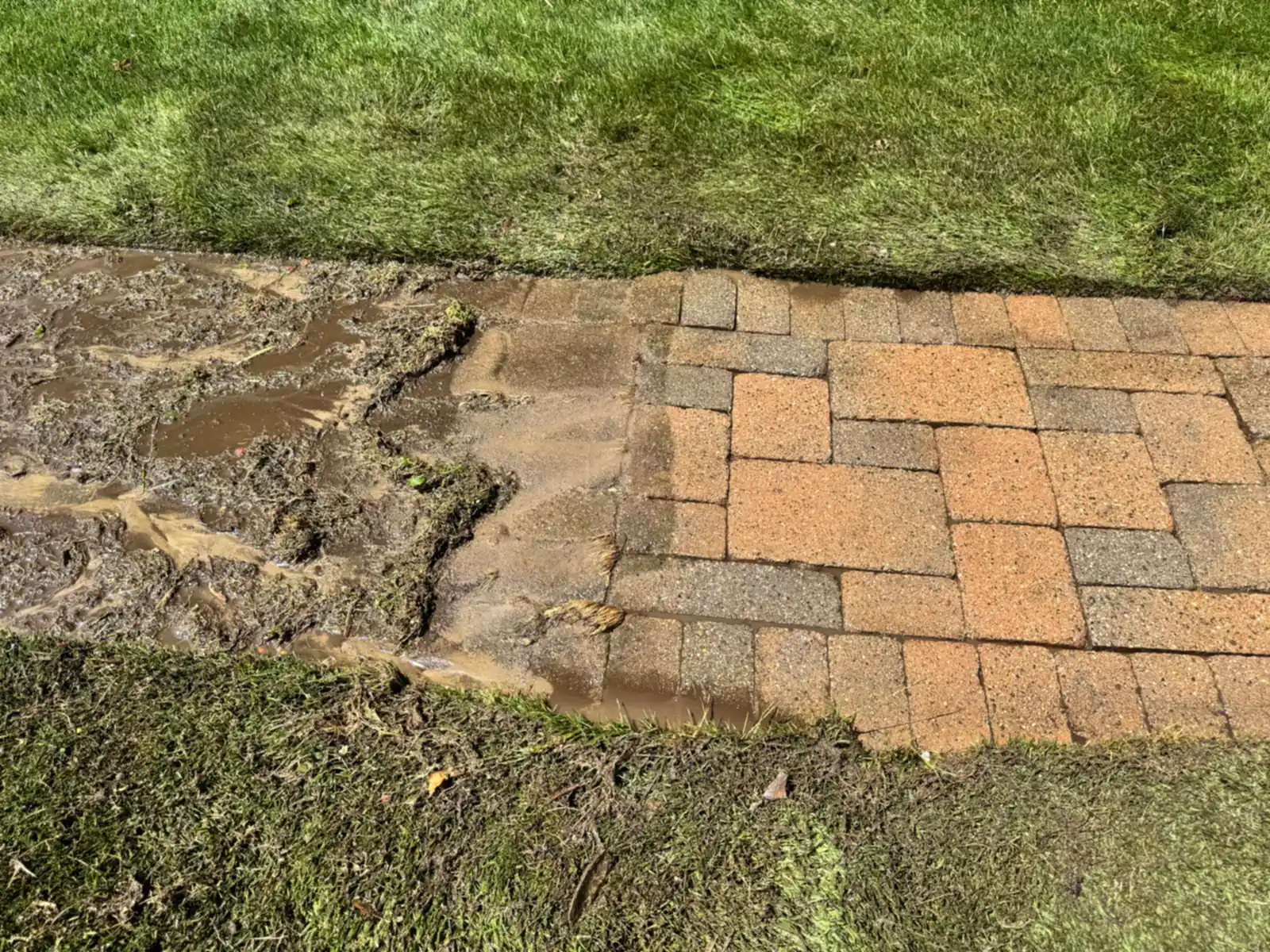
Paver walkwayOvergrown turf and soil washed off a brick paver walk
- 4.9 from 177 Google reviews
- 1,200+ projects since June 2022
- $2M insured, plus workers' comp
- 24h to a free, written, line-item quote
Paver repair & re-sanding in Lake Angelus carries no travel fee, and every job gets a written, line-by-line quote within 24 hours.
| Service | Paver Repair & Re-Sanding |
|---|---|
| Area | Lake Angelus, Oakland County, Michigan |
| Price | Quoted per job, from photos or in person |
| Travel fee | None |
| Written quote | Within 24 hours |
| Call or text | (586) 284-3810 |
In Lake Angelus
Lake Angelus sits minutes off Baldwin Rd, its parcels ringing a private lake, reached by Lake Angelus Rd and long drives past walks, hardscape and lawns that run to the waterline. The canopy over them is heavy, with plantings that have had decades to mature. Expanding roots can push paving up, and Iowa State University's extension service notes that pavers accommodate root growth better than rigid concrete. A lifted section of pavers can be taken up and relaid.
What we don't do is cut roots. Removing a major root can lead to dieback or the death of the tree, the same extension guidance warns, so a root under a walk is an arborist's question first. Once that call is made, we lift the pavers over the rise, correct the base and bedding where they can be corrected, and reset the section in its original pattern.
Not every high spot is a root. The Concrete Masonry and Hardscapes Association (CMHA) names frost heave as the usual cause of heaved paving, and frost-lifted ground can settle back after the thaw, so a hump seen in March deserves a second look in late spring. Low spots have their own causes: base or soil that settled, often because it wasn't compacted well, a saturated base, bedding laid too thick, or bedding and joint sand that washed out. Each moved stretch gets its own diagnosis.
How we work
One Stretch at a Time, Cause First
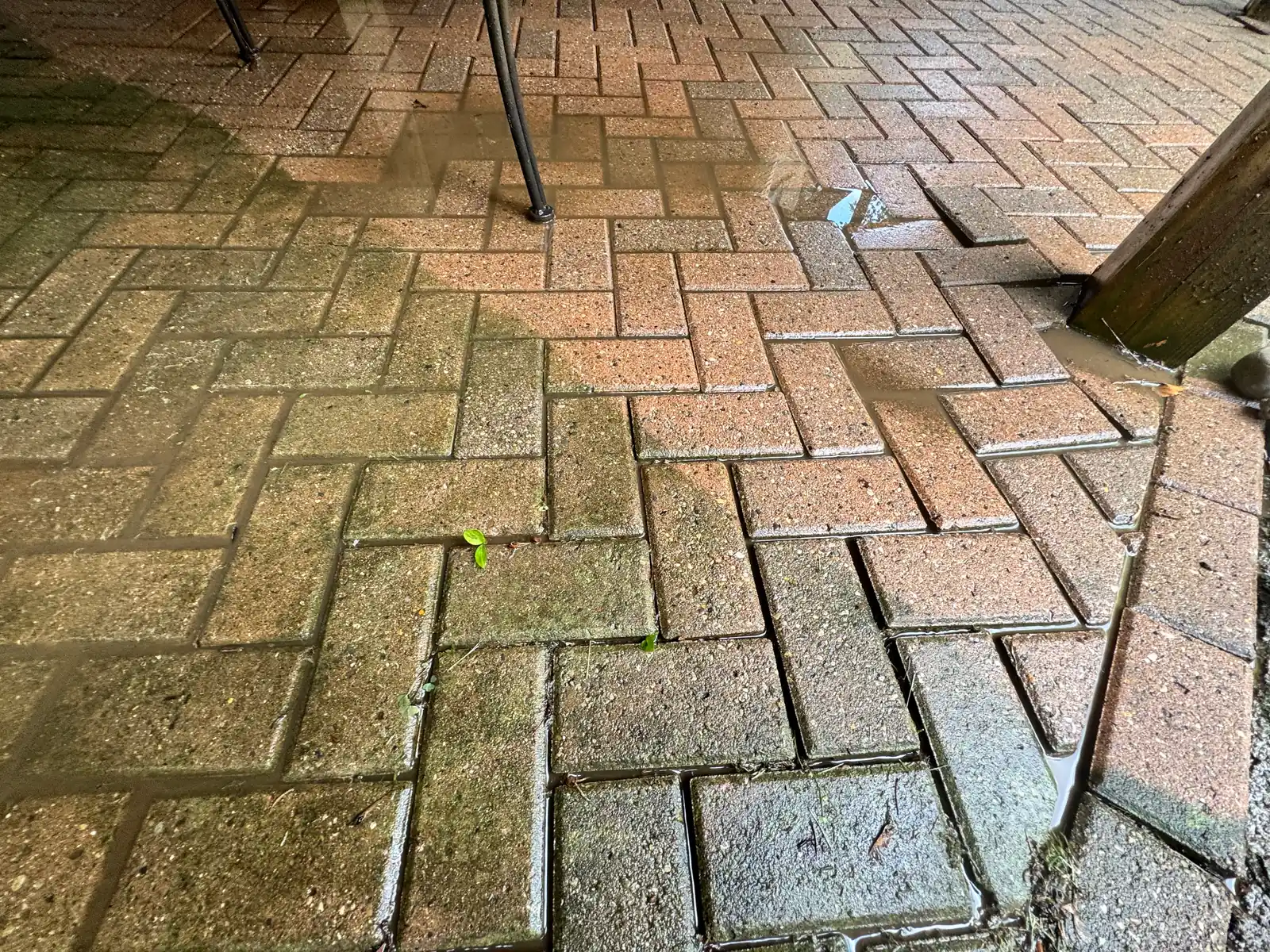
Each moved stretch is measured with a string line, since low morning and late-afternoon shadows can make a dip look deeper than it is. An extractor pulls the first paver, or a chisel breaks it out when the field is locked too tight to give, and every paver after it is scraped clean and stacked nearby so the pattern can be rebuilt. Bedding sand that has mixed with soil or base is replaced, not reused. Where the base has dropped, it is filled with compacted base material.
Fresh bedding is screeded, and the original pavers return to their old pattern, guided by string lines. Two or more plate-compactor passes follow, each running onto the untouched pavers around the repair, and sand is worked in until the joints are full. The relaid section is left standing 1/16 to 1/8 inch above the surrounding pavers, the allowance CMHA gives for further settling. Broken pavers are replaced during the reset. Tight hairline cracks generally don't affect performance, so those can usually stay.
Where joints need re-sanding, they are cleared to at least 1½ inches and filled with polymeric sand, one material, full depth. Rinse water from the work is kept out of the lake.
Repairs That Fight the Tree or the Base
Cutting a major root to flatten a walk can kill the tree, and no paver repair is worth that trade. Shimming a sunken stretch with extra bedding sand levels the surface but leaves the low base below it, and the dip returns through the sand.
Sealing a field that has moved, hoping the sealer will hold it together, does nothing for the base. CMHA is clear that sealers and joint stabilizers add no structural strength, so repairs come first, and any cleaning, re-sanding and sealing follows. And stirring polymeric sand into whatever old sand is left in the joints goes against the label: two makers say never to mix polymeric with other sand.
When to Book Paver Repair & Re-Sanding in Lake Angelus
CMHA suggests walking your paving each spring during or just after a rain, when puddles mark the low spots, with a second round in late summer or early fall. Under this much canopy, fallen leaves come out of the joints before any re-sanding, the pavers must be dry, and polymeric sand needs 48 hours above freezing to set. Base work waits for unfrozen ground.
Questions, answered
Paver Repair & Re-Sanding in Lake Angelus: FAQs
If the tree stays, will the reset walk stay flat?
Not if the root under it keeps growing. A reset corrects the base and relays the pavers; it does not stop a root. If the arborist leaves the root in place, expect that section may need lifting and resetting again in later years, which pavers allow because they come back up without breaking out a slab. Tell us what the arborist decided when you ask for the estimate.
Does a long drive have to be relaid end to end when one stretch sinks?
Not necessarily. CMHA's guidance for a mild depression is to lift the pavers in that area, correct the settlement and reinstall the same units, with no wasted material and no patch. The written estimate lists each stretch being repaired, and the sound stretches are left alone.
We kept spare pavers from the original install. Will they match?
Probably not to the eye, and we won't promise a match. Pavers in service change color with traffic, weather and wear, while spares kept in storage miss that wear. CMHA's advice is to scatter replacements among the reset pavers rather than grouping them, which softens the color difference. The spares are still worth using, since they fit the pattern.
What do you need from us for an estimate?
Photos of each problem area plus a wide shot of the drive or walk, or a visit. You'll have a written estimate within 24 hours. There is no set repair price to publish, since what has failed below the surface determines the work. The drive from our Clinton Township shop takes about 33 minutes and adds no travel fee, as in Auburn Hills, Orion Township or Waterford Township, and our insurance certificate comes before work starts.
More in Lake Angelus
Service overviews
What Neighbors Say About Our Work
Live from our Google Business Profile — 4.9 stars across 177+ reviews, nothing filtered out.
Free estimate
Book Paver Repair & Re-Sanding in Lake Angelus
Send photos of the low spot, the loose edge or the empty joints, or have us look in person. Every repair gets a written estimate within 24 hours.
- Written quoteWithin 24 hours
- Shop21366 Hall Rd,
Clinton Township - Insurance$2M + workers' comp