Paver Repair & Re-Sanding — Orchard Lake Village, Michigan
Paver Repair & Re-Sanding in Orchard Lake Village
Around Orchard Lake, hardscape often runs from the house down to the waterline, and the stretch by the shore can sit on wetter ground. Where it is laid in pavers, we relevel what has heaved or sunk, reset open edges, replace broken pavers and re-sand the joints.
Free written estimate within 24 hours Zero travel fees
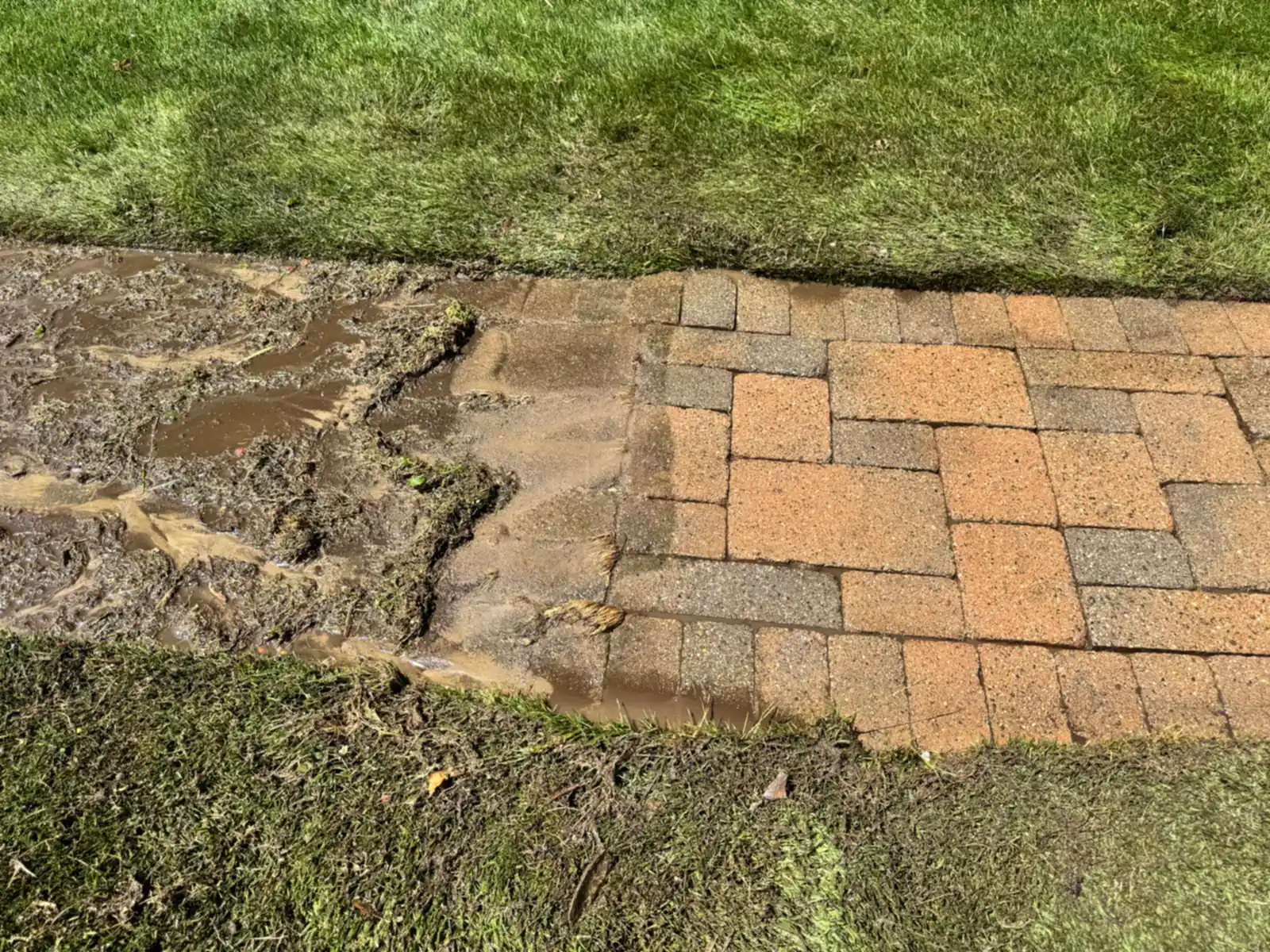
Paver walkwayOvergrown turf and soil washed off a brick paver walk
- 4.9 from 177 Google reviews
- 1,200+ projects since June 2022
- $2M insured, plus workers' comp
- 24h to a free, written, line-item quote
Paver repair & re-sanding in Orchard Lake Village carries no travel fee, and every job gets a written, line-by-line quote within 24 hours.
| Service | Paver Repair & Re-Sanding |
|---|---|
| Area | Orchard Lake Village, Oakland County, Michigan |
| Price | Quoted per job, from photos or in person |
| Travel fee | None |
| Written quote | Within 24 hours |
| Call or text | (586) 284-3810 |
In Orchard Lake Village
Orchard Lake Village is a ring of wooded lots around one of Oakland County's largest all-sports lakes. Many of those lots, on Old Orchard Trail and the roads around the shore, have private frontage, a dock and stone hardscape at the waterline. Where that hardscape is concrete or clay pavers, two findings from the Concrete Masonry and Hardscapes Association (CMHA) bear on the shore end: a saturated base is among the causes of sunken pavers, and frost heave is the usual reason pavers rise.
Frost heave needs three things together: freezing temperatures, frost-susceptible soil and water. Ice lenses grow as water wicks up toward the freezing front, and the damage comes from uneven lift, one part of a terrace rising more than the next. In spring the ground thaws from the top down, trapping meltwater above still-frozen soil, and a refreeze makes heave worse. A terrace that looks badly out of plane in late winter can settle partway back after the thaw, so that is when heave gets judged.
Open edges matter too. CMHA requires a restraint along the perimeter of the paving, and here that perimeter can be lawn, a planting bed or shore stone. Landscape bed edging, timber and soil backfill do not qualify.
How we work
Resetting a Terrace by the Water
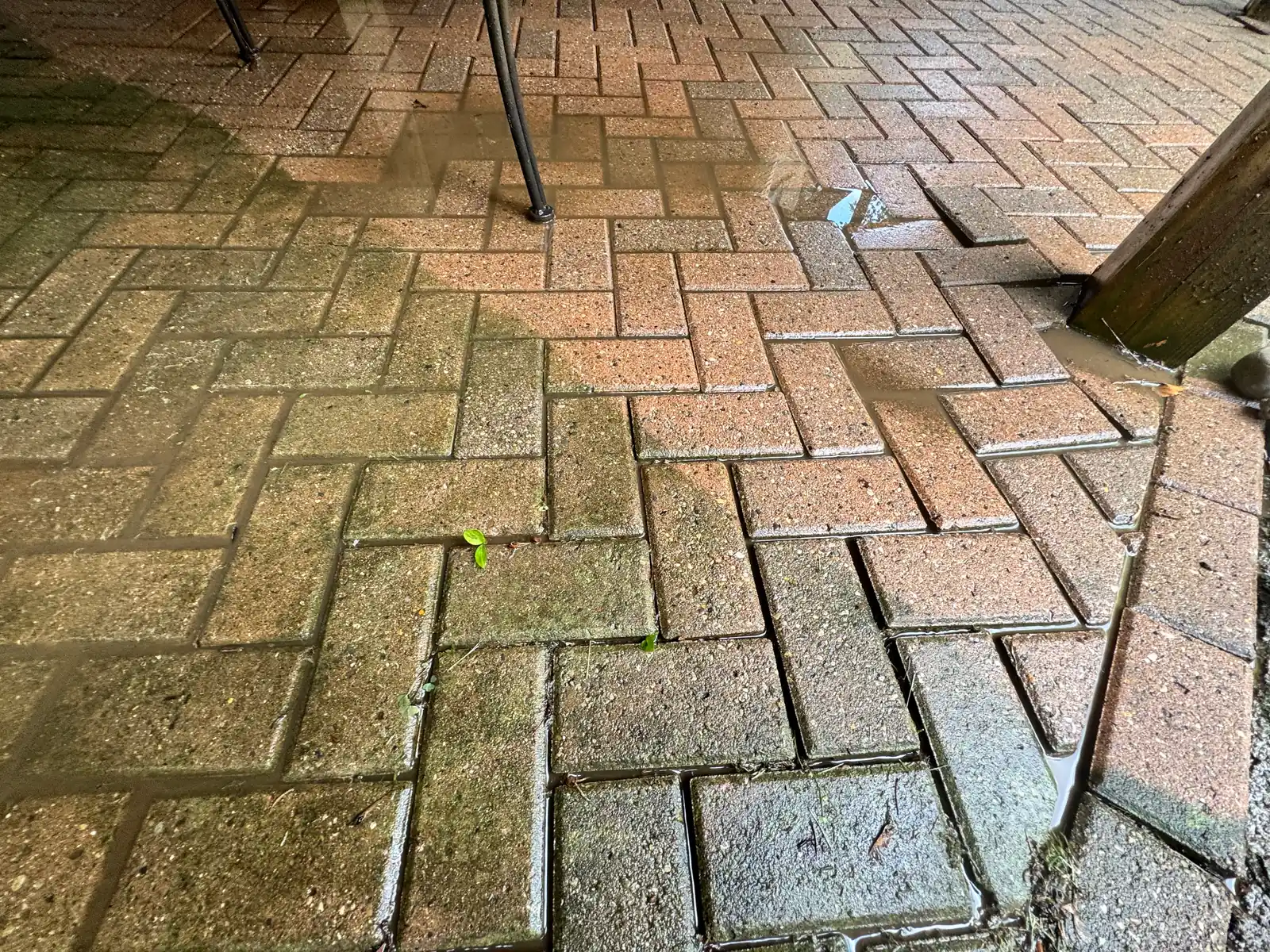
A string line shows how far each area sits out of plane, and lifting a few pavers shows whether the bedding is saturated, washed out or too thick. The section then comes up paver by paver, each cleaned and stacked in order.
Wet bedding comes out, settled base is rebuilt with compacted base material, and no base work goes onto frozen ground. About an inch of clean concrete sand, never stone dust or screenings, is screeded as bedding. Along the open edge, the restraint is repaired or replaced and spiked into a base that extends past it by at least the base's own thickness. The pavers return to their original pattern along string lines, set slightly proud, and are compacted at least twice, lapping onto paving that never moved.
Re-sanding waits for a dry day: joints cleared to 1½ inches, polymeric sand compacted in twice and finished 1/8 inch below the tops, loose grains swept off, then a light shower. One maker warns against overwatering, and the water is kept from running off into the lake.
Mistakes Near the Shore
Resetting heaved pavers on frozen ground breaks CMHA's rule against base work there, and a reset made right at the thaw can be undone by a refreeze. Extra bedding sand in a sunken area leaves the wet base beneath it, and the dip shows through again. A skim of polymeric over old joint sand peels away in flakes, and at least one maker rules its polymeric sand out for constantly wet surfaces, so pavers that stay wet at the waterline get a closer look before any goes in. Re-sanding with dew still on the pavers invites a polymeric haze. And sealer does nothing for a failed base, so any sealing waits until repairs are done and the sand cures; our post on whether sealing pavers is worth it covers that decision.
When to Book Paver Repair & Re-Sanding in Orchard Lake Village
CMHA's inspection schedule is twice a year: in spring during or just after a rain, and again in late summer or early fall. On a lakefront lot, make the spring check once the frost is out. Pavers standing more than 1/8 inch above their neighbors should be reset before winter, since shovels catch their edges, and polymeric sand needs dry pavers and roughly 48 hours above freezing after it goes in. Near the water, dew and humidity can keep pavers damp later into the morning, so the work follows a dry forecast rather than a calendar date.
Questions, answered
Paver Repair & Re-Sanding in Orchard Lake Village: FAQs
Is the stone at the water's edge part of a paver repair?
Only where it is laid in concrete or clay pavers. Paver repair covers the pavers, the bedding and base under them, and the restraint along their edge, including the edge where a terrace meets shore stone. A seawall or riprap along the shore is a different structure, and rebuilding it is outside paver repair.
The terrace by the water lifts every winter and settles in spring. Will a reset stop that?
No reset can promise that. Rising and settling with the seasons is the pattern of frost heave, which needs freezing, frost-susceptible soil and water. CMHA's remedy is a frost-resistant subbase, which means rebuilding from below, and new installation is outside our work. A reset corrects the bedding and base under the pavers and lays them level again.
Should the pavers be sealed after the repair?
That is a choice, and it comes after the repairs, never before. Sealing waits until the polymeric sand has cured, from a day or two to several weeks as the product's label directs. Cleaning, re-sanding and sealing together is our paver restoration service. White residue after the joints are watered can be efflorescence, which our guide to efflorescence on pavers explains.
How is paver repair priced in Orchard Lake Village?
Each repair is quoted on its own, with no published price, because one heaved row and a terrace sunk along the shore are different jobs. Photos can start an estimate, though uneven ground by the water may need a visit, and the written estimate comes within 24 hours. A certificate of insurance can be sent before anyone visits. The drive from Clinton Township is about 40 minutes with no travel fee, the same as for West Bloomfield Township, Sylvan Lake or Keego Harbor.
More in Orchard Lake Village
Service overviews
What Neighbors Say About Our Work
Live from our Google Business Profile — 4.9 stars across 177+ reviews, nothing filtered out.
Free estimate
Book Paver Repair & Re-Sanding in Orchard Lake Village
Send photos of the low spot, the loose edge or the empty joints, or have us look in person. Every repair gets a written estimate within 24 hours.
- Written quoteWithin 24 hours
- Shop21366 Hall Rd,
Clinton Township - Insurance$2M + workers' comp