Paver Repair & Re-Sanding — Bloomfield Township, Michigan
Paver Repair & Re-Sanding in Bloomfield Township
On Bloomfield Township's wooded, rolling lots, on either side of Telegraph Rd, a paver patio or walk depends on whatever holds its outside edge. We repair or replace failed edge restraints, relay tipped edge pavers, relevel heaved or sunken sections on a corrected base and re-sand the joints. Send photos or ask for a visit, and the written estimate follows within 24 hours.
Free written estimate within 24 hours Zero travel fees
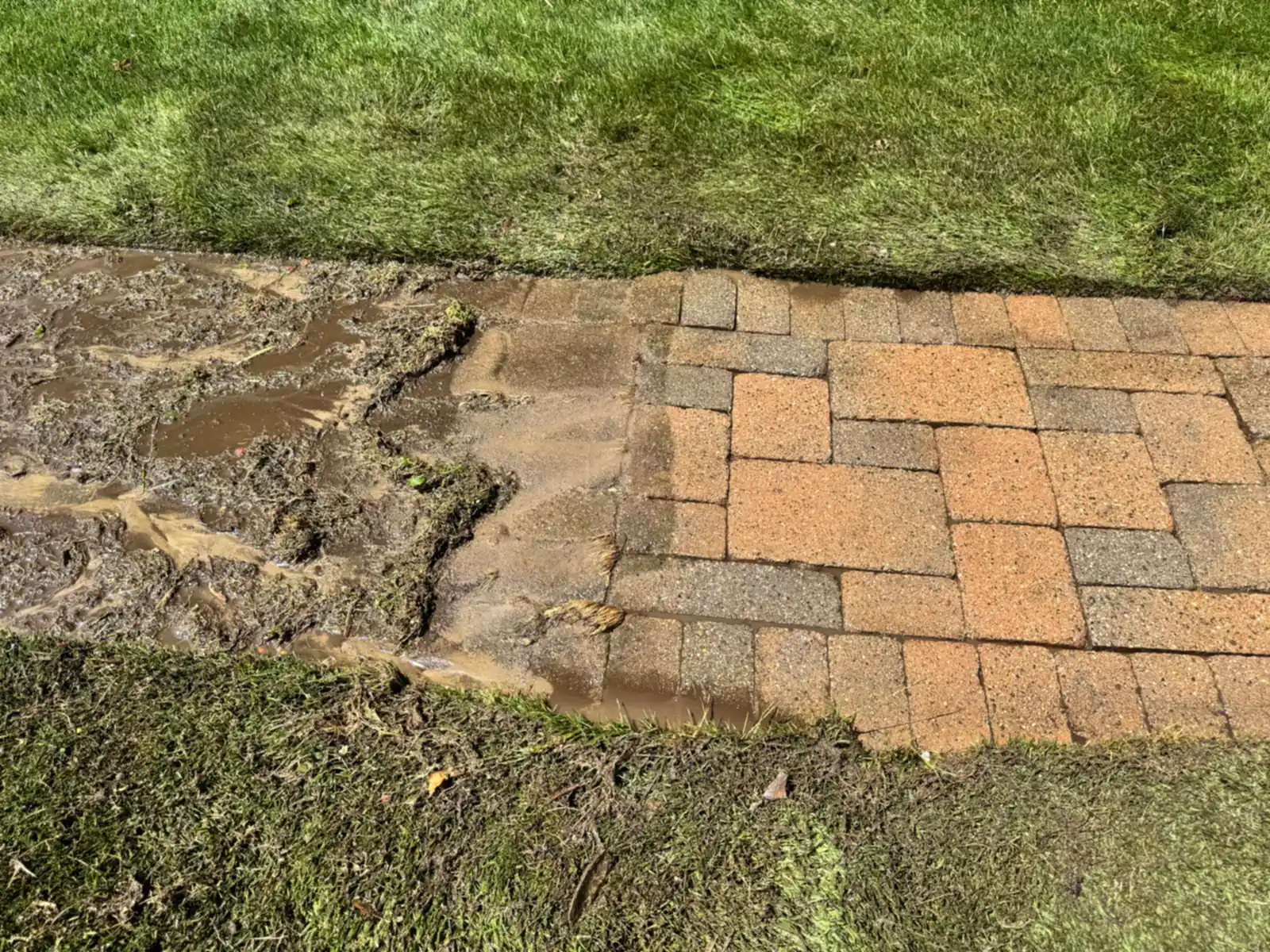
Paver walkwayOvergrown turf and soil washed off a brick paver walk
- 4.9 from 177 Google reviews
- 1,200+ projects since June 2022
- $2M insured, plus workers' comp
- 24h to a free, written, line-item quote
Paver repair & re-sanding in Bloomfield Township carries no travel fee, and every job gets a written, line-by-line quote within 24 hours.
| Service | Paver Repair & Re-Sanding |
|---|---|
| Area | Bloomfield Township, Oakland County, Michigan |
| Price | Quoted per job, from photos or in person |
| Travel fee | None |
| Written quote | Within 24 hours |
| Call or text | (586) 284-3810 |
In Bloomfield Township
The Concrete Masonry and Hardscapes Association (CMHA) calls for an edge restraint around a paver surface and wherever it meets another material, and it describes how a failed one shows: joints widen along the border, perimeter pavers tip or settle, and sand escapes, most visibly within two feet of the edge. A house wall can serve as a restraint. A planting bed or the lawn cannot, so where a patio ends at a bed, every foot of that border depends on what was installed there.
CMHA rules out the flat landscape edging used around flower beds, because it cannot keep pavers tight enough to hold their interlock, and it does not recommend timber, which warps and eventually rots. Soil backfill is never a restraint. For a home patio on a gravel base, the choices CMHA lists are plastic or aluminum edging made for pavers, precast concrete or cut stone, and poured concrete curbs. Spiked restraints are fixed into the compacted base, never into soil, and the base should extend past the restraint at least as far as it is thick, which CMHA says steadies the restraint in soils that heave.
Frost is the other force at work on these lots. Heave takes three things at once: temperatures below freezing, a soil that pulls water up toward the frost (silts and loams do it most), and a supply of water, and the damage comes where the ground rises unevenly. In spring the thaw works down from the surface and traps meltwater above soil that is still frozen, which softens the ground, and a refreeze adds to the heave. Water is the one an owner can sometimes redirect, so the walkaround notes where downspouts and grade send it, whether the patio sits high on the lot or low near the Wing Lake shoreline, Square Lake or Gilbert Lake.
How we work
Edge First, Then the Field
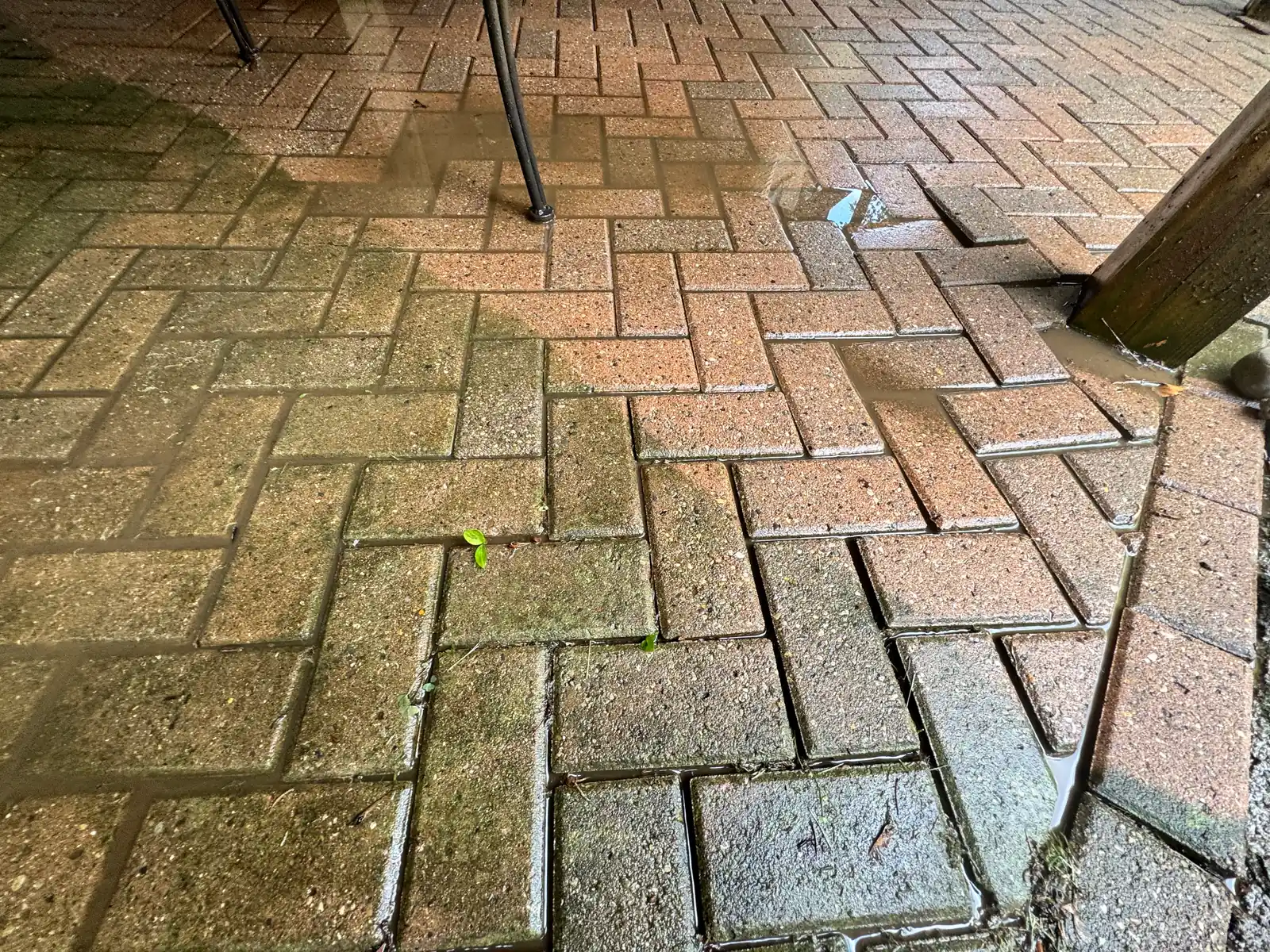
We walk the perimeter first and probe along it to find the restraint: what it is, whether it is spiked, and whether the spikes reach base or only soil. Along a failed stretch, the restraint and the edge pavers within a foot or two of it come up and are stacked. The base there is compacted again and carried outward so it runs past the new restraint, which is spiked into that base. Edge pavers go back in their pattern, and any field pavers that drifted are reset alongside them. The repair is plate-compacted, polymeric sand is swept into the joints to full depth and compacted in, then misted to set.
Edges That Fail Twice
Driving new spikes into the soil beside old edging puts them where CMHA says they never belong: spikes go into the compacted base. Swapping in landscape edging or a timber border uses exactly what CMHA rules out. Relaying tipped pavers without replacing the restraint behind them leaves nothing to stop the next drift. Polymeric sand cannot stand in for an edge either: a stabilizer binds the joint sand but, per CMHA, adds no load-bearing strength. And a heaved section reset while the ground is still frozen is built on frozen base, which CMHA rules out.
When to Book Paver Repair & Re-Sanding in Bloomfield Township
CMHA suggests checking pavers each spring during or after rain, and again in late summer or early fall; along an edge, look for widening joints and pavers that tip. Heaved areas are judged after the thaw, and no base is rebuilt until the frost is out of it. Lippage over 1/8 inch, where one paver sits above the next, should be fixed before snow season, since blades catch it. Polymeric sand goes down only on dry pavers with two days above freezing ahead. A tipping edge is worth fixing before winter, since a failed restraint no longer holds pavers still through freeze and thaw.
Questions, answered
Paver Repair & Re-Sanding in Bloomfield Township: FAQs
The pavers along our patio edge are tipping into the garden bed. Why?
Most likely the restraint along that edge has failed or was never installed. CMHA describes the pattern: widening joints at the border, edge pavers that rotate or settle, and sand escaping. The repair is to replace the restraint and the pavers next to it, compact, refill the joints and compact again. Resetting the pavers alone leaves them free to move the same way.
Is the thin black edging around our beds enough to hold pavers?
No. CMHA says flat landscape edging made for flower beds does not give pavers enough lateral support to keep their interlock. Edging made for pavers is a different product, built to be spiked into the compacted base under the patio. Timber borders warp and rot, so CMHA does not recommend them either.
Part of our lakeside patio rose over the winter. What now?
Wait until the ground has thawed. Heaved ground can drop back as the frost leaves it, so the patio is measured with a string line after that, and areas still high are lifted, rebased and relaid. A reset does not stop frost from lifting the ground again. If the same area rises every winter, CMHA points to a frost-resistant subbase, which is reconstruction rather than a reset.
Can repairs and cleaning be booked together?
Yes, and the order matters. SEK's polymeric sand guidance puts repairs ahead of re-sanding, so settled or tipped pavers and failed edges come first. Cleaning, re-sanding and sealing follow as paver restoration, and sealing never comes before repairs. The written estimate lists each piece and arrives within 24 hours, with no travel fee.
What Neighbors Say About Our Work
Live from our Google Business Profile — 4.9 stars across 177+ reviews, nothing filtered out.
Free estimate
Book Paver Repair & Re-Sanding in Bloomfield Township
Send photos of the low spot, the loose edge or the empty joints, or have us look in person. Every repair gets a written estimate within 24 hours.
- Written quoteWithin 24 hours
- Shop21366 Hall Rd,
Clinton Township - Insurance$2M + workers' comp