Paver Repair & Re-Sanding — Fort Gratiot Township, Michigan
Paver Repair & Re-Sanding in Fort Gratiot Township
In Fort Gratiot Township the first question about a moved paver section is which way it went: up with the frost or down into a soft base. The two need different repairs. We relevel heaved and sunken sections over a corrected base, swap out broken pavers, reset drifted edges and restraints and re-sand joints with polymeric sand. Every repair gets a written estimate within 24 hours.
Free written estimate within 24 hours Zero travel fees
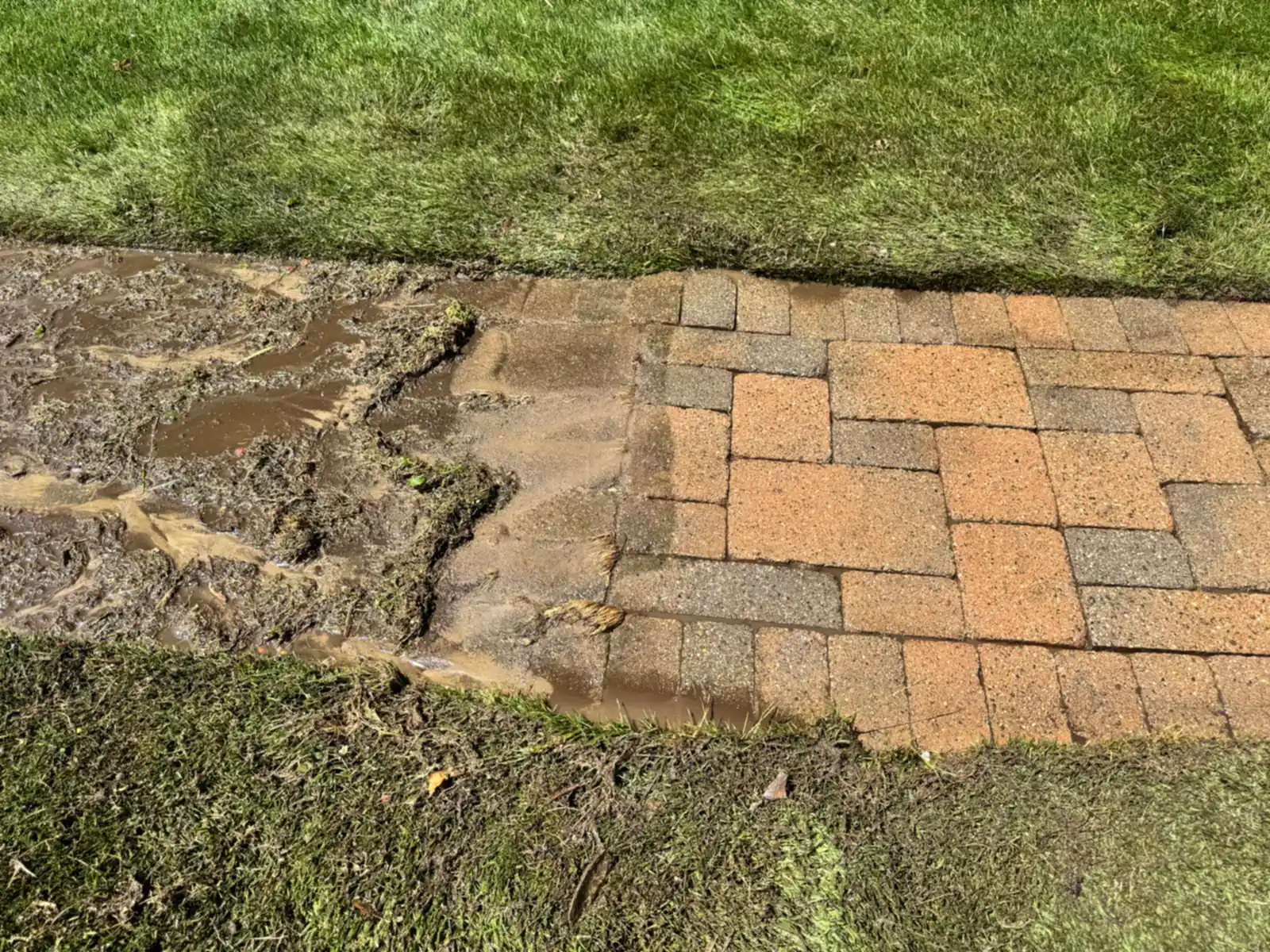
Paver walkwayOvergrown turf and soil washed off a brick paver walk
- 4.9 from 177 Google reviews
- 1,200+ projects since June 2022
- $2M insured, plus workers' comp
- 24h to a free, written, line-item quote
Paver repair & re-sanding in Fort Gratiot Township carries no travel fee, and every job gets a written, line-by-line quote within 24 hours.
| Service | Paver Repair & Re-Sanding |
|---|---|
| Area | Fort Gratiot Township, St. Clair County, Michigan |
| Price | Quoted per job, from photos or in person |
| Travel fee | None |
| Written quote | Within 24 hours |
| Call or text | (586) 284-3810 |
In Fort Gratiot Township
The township master plan's soil summary describes high water tables in two inland areas: Lando-Avoca soils in the northwest, and Wainola-Deford soils south of Keewahdin Rd and west of Pine Grove Ave, both somewhat poorly drained. Frost heave needs three things: freezing weather, soil that frost can lift, and water, which ice lenses draw up toward the freezing front. The North Dakota Geological Survey names soil texture and the height of the water table as the main reasons heave is uneven, and uneven heave is what does the damage: one corner of a patio rises while the rest stays put.
Spring is when it gets worse. Ground thaws from the top down, so meltwater sits above the still-frozen layer with nowhere to go and softens the soil, and a hard refreeze can lift it again. Frost-lifted ground can also settle back as it thaws, so a section that looked bad in March may sit closer to true by May.
Sinking is the other movement. The Concrete Masonry and Hardscapes Association (CMHA) traces depressions to a base or subgrade that settled, a base that stays saturated, bedding laid too thick, or bedding sand that washed out. Next to the beach-ridge soils, a band of Bach soils parallels the shore with a high water table and periodic flooding, and the 100-year floodplain covers a narrow strip along the shoreline itself, so a wet base is the first thing to check under a low spot near the water.
How we work
Up or Down: Reading the Section, Then Rebuilding
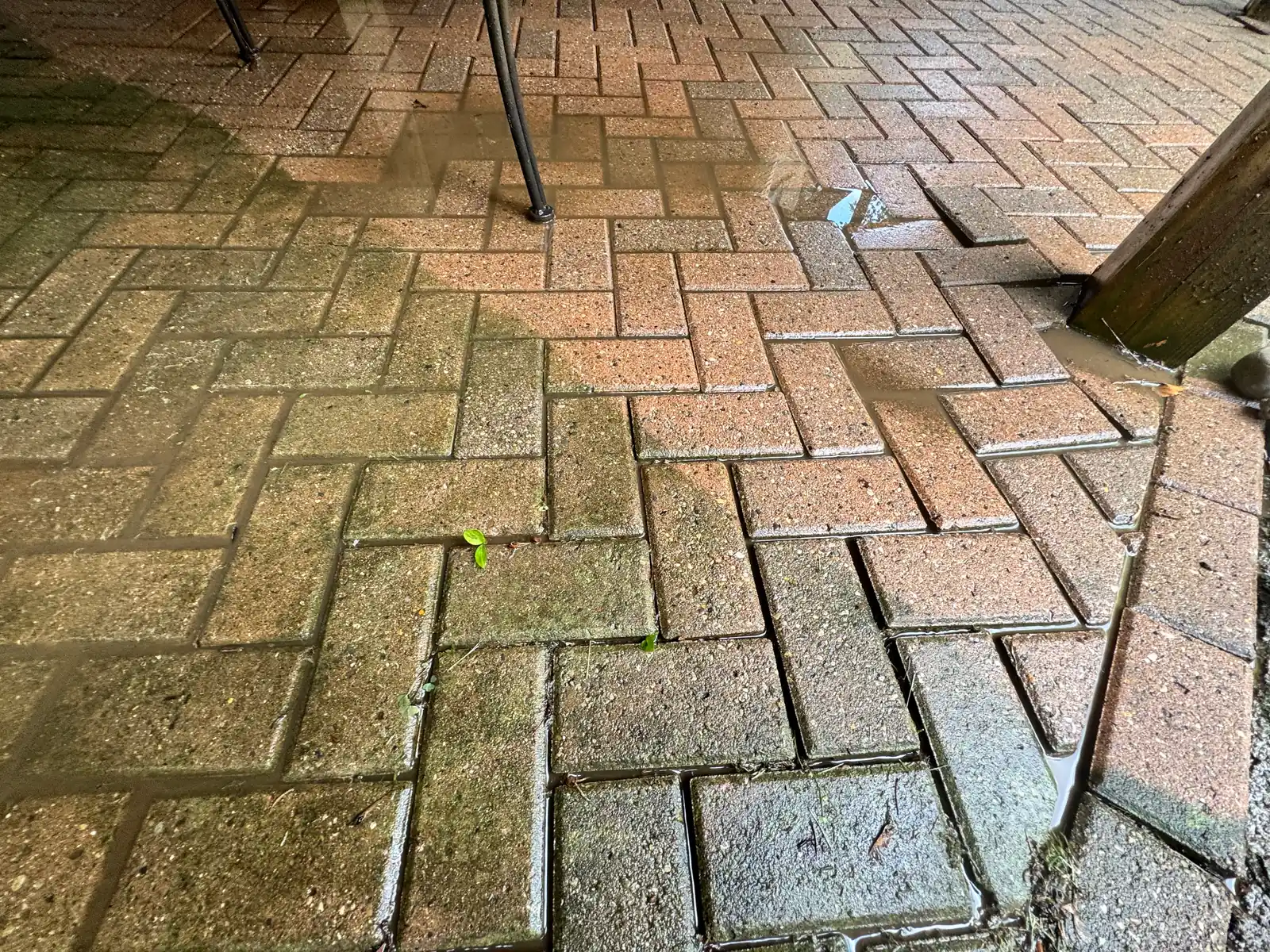
A string line across the section shows how far it moved and in which direction, because shade makes a dip look deeper than it is. For a heaved area we wait until the frost is out, lift the raised pavers, clean and stack them, bring the base back to the grade of the paving around it with compacted base material and relay the same pavers in their pattern. A sunken area starts with finding the layer that dropped: a soft or low base is dug out and built back up with compacted base material, and wet or washed-out bedding is replaced with about an inch of fresh concrete sand. Either way the relaid pavers start slightly high, take at least two passes of a plate compactor and get polymeric sand to full depth.
Promises a Reset Cannot Keep
The first mistake is claiming a reset ends frost heave. Releveling puts the paving back on the same ground, and CMHA's remedy for frost heave is a frost-resistant subbase, a larger job than a reset, so a section reset on the same ground can lift again. The second is base work on ground that is still frozen, which CMHA's construction guide rules out. The third is stone dust or screenings for bedding, which CMHA rules out in favor of concrete sand. Sealing a moved section does not fix it either, since sealer adds nothing to a failed base.
When to Book Paver Repair & Re-Sanding in Fort Gratiot Township
Once the frost is out, heaved and sunken sections show where they really sit; look during or after a rain to see where water stands. Repairs then run until the ground freezes again. A paver left more than 1/8 inch high is worth resetting before winter, when shovels and plows start catching edges. Joint sand is the weather-bound step: it wants dry paving and roughly 48 hours above freezing, which in late fall means watching the forecast. Check the paving again toward the end of summer.
Questions, answered
Paver Repair & Re-Sanding in Fort Gratiot Township: FAQs
Does frost heave mean the patio was built badly?
Not necessarily. CMHA names frost heave as the usual cause of heaved pavers, with unstable subgrade as a less common one. Frost heave is worst in silts, loams and very fine sands and rare in clean, drained gravel, so the soil and the water under a section matter, not only how it was built. A section whose ground settles back after the thaw may need only a careful reset.
We live in a condominium. Who arranges the repair?
Start with the association. Condominiums such as Connie Woods, Fairway Terrace and Windermere are run by co-owner associations under the Michigan Condominium Act, so check your condominium documents or ask the board who handles walks and patios before booking a repair. Once that is settled, you or the association can send photos, and the written estimate comes within 24 hours.
Why does water stand on our patio after rain?
Often because part of it has settled; CMHA notes that depressions show up as puddles after rain, and a string line confirms it. Standing water points to a base that settled or stays wet, or to bedding that washed out, and on the high-water-table soils across much of the township a wet base is worth checking first. The repair lifts the low pavers and corrects what is under them; sand spread on top changes nothing.
What does paver repair cost in Fort Gratiot Township?
Repairs have no published price; each is estimated from the work involved: the area that comes up, the base under it, the joints to clear and refill and any edge to reset. Send photos or ask for an on-site look, and the written estimate arrives within 24 hours, with no travel fee for the trip of about 50 minutes up I-94. A clean and seal over the finished repair is priced separately as paver restoration.
What Neighbors Say About Our Work
Live from our Google Business Profile — 4.9 stars across 177+ reviews, nothing filtered out.
Free estimate
Book Paver Repair & Re-Sanding in Fort Gratiot Township
Send photos of the low spot, the loose edge or the empty joints, or have us look in person. Every repair gets a written estimate within 24 hours.
- Written quoteWithin 24 hours
- Shop21366 Hall Rd,
Clinton Township - Insurance$2M + workers' comp