Paver Repair & Re-Sanding — Kimball Township, Michigan
Paver Repair & Re-Sanding in Kimball Township
When the edge of a paver patio or walk lets go, the joints along it widen and the border pavers tip or settle. In Kimball Township we repair or replace failed edge restraints, reset the edge rows, replace cracked or broken pavers, relevel sunken or heaved sections on a corrected base and re-sand joints with polymeric sand. Estimates come in writing within 24 hours of your photos or our visit.
Free written estimate within 24 hours Zero travel fees
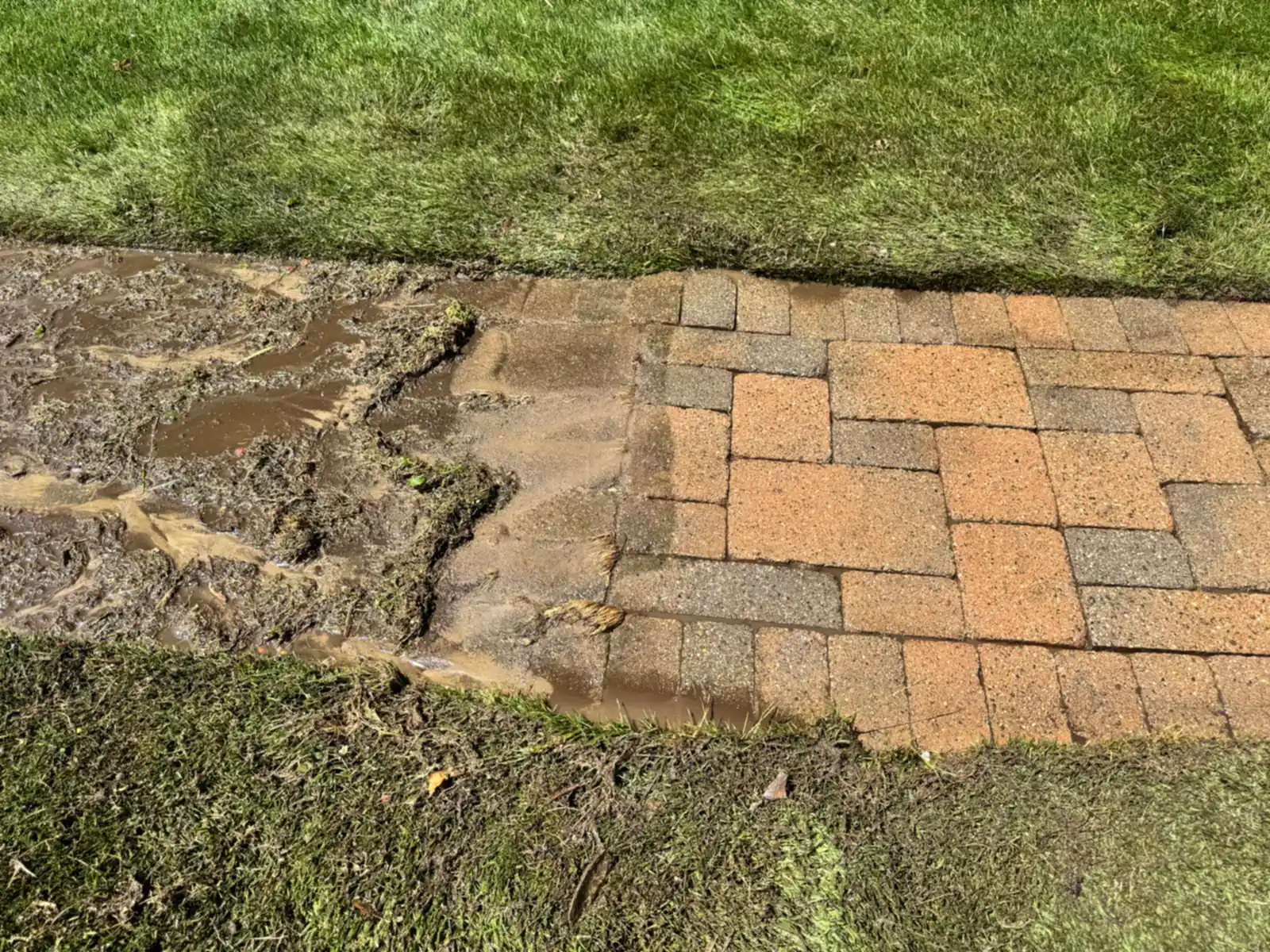
Paver walkwayOvergrown turf and soil washed off a brick paver walk
- 4.9 from 177 Google reviews
- 1,200+ projects since June 2022
- $2M insured, plus workers' comp
- 24h to a free, written, line-item quote
Paver repair & re-sanding in Kimball Township carries no travel fee, and every job gets a written, line-by-line quote within 24 hours.
| Service | Paver Repair & Re-Sanding |
|---|---|
| Area | Kimball Township, St. Clair County, Michigan |
| Price | Quoted per job, from photos or in person |
| Travel fee | None |
| Written quote | Within 24 hours |
| Call or text | (586) 284-3810 |
In Kimball Township
Kimball Township's 3,962 homes are spread over 37 square miles, set along county roads such as Wadhams Rd, Griswold Rd and Smiths Creek Rd rather than in tight subdivision grids. Where a patio or walk ends at lawn or a planting bed, its outer row has nothing beside it to push against except the restraint. The Concrete Masonry and Hardscapes Association (CMHA) calls for a restraint around the full perimeter of a paver surface and wherever it meets another material, because the restraint keeps the pavers tight and stops them spreading under traffic and freeze-thaw.
Failure has a look. CMHA describes joints that widen near the edge, border pavers that rotate or settle and sand escaping, most of it within a foot or two of the perimeter. Some edging was never up to the job: CMHA rules out flat landscape bed edging, soil backfill and any restraint set on top of the bedding sand, and it advises against timber because it warps and rots. It wants spikes driven into the base, never into soil, and the base carried past the restraint by at least the restraint's own thickness.
Broken pavers deserve the same careful reading. CMHA says tight hairline cracks generally don't affect performance, while damage can be a sign of weak support underneath, so a cluster of broken units gets the base checked before replacements go in. Lots along the Pine River, Big Creek or Smiths Creek, or beside one of the county drains, add water to the picture, and CMHA names a saturated base as one reason pavers settle.
How we work
Rebuilding an Edge From the Base Out
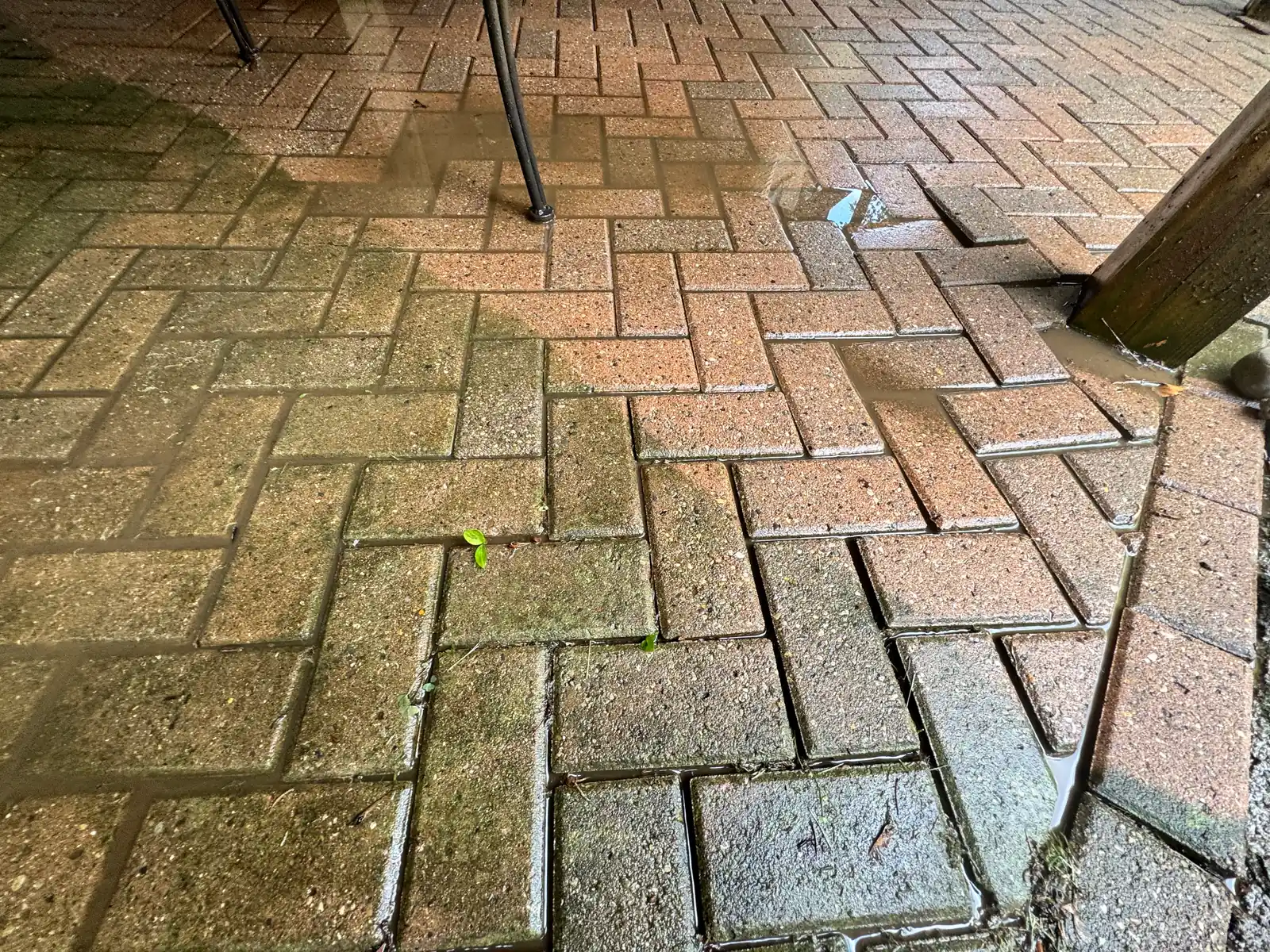
We start at the failed stretch and lift the border pavers that have tipped or drifted, plus enough of the field behind them to reach paving that sits true, cleaning and stacking each one in order. The base is checked, and where it is low, or stops short of where the new restraint will sit, it is rebuilt with compacted base material that reaches beyond the restraint. The restraint goes in as one of the residential types CMHA lists, such as plastic edging made for pavers, aluminum or spiked precast concrete, anchored into the base. Cracked or broken units are swapped out, with replacements scattered rather than grouped. The rows are relaid, compacted along with the field and finished with polymeric sand in the joints.
Where Edge and Patch Repairs Come Apart
Driving the old edging's spikes back into topsoil repeats the original mistake, because CMHA wants them in the base, never the soil. Replacing rotted timber or bed edging with more of the same repeats an edging CMHA rules out or advises against. A troweled concrete bead along the edge appears in CMHA's guidance only for places where the ground doesn't freeze. Pressing tipped border pavers back down without rebuilding the base under them leaves the cause in place. And grouping every new paver in one patch makes the repair stand out, since pavers in service weather to a different color than new ones.
When to Book Paver Repair & Re-Sanding in Kimball Township
Edge and base work can go ahead whenever the ground is not frozen. Frost-lifted ground can sink back as it warms, so an edge that came up during the winter is assessed once the thaw is complete. Polymeric sand needs dry pavers and about 48 hours above freezing, so in late fall the sand goes in on the forecast rather than the calendar. Each spring, check the edges in or right after a rain, when escaping sand and water standing at the border show most clearly, and look again as summer ends.
Questions, answered
Paver Repair & Re-Sanding in Kimball Township: FAQs
Will a replacement paver match the ones around it?
Not exactly, and we don't promise it. Traffic and weather change the surface and color of pavers in service, so a new paver, or a spare kept since the patio went in, looks different from its weathered neighbors. Some colors are discontinued, too. Wherever originals come up whole, we reset them, and new units are scattered among them, which CMHA says reduces how much the color difference shows.
Do a few cracked pavers mean something is wrong underneath?
Not always. CMHA says tight hairline cracks generally leave a paver working fine. Pavers broken through, or cracks gathered in one spot, can point to weak support, so the base under that spot is checked before new pavers go in. CMHA also advises replacing missing pavers promptly, then compacting the patch, refilling the joint sand and compacting again.
Our walk meets a gravel or asphalt drive. Does that seam need a restraint?
Yes. CMHA calls for a restraint wherever pavers meet a different material, not only around the outside. Without one, the pavers along the seam can spread, open their joints and settle. Poured concrete curbs, precast concrete or cut stone, aluminum and plastic edging made for pavers are all residential options, while steel suits only rigid bases.
How is paver repair priced in Kimball Township?
By the work, with no set rate: the length of edge and restraint, the number of pavers lifted, the base work and the joint sand to clear and replace. A photo from a step back plus close-ups of the worst spots is a good start, or we look in person. Expect the written estimate within 24 hours, with nothing added for the drive of about 45 minutes. A clean and seal afterward is quoted as paver restoration.
What Neighbors Say About Our Work
Live from our Google Business Profile — 4.9 stars across 177+ reviews, nothing filtered out.
Free estimate
Book Paver Repair & Re-Sanding in Kimball Township
Send photos of the low spot, the loose edge or the empty joints, or have us look in person. Every repair gets a written estimate within 24 hours.
- Written quoteWithin 24 hours
- Shop21366 Hall Rd,
Clinton Township - Insurance$2M + workers' comp