
Hood Vent Cleaning in Macomb & Oakland Counties, Michigan
Hood Vent Cleaning That Keeps the Fire Marshal Bored
Grease in an exhaust system is fuel above an open flame — which is why fire code sets the cleaning schedule, insurers ask for the paperwork, and smart kitchens put both on autopilot. We degrease hoods, filters, and accessible duct and fan surfaces after close, and leave the documentation your file needs.
The One Cleaning Job Where the Stakes Are Written in Code
Kitchen exhaust cleaning isn't cosmetic work. NFPA 96 is the fire-protection standard nearly every Michigan municipality enforces, and it sets cleaning frequencies for commercial cooking exhaust based on volume: monthly for solid-fuel cooking, quarterly for high-volume and 24-hour kitchens, semi-annually for moderate volume, and annually for low volume. Miss the cadence and the consequences arrive in order: a failed health or fire inspection, then an insurance carrier asking for service records you don't have, and finally a flue fire feeding on exactly the grease that should have been removed. That fire is the reason the standard exists.
We bring the same hot-water equipment, degreasing chemistry, and after-close scheduling that already serves our restaurant washing clients across Macomb and Oakland County, applied to the system above the line: hood interiors and exteriors, grease filters, accessible plenum and duct surfaces, and fan units. Work happens after your kitchen closes, protective sheeting keeps the line and equipment clean, and you open the next morning with a degreased system and dated documentation for the file.
What a Service Visit Covers
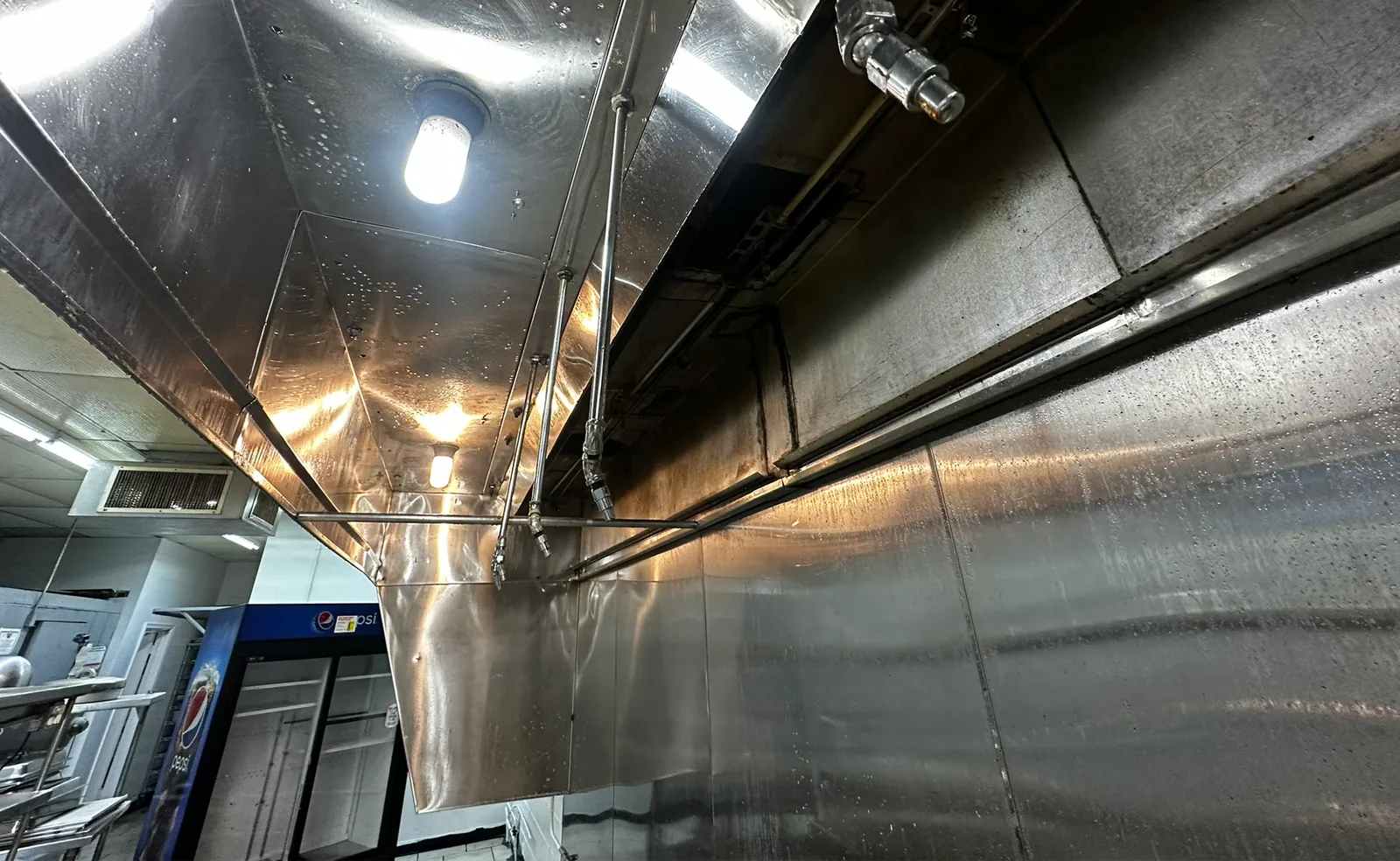
The visible stainless is the smallest part of the job. A full service works the grease path end to end: hood canopy inside and out, degreased to bare metal; baffle filters pulled and hot-tank cleaned or swapped per your preference; the plenum and accessible ductwork scraped and washed where buildup accumulates fastest; and the exhaust fan — blades, housing, and the rooftop grease containment that quietly overflows onto membranes and voids roof warranties when nobody checks it. Adjacent wall and equipment surfaces get wiped down, and everything is photographed before and after.
The Paper Trail Is Half the Product
Inspectors and insurance carriers don't take a shiny hood as evidence — they take records. Every service closes with dated before-and-after photos and a written service record naming what was cleaned and when, ready for the binder your fire marshal or adjuster asks for. If you've ever scrambled to reconstruct a cleaning history after an inspector's visit, this is the part you'll appreciate most.
Scheduled So You Never Think About It
Exhaust cleaning is calendar work, so we run it on standing schedules matched to your cooking volume and to the quarterly-or-better cadence the code expects. Where it makes sense, it is bundled with the exterior washing, dumpster pad care, and grease-pad concrete work we already run for restaurant clients on overnight routes. You deal with one vendor, one invoice and one standard, and no cleaning cycle gets missed.
Hood Vent Cleaning FAQs
How often does a restaurant hood need professional cleaning?
NFPA 96 sets the schedule by cooking volume: monthly for solid-fuel cooking, quarterly for high-volume operations, semi-annual for moderate kitchens, and annual for low-volume sites like churches and seasonal camps. Your local fire authority enforces some version of this nearly everywhere in Michigan — we'll recommend the cadence that fits your line and put it on a standing schedule.
Do you clean during business hours?
No — exhaust cleaning is after-close work by nature. Crews arrive when the kitchen shuts down, sheet the line and equipment, work the system, and are gone before prep starts. It's the same overnight discipline our commercial washing routes already run for restaurants and retail across both counties.
What documentation do we get for inspectors and insurance?
A dated written service record of what was cleaned, plus before-and-after photos of the hood, filters, accessible duct surfaces, and fan. That package is what fire inspectors and insurance carriers ask for — a clean system with no paper trail protects you exactly as much as no cleaning at all in their eyes.
Can you handle the rooftop fan and grease containment too?
Yes — the fan and its grease containment are part of a complete service, and they're the components most often left out of a hood cleaning. Overflowing rooftop containment quietly destroys roof membrane and creates exactly the fire-path condition the code targets, so we photograph and service it on every visit.
Do you serve restaurants outside Macomb County?
Both counties, same terms — our overnight commercial routes already cover Macomb and Oakland with zero travel fees, and hood service slots into them. Multi-location operators get one schedule, one standard, and one invoice across every store.
What Clients Say About This Work
Live from our Google Business Profile — 4.9 stars across 179+ reviews, nothing filtered out.
Services that pair well with hood vent cleaning
Commercial Power Washing
The crew national brands trust: storefronts, fleets, parking structures, and multi-site contracts handled with commercial-grade equipment and zero disruption.
Explore Commercial Services →Concrete Cleaning
Surface-cleaner technology and hot water restore concrete to its original color — no zebra stripes, no etching, no missed edges.
Explore Concrete Cleaning →Oil Stain Removal
That black blotch where the car parks doesn't have to be permanent. Hot water, degreasers, and poultice treatments pull oil out of the pores.
Explore Oil Stain Removal →Hood Vent Cleaning across Macomb, Oakland & St. Clair Counties
We bring hood vent cleaning to all 87 communities we serve — zero travel fees in all three counties. Find your city below for local details, or call and we'll confirm your address on the spot.
Macomb County & the Pointes
Oakland County
Troy & the Northeast
Woodward Corridor & South Oakland
Bloomfield & the Lake Belt
West Oakland & the Lakes Area
The Rural North
St. Clair County
Port Huron & the Blue Water Area
The St. Clair River Towns
Inland & Anchor Bay Side
Put Your Exhaust System on a Schedule
Tell us your cooking volume and hours, and we'll quote a standing cadence with documentation included — first service scheduled after close, any night but Sunday.
Get My Free Estimate or call (586) 284-3810 — Mon–Sat, 8am–10pm