Paver Repair & Re-Sanding — St. Clair Shores, Michigan
Paver Repair & Re-Sanding in St. Clair Shores
On flat ground that drains slowly, a sunken paver shows itself as a puddle that stays after the rain stops. In St. Clair Shores we lift sunken or heaved pavers, correct the base under them and reset them, replace cracked units, restore failed edges and re-sand the joints with polymeric sand. Every repair is quoted from your photos or an in-person look, with the written estimate inside 24 hours.
Free written estimate within 24 hours Zero travel fees
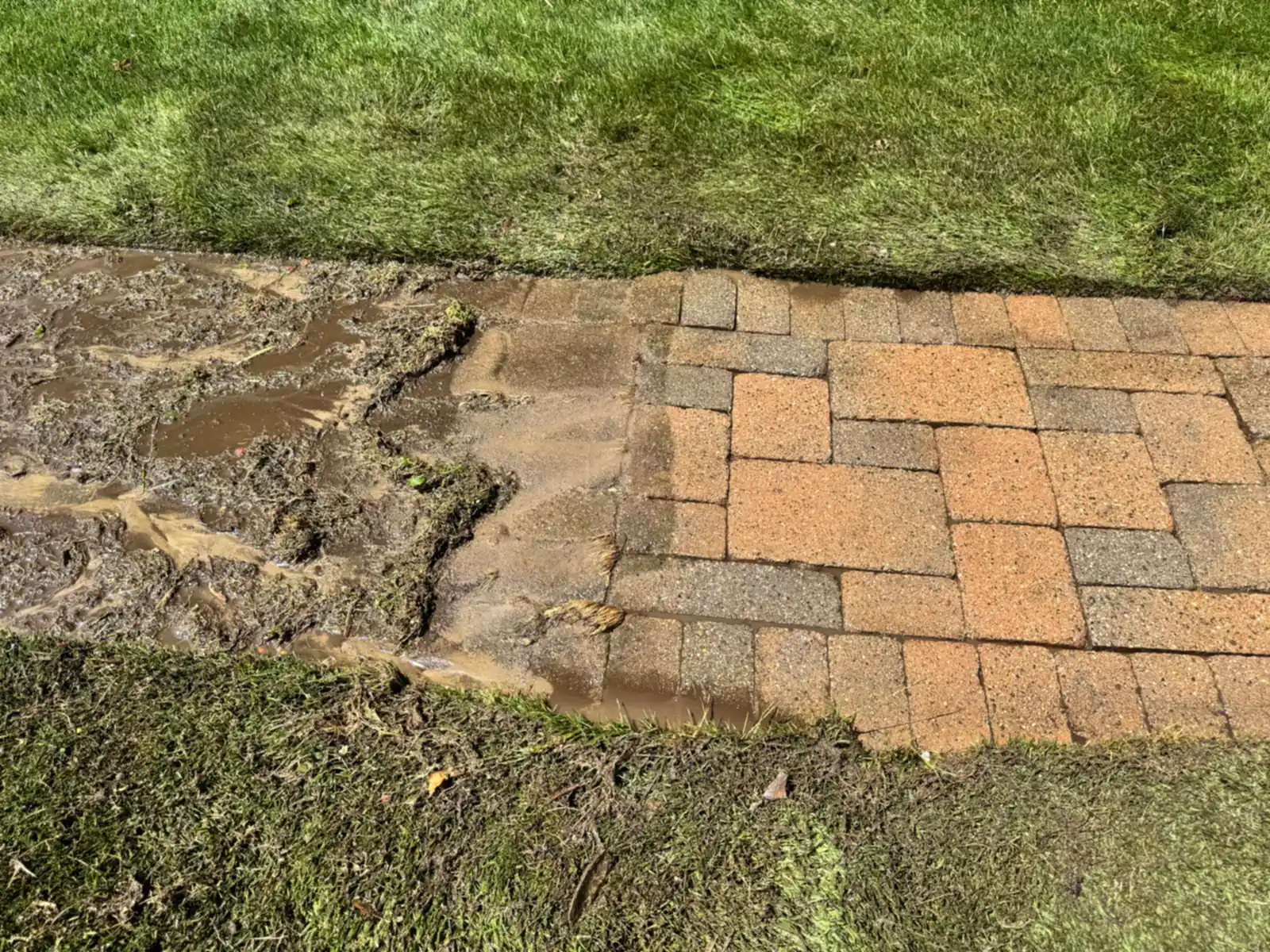
Paver walkwayOvergrown turf and soil washed off a brick paver walk
- 4.9 from 177 Google reviews
- 1,200+ projects since June 2022
- $2M insured, plus workers' comp
- 24h to a free, written, line-item quote
Paver repair & re-sanding in St. Clair Shores carries no travel fee, and every job gets a written, line-by-line quote within 24 hours.
| Service | Paver Repair & Re-Sanding |
|---|---|
| Area | St. Clair Shores, Macomb County, Michigan |
| Price | Quoted per job, from photos or in person |
| Travel fee | None |
| Written quote | Within 24 hours |
| Call or text | (586) 284-3810 |
In St. Clair Shores
The postwar grid between Harper Ave and Jefferson Ave and the canal streets off the Nautical Mile, between 9 Mile and 10 Mile, sit on a flat lake plain that drains slowly. Paving there has little slope to carry water away, so a section that drops collects it. The Concrete Masonry and Hardscapes Association (CMHA) lists puddles after rain among the things to check, and suggests confirming a dip with a string line rather than by eye.
Why a section dropped decides the repair. CMHA traces depressions to a base or subgrade that settled, often from poor compaction when it was built; a base that stays saturated; bedding sand laid too thick; or bedding sand that washed out from below. Each cause gets a different fix, and none of those fixes is more sand on top.
The canal plats add water from the lake side. East-wind storms push Lake St. Clair against and over the seawalls, and a patio between the house and the wall can take that water down through its joints into the bedding. A low spot along the seawall raises one question before anything is reset: did water wash the bedding out, or is the wall letting soil through? The second is seawall work, which we do not do, and the estimate says so.
The third weak point is the seam where pavers meet older concrete. Where a paver walk or patio was added beside an original poured drive or walk, CMHA calls for an edge restraint at that change of material, just as it does around the perimeter. Without one the field can spread: joints open along the seam, and edge pavers tip or settle, mostly in the outer foot or two.
How we work
Dig Down to the Layer That Failed
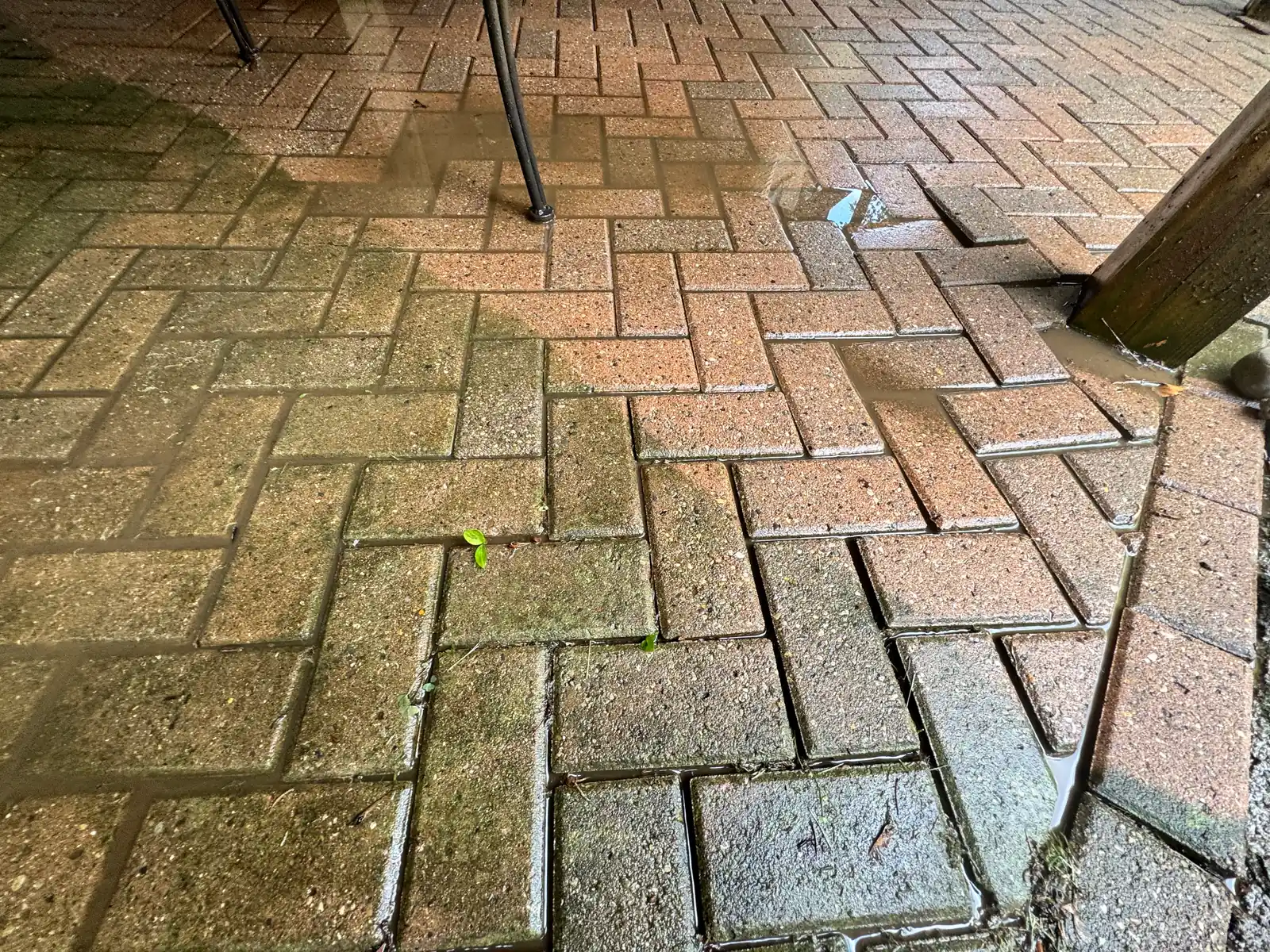
We measure the dip, then open it up past the low area onto pavers that sit true. Each paver is lifted, cleaned and stacked so it can go back in its own spot. Then we read the layers. Washed-out or overly thick bedding is scraped away, and a base that settled is built back up with compacted base material. Fresh bedding goes down about an inch deep in concrete sand, never stone dust or screenings, and is screeded flat. The pavers are relaid and compacted at least twice, overlapping the untouched paving, and finish slightly proud of their neighbors to allow for further settling. Where a restraint at an edge or seam has failed or is missing, it is repaired or replaced before the field is closed up, and polymeric sand fills the joints last.
Shortcuts That Bring the Dip Back
The tempting shortcut is packing extra bedding sand under a sunken section. CMHA is clear that bedding cannot make up for a low base, and the unevenness shows through again. Stone dust used as bedding is another, and CMHA rules it out. Sealing a patio that has sunk does nothing for the base under it, which is why SEK's prep guidance puts every repair ahead of any sealer. Building on frozen ground is out as well, so winter-damaged sections wait for the thaw. For the cleaning side of a canal lot, see our post on canal-home upkeep.
When to Book Paver Repair & Re-Sanding in St. Clair Shores
Pavers that rose over the winter are judged after the thaw. Frost heave needs freezing weather, soil that wicks water and the water itself, and the spring thaw works from the top down, holding meltwater in the soil above the frozen layer; ground that heaved can settle back once it thaws. Repairs then run from spring into fall, with polymeric sand waiting for dry paving and two frost-free days after it goes in. A paver left more than 1/8 inch high is worth resetting before the first snow, while the ground can still be worked.
Questions, answered
Paver Repair & Re-Sanding in St. Clair Shores: FAQs
Is a puddle on our patio worth fixing?
If a string line confirms a dip, yes. A low spot that holds water keeps the base under it wet, and a saturated base is one of the causes CMHA lists for pavers sinking. Fixing it means correcting the layer that dropped, not spreading sand over the surface.
Our pavers heaved this winter. Will resetting them stop it from happening again?
A reset cannot promise that. It relevels the surface on the same ground, and frost heave comes from freezing weather, frost-susceptible soil and water. CMHA's remedy for heave is a frost-resistant subbase, a bigger job than a reset. We look at the section once the ground has thawed, and the estimate says which of the two it needs.
We want the patio restored too. What goes first?
The repairs. Sunken pavers, broken units and loose edges are fixed, and then the restoration cleaning, polymeric sand and sealer go over a sound surface. The label on the joint sand sets how long the sealer waits. Once we seal, keep foot traffic and furniture off for 48 hours and vehicles off for 72, longer if the label or cold, damp weather calls for it.
Can you replace a few cracked pavers so they blend in?
We replace them, but blending has limits. Pavers that have weathered on a patio look different from new ones, or from spares kept in a garage, so a replacement can stand out. Scattering replacements instead of grouping them softens that. Tight hairline cracks generally leave a paver working fine, so not every crack needs one.
What Neighbors Say About Our Work
Live from our Google Business Profile — 4.9 stars across 177+ reviews, nothing filtered out.
Free estimate
Book Paver Repair & Re-Sanding in St. Clair Shores
Send photos of the low spot, the loose edge or the empty joints, or have us look in person. Every repair gets a written estimate within 24 hours.
- Written quoteWithin 24 hours
- Shop21366 Hall Rd,
Clinton Township - Insurance$2M + workers' comp