Paver Repair & Re-Sanding — Rose Township, Michigan
Paver Repair & Re-Sanding in Rose Township
On rural acreage served by gravel roads, a paver walk or patio can end against gravel, lawn or a field instead of a curb. We reset spreading edges with a proper restraint, relevel sunken areas, replace broken pavers and re-sand washed-out or weedy joints.
Free written estimate within 24 hours Zero travel fees
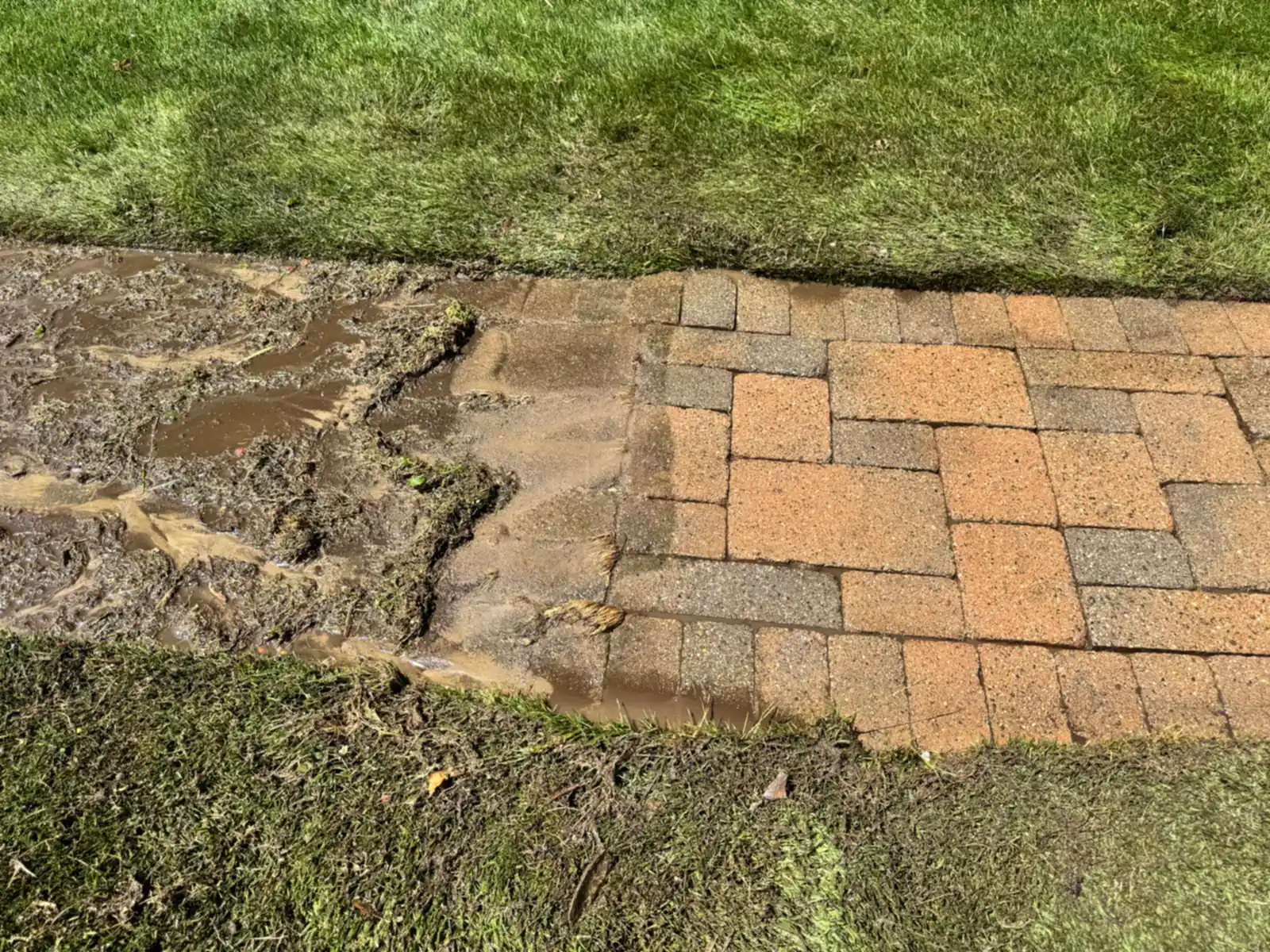
Paver walkwayOvergrown turf and soil washed off a brick paver walk
- 4.9 from 177 Google reviews
- 1,200+ projects since June 2022
- $2M insured, plus workers' comp
- 24h to a free, written, line-item quote
Paver repair & re-sanding in Rose Township carries no travel fee, and every job gets a written, line-by-line quote within 24 hours.
| Service | Paver Repair & Re-Sanding |
|---|---|
| Area | Rose Township, Oakland County, Michigan |
| Price | Quoted per job, from photos or in person |
| Travel fee | None |
| Written quote | Within 24 hours |
| Call or text | (586) 284-3810 |
In Rose Township
Rose Township is the county's rural northwest: acreage off Buckhorn Lake Rd, Fish Lake Rd and Rose Center Rd, gravel side roads, wooded ridges between open fields, and small kettle lakes and wetlands throughout. Where a property here has pavers, the open edges deserve the first look. The Concrete Masonry and Hardscapes Association (CMHA) requires an edge restraint along the perimeter of the paving, and that includes the line where pavers meet a gravel drive.
When an edge lets go, CMHA describes what follows: joints widen near the perimeter, the outer pavers rotate or settle, most visibly within a foot or two of the edge, and joint and bedding sand start to escape. Joint sand is what lets each paver pass load to the next, so as it leaves, the field behind the edge can loosen too.
The land adds two more pressures. On open-field lots, wind strips sand from the joints and drops seed into them, and weeds grow from that windblown seed rather than up through the base. Near the kettle lakes and wetlands, wet ground can mean a saturated base, one of CMHA's causes of sunken pavers, and frost heave, which needs water along with freezing and frost-susceptible soil. On a rural lot, that makes the edge the first thing a paver repair checks.
How we work
Fixing an Open Edge on a Rural Lot
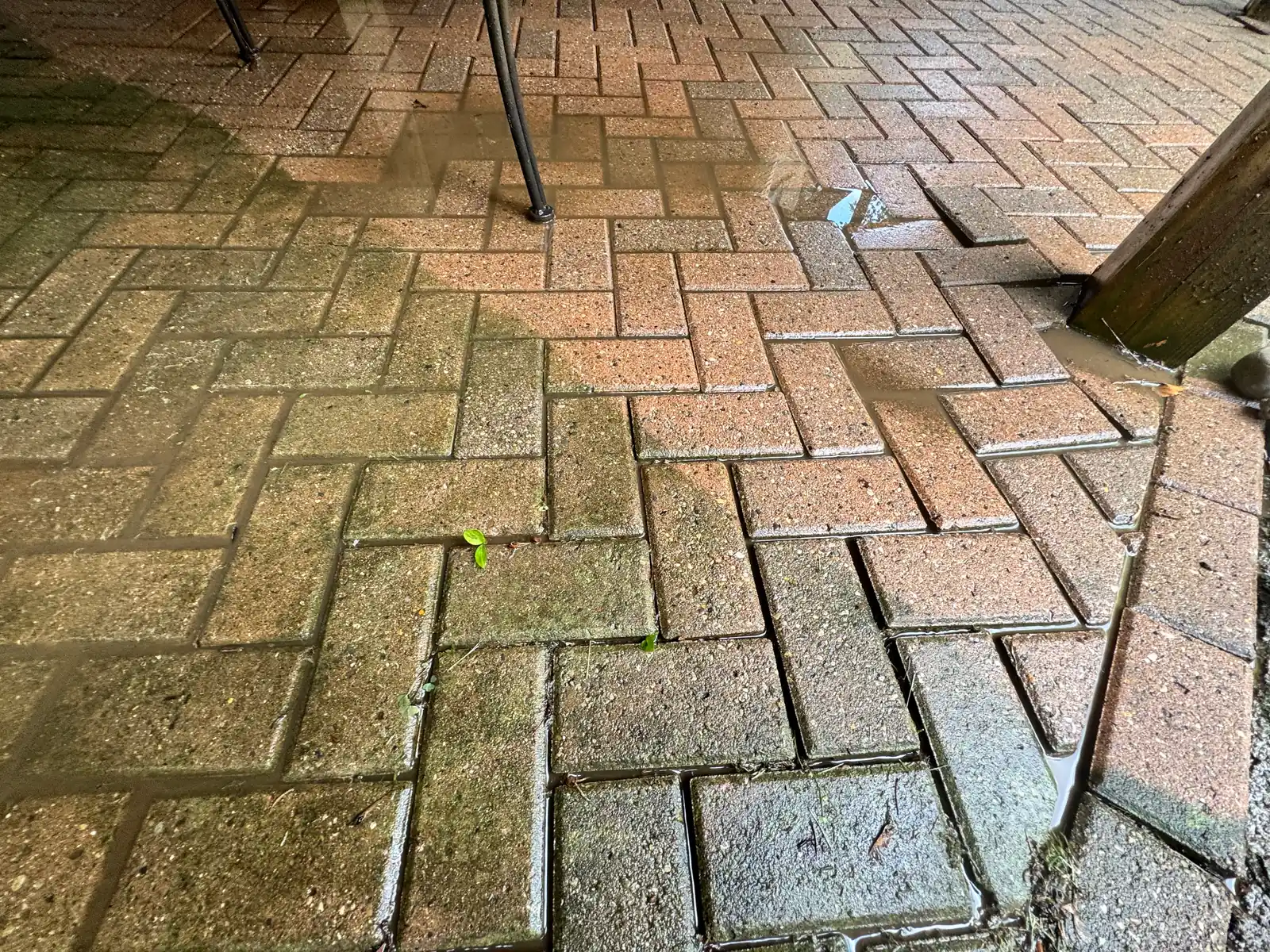
Work starts at the failed edge. The outer rows come up with an extractor and are stacked in order, which shows what was holding them: sometimes only soil, sometimes edging set on the bedding sand or spiked into dirt. Where the base stops short, it is extended with compacted base material so it runs past the new restraint by at least the base's own thickness. The new restraint is a type CMHA accepts for residential paving, such as plastic or aluminum edging made for pavers, and its spikes go into the base, never the soil.
Sunken areas inside the edge are opened the same way and a low base built back with compacted material rather than extra bedding. Fresh concrete sand bedding is screeded, the pavers are relaid along string lines 1/16 to 1/8 inch above their neighbors, and the compactor crosses them at least twice. Cracked or broken pavers are replaced in the same pass.
Last, the joints are cleaned of old sand, seedlings and debris to 1½ inches deep, and once everything is dry they take polymeric sand, compacted, refilled and compacted again, finished 1/8 inch below the paver tops.
What Won't Hold at an Open Edge
Banking dirt against tipped edge pavers is not a fix: CMHA says soil backfill is never a suitable restraint. Timber warps and eventually rots, and landscape bed edging gives too little lateral support. Even edging made for pavers won't hold when its spikes go into soil instead of compacted base. Brushing a skim of polymeric sand over old joint sand after pulling weeds leaves a layer that peels and flakes. A narrow pressure-washer tip used to blast seedlings out takes the joint sand with them and can undermine the pavers; CMHA calls for a wide, low-angle spray. Our post on weeds in polymeric sand covers why joints sprout.
When to Book Paver Repair & Re-Sanding in Rose Township
CMHA suggests walking pavers in spring during or just after a rain, when standing water marks the low spots, and again in late summer or early fall. Judge any heaving after the ground has thawed, since frost-lifted paving can settle partway back. Base work needs unfrozen ground; polymeric sand needs dry pavers and about 48 hours above freezing. A paver more than 1/8 inch proud should be reset before snow season, because shovels and plow blades catch it; until then, shovel diagonally across the pattern. Our ice melt guide covers deicers on pavers.
Questions, answered
Paver Repair & Re-Sanding in Rose Township: FAQs
The pavers along our gravel drive keep drifting outward. Why?
That points to an edge without a working restraint. Where pavers meet gravel, CMHA still requires one, and soil backfill does not count. Without it, traffic and freeze-thaw spread the outer rows, the joints open, and sand runs out. The repair is a restraint on a base that extends past it, the pavers beside it reset, then compaction, fresh joint sand and compaction again.
Weeds come back in our patio joints every year. Is the base the problem?
Usually not. CMHA traces joint weeds to windblown seed lodged in the joints, not to growth from the base, and joints low on sand or full of debris hold more of it. Clearing them to full depth and refilling with polymeric sand, which CMHA lists as a help against weeds and ants, gives seed less room, though it reduces weeds rather than stopping every one.
Our cottage patio near the lake has sunk in a few spots. What causes that?
CMHA's list is short: base that settled, often from poor compaction; a base that stays saturated; bedding sand laid too thick; or bedding washed out from under the pavers. Ground beside a kettle lake or wetland can stay wet, which makes the second worth checking first. Either way the pavers come up, the layer that moved is corrected and compacted, and the same pavers go back level.
Is there a travel charge for a paver estimate out in Rose Township?
No. Rose Township is about 55 minutes from our Clinton Township shop and there is no travel fee, the same as in Holly or Highland Township. Paver repair has no published price, so send photos or ask for a visit, and a written estimate comes back within 24 hours with each repair listed separately.
More in Rose Township
Service overviews
What Neighbors Say About Our Work
Live from our Google Business Profile — 4.9 stars across 177+ reviews, nothing filtered out.
Free estimate
Book Paver Repair & Re-Sanding in Rose Township
Send photos of the low spot, the loose edge or the empty joints, or have us look in person. Every repair gets a written estimate within 24 hours.
- Written quoteWithin 24 hours
- Shop21366 Hall Rd,
Clinton Township - Insurance$2M + workers' comp