Paver Repair & Re-Sanding — St. Clair Township, Michigan
Paver Repair & Re-Sanding in St. Clair Township
Where a paver walk or drive in St. Clair Township ends at lawn instead of a curb, that border is the first place to look. Once the restraint along it slips, joints open, the outer row tips toward the grass and sand drains out the side. We rebuild the edge, reset the pavers and refill the joints.
Free written estimate within 24 hours Zero travel fees
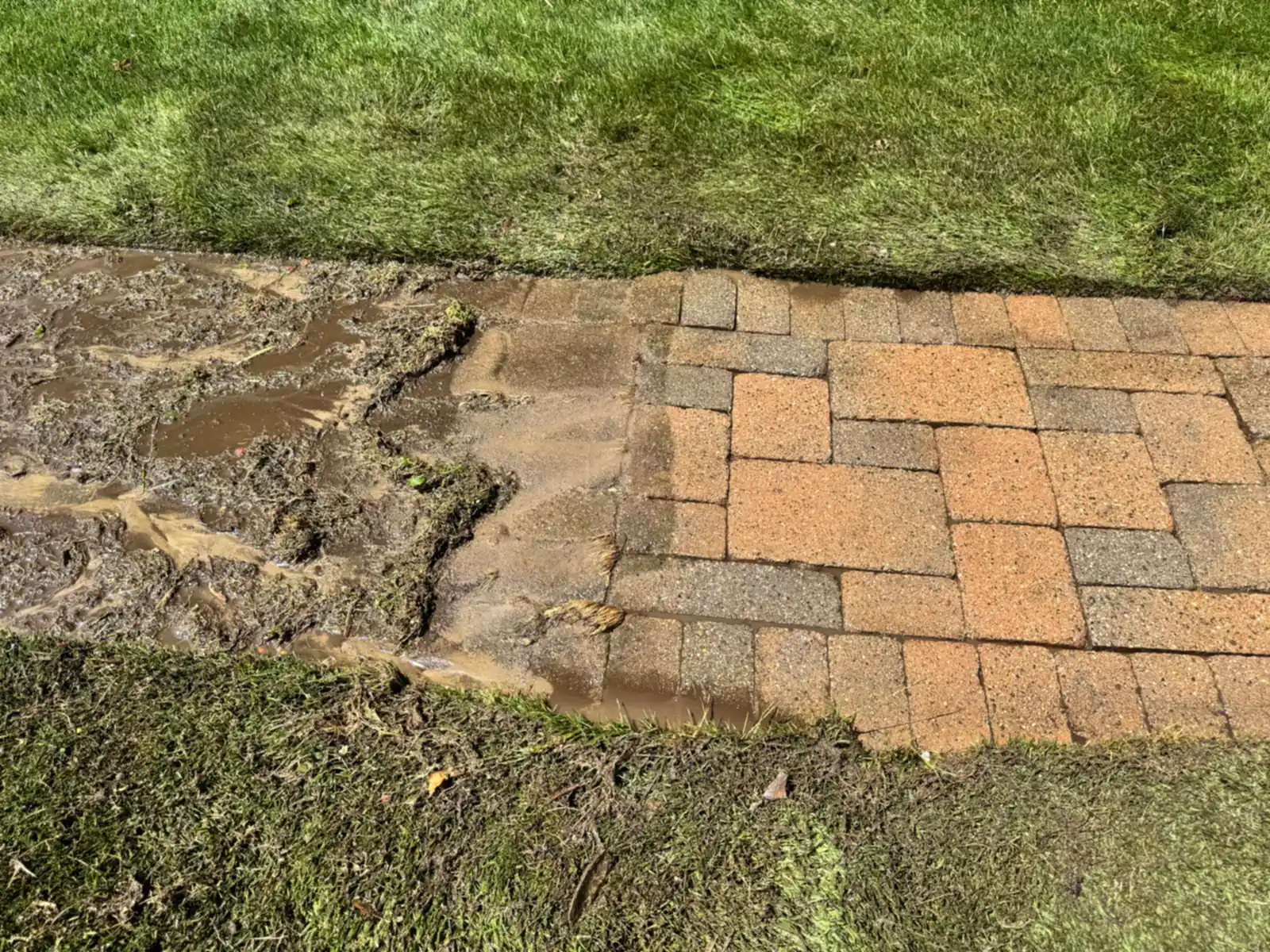
Paver walkwayOvergrown turf and soil washed off a brick paver walk
- 4.9 from 177 Google reviews
- 1,200+ projects since June 2022
- $2M insured, plus workers' comp
- 24h to a free, written, line-item quote
Paver repair & re-sanding in St. Clair Township carries no travel fee, and every job gets a written, line-by-line quote within 24 hours.
| Service | Paver Repair & Re-Sanding |
|---|---|
| Area | St. Clair Township, St. Clair County, Michigan |
| Price | Quoted per job, from photos or in person |
| Travel fee | None |
| Written quote | Within 24 hours |
| Call or text | (586) 284-3810 |
In St. Clair Township
The township has two settings. On the east side, platted neighborhoods such as River Ridge and the streets around St. Clair Golf Club sit near River Rd; across the interior, homes stand on large Rural-zoned lots along interior roads such as Yankee Rd and S. Bartlett Rd. The 1990s were the biggest building decade, with about 29% of the housing, so a patio laid when one of those houses was new has now seen about thirty winters. In either setting, a border facing open ground depends on a restraint, and CMHA's edge restraint guide calls for one along the perimeter and wherever pavers meet another material.
For homes, CMHA accepts precast concrete or cut stone, plastic edging made for pavers, aluminum, steel on rigid bases, and poured concrete curbs. It rules out flat landscape bed edging, soil backfill and any restraint set on top of the bedding sand, and does not recommend timber, which warps and rots. Spikes belong in the compacted base, never in soil, and the base has to run past the restraint by at least its own thickness. CMHA describes a troweled concrete edge only for areas where the ground does not freeze, so it is not one to count on through a Michigan winter.
Base depth matters too. CMHA's construction guide calls for at least 4 inches of base under patios and walks and 6 under driveways on well-drained soil, more in cold climates or wet soil, so a section built as a walk and later parked on can sink under the wheels. CMHA also lists a saturated base among the causes of a dip, a risk worth checking on lots near the Pine River, where FEMA maps floodplain, and beside the township's wooded wetlands.
How we work
Rebuilding the Edge Before the Joints
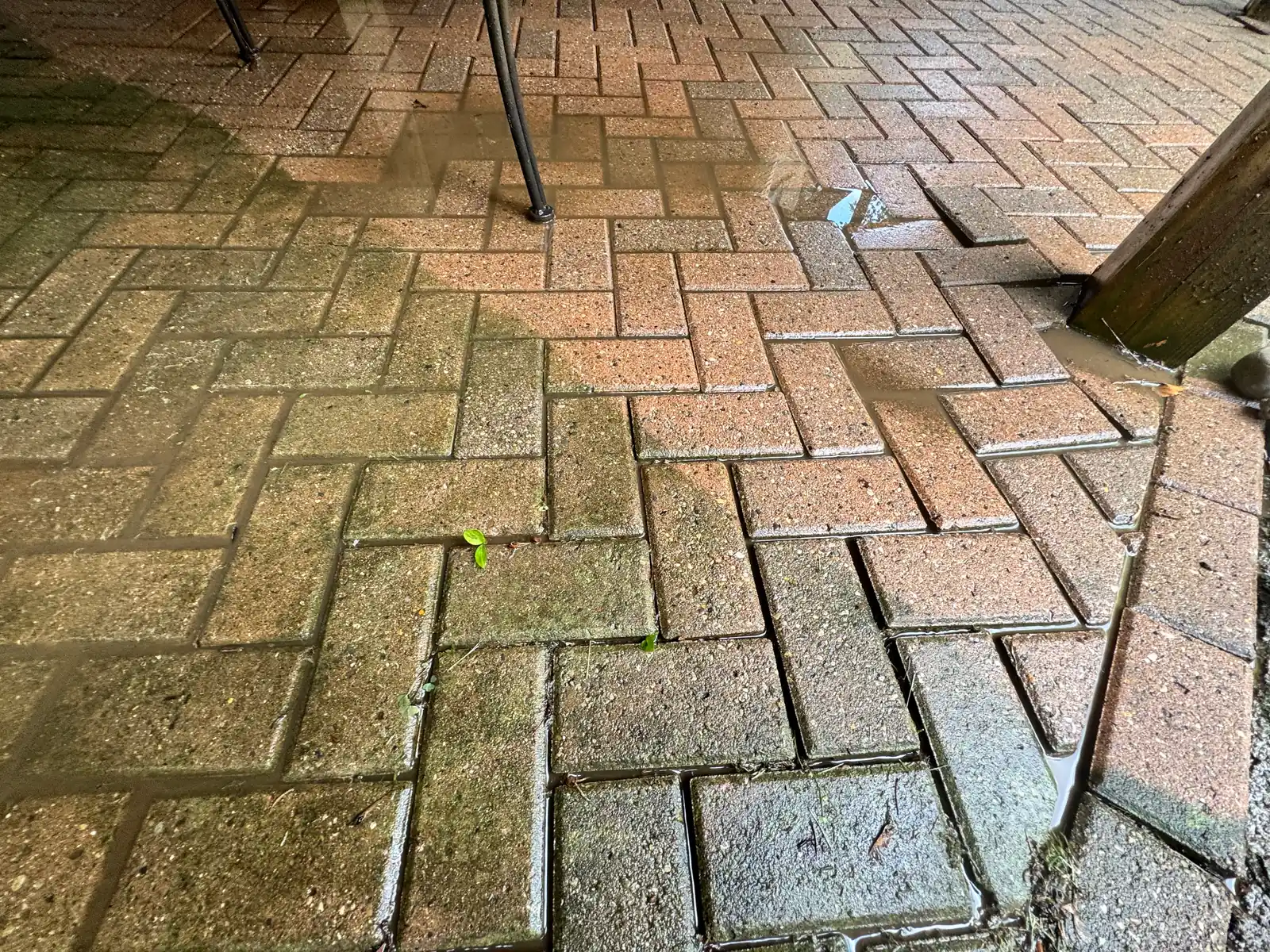
The repair begins at the border. The outer rows come up, the old edging comes out, and the base under it is checked. Where it stops short, it is extended and compacted so it reaches past the new restraint by at least the base's own thickness. The restraint sits on that base, not on the bedding, and any spikes go into the base, not the soil. Pavers that tipped or settled go back on fresh bedding in their original spots along a string line, a touch above the field, and the plate compactor makes at least two passes across them and onto the undisturbed pavers. A sunken area out in the field follows the same order: lift, compacted base material where the base is low, fresh bedding, relay, compact. Only then are the surrounding joints cleaned out at least an inch and a half deep, filled with polymeric sand, compacted, refilled and compacted again.
Edges That Slip Again
Re-spiking plastic edging into the lawn puts it back in the soil it already pulled out of. Sweeping polymeric sand in while the joints are still damp from rain lets it stick to the paver faces and dry as a haze. Topping up joints along a spreading edge loses the new sand through the same gap, and polymeric sand laid over old sand flakes off. Raising a sunken drive with extra bedding sand leaves the low base in place, and the dip shows through again where the tires run.
When to Book Paver Repair & Re-Sanding in St. Clair Township
Edge and base work needs unfrozen ground. The polymeric sand that follows asks for dry pavers, no rain coming and two days above freezing after it is swept in, plus a day's wait after any rain. CMHA's maintenance guide has owners walk the pavers each spring while it rains or just after, when puddles mark the low spots, then look again toward the end of summer. The National Weather Service marks October as the close of the growing season here, so book a fall repair early.
Questions, answered
Paver Repair & Re-Sanding in St. Clair Township: FAQs
How can I tell if our edge restraint has failed?
Look within a foot or two of the border, where CMHA says edge failure is most noticeable. Joints wider there than in the middle, outer pavers leaning or sitting low, and sand washed into the grass beside the patio all point to the edge. Press on the edging itself: plastic that lifts or shifts by hand may have been spiked into soil rather than base.
Why does the same spot on our drive keep sinking?
Something under it is still giving way: a base that settled or was never compacted enough, a base that stays wet, bedding laid too thick, or bedding that washed out. Where a section built as a walk now carries a car, a thin base is a likely suspect. Releveling corrects the base under the area, then relays and compacts the pavers; more joint sand never raises a dip.
We are on septic. Does that change the job?
Only where the water goes. Clearing old sand from the joints can involve rinse water, and that water is kept away from the drain field. Mark where the field runs in the photos you send, or point it out at the visit, since not every home in the township is on sewer.
How do we get a price for paver repair?
Send photos of the edge and any low spots, or ask for a visit, and a written estimate comes within 24 hours. Repair has no published price, because an edge rebuild, a relevel and a re-sand are different jobs. There is no travel fee from the Clinton Township shop, and cleaning and sealing can be added as paver restoration.
More in St. Clair Township
Service overviews
What Neighbors Say About Our Work
Live from our Google Business Profile — 4.9 stars across 177+ reviews, nothing filtered out.
Free estimate
Book Paver Repair & Re-Sanding in St. Clair Township
Send photos of the low spot, the loose edge or the empty joints, or have us look in person. Every repair gets a written estimate within 24 hours.
- Written quoteWithin 24 hours
- Shop21366 Hall Rd,
Clinton Township - Insurance$2M + workers' comp