Paver Repair & Re-Sanding — White Lake Township, Michigan
Paver Repair & Re-Sanding in White Lake Township
Under the heavy tree cover around White Lake Township's lakes and state land, leaf grit and windblown seed lodge in paver joints, and weeds follow. We clean those joints out to at least 1½ inches, refill them with polymeric sand, lift and reset pavers that have sunk or heaved, and replace cracked ones.
Free written estimate within 24 hours Zero travel fees
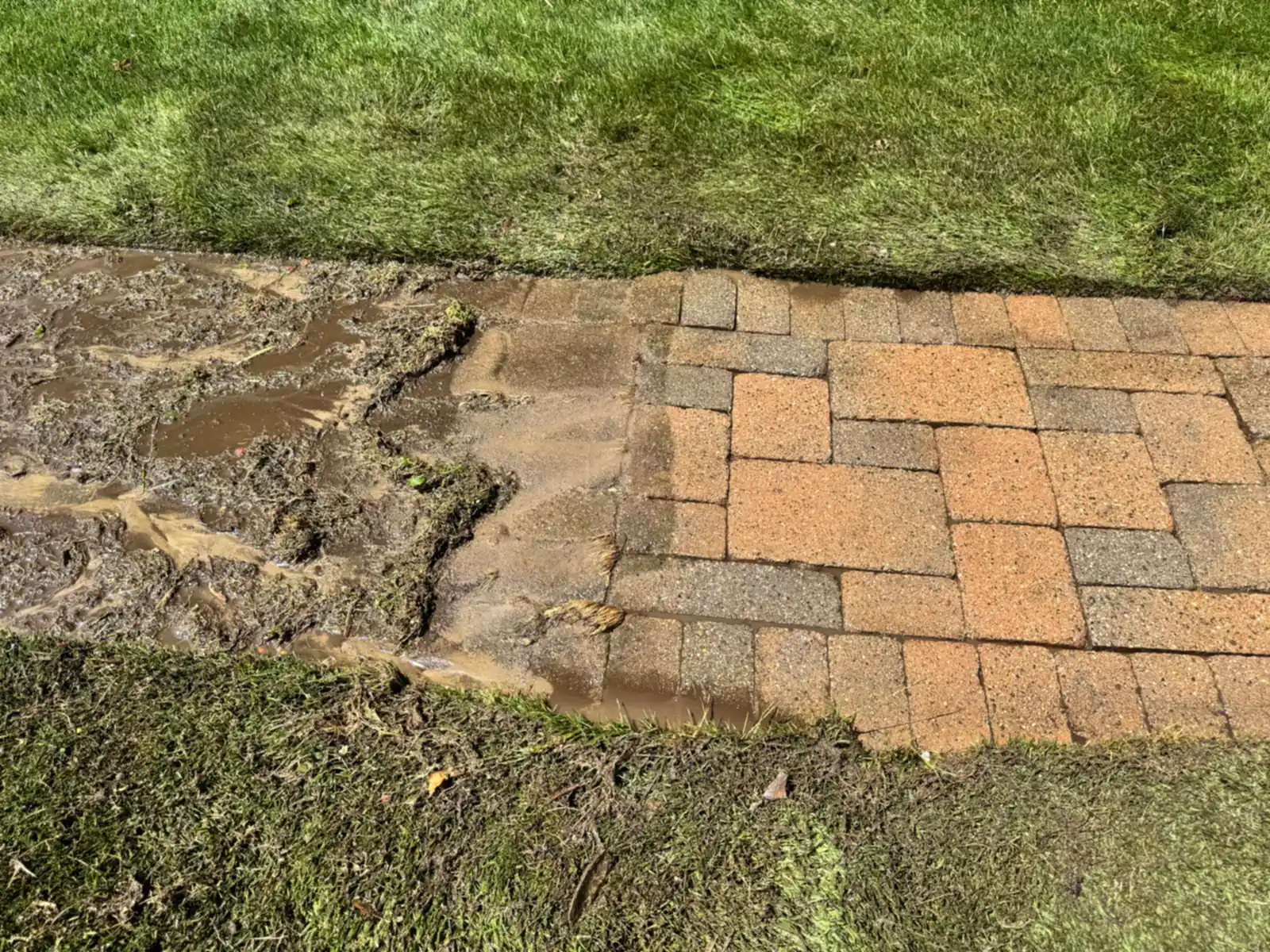
Paver walkwayOvergrown turf and soil washed off a brick paver walk
- 4.9 from 177 Google reviews
- 1,200+ projects since June 2022
- $2M insured, plus workers' comp
- 24h to a free, written, line-item quote
Paver repair & re-sanding in White Lake Township carries no travel fee, and every job gets a written, line-by-line quote within 24 hours.
| Service | Paver Repair & Re-Sanding |
|---|---|
| Area | White Lake Township, Oakland County, Michigan |
| Price | Quoted per job, from photos or in person |
| Travel fee | None |
| Written quote | Within 24 hours |
| Call or text | (586) 284-3810 |
In White Lake Township
Tree cover runs heavy around the township's 21 lakes and through the forests of Highland State Recreation Area, with Indian Springs Metropark on the north edge, so a patio on a wooded lot spends every fall under leaf drop. The Concrete Masonry & Hardscapes Association (CMHA), which publishes the paver industry's maintenance guides, says joint stabilizers such as polymeric sand guard against two things: sand carried off by flowing water, wind, tires and hard cleaning, and organic matter, seeds and insects working their way in. Its maintenance guide adds that weeds in a joint sprout from windblown seed lodged there, not from the bedding, base or soil. So weeds point to the joint, not the ground under it.
The sand under the weeds matters more. Joint sand carries load from paver to paver, and CMHA calls it essential to interlock and stiffness. It lists lost joint sand among the causes of widening joints, and as joints widen, the paver layer loses stiffness and can overstress the layers beneath it. CMHA's homeowner check: sand more than half an inch below the paver tops should be refilled.
Roots and sunken or heaved sections turn up on wooded lots as well, and each is diagnosed before anything is relaid. Cleaning and sealing belong to paver restoration; the full repair list is on the paver repair page.
How we work
From Weedy Joint to Locked Joint
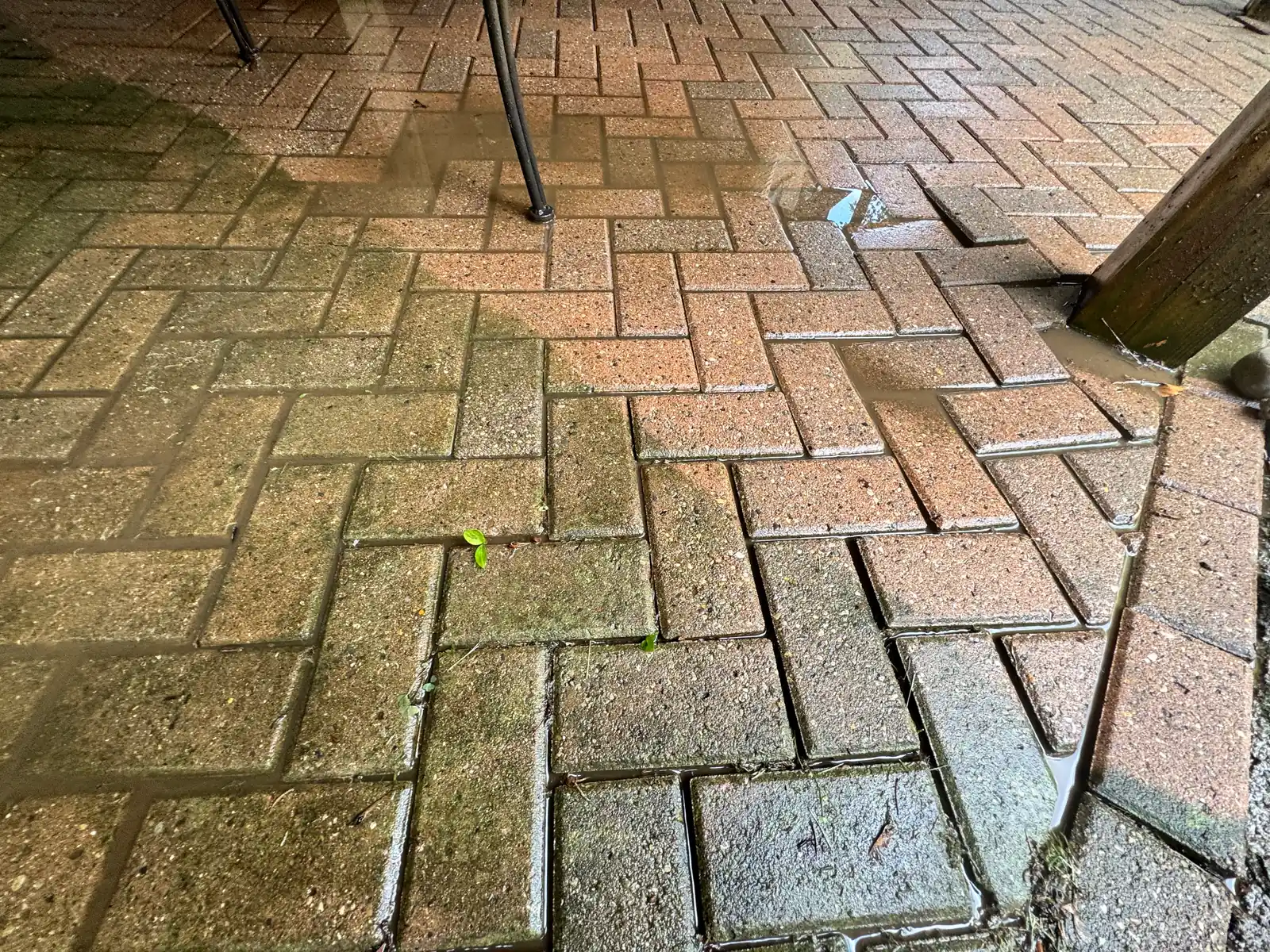
Repairs come before sand, because sand swept over a section that is still moving will not hold it. Where a section has dropped, the pavers come up and are stacked in order, the low spot is filled with compacted base material rather than extra bedding sand, fresh bedding is screeded, and the pavers are relaid on string lines and plate-compacted at least twice.
Then the joints are cleaned out to at least 1½ inches without disturbing the bedding, taking out seedlings, leaf grit and spent sand together. Tops, sides and joints must dry completely; one sand maker's rule is 24 hours after cleaning or rain. Polymeric sand is swept in, compacted, refilled and compacted again until a fingertip no longer sinks in, finishing about 1/8 inch below the paver surface. Dust is cleared off the faces before a gentle shower wets the joints from the low point.
Weed Fixes That Leave the Joint Empty
Pulling or spraying weeds clears what shows and leaves the same shallow, debris-packed joint for the next seed; our post on weeds in polymeric sand explains why they return. A thin layer of polymeric over what is left fails differently. The makers require at least 1½ inches of clean, open joint, polymeric over partly filled joints peels and flakes, and CMHA does not recommend polymeric for topping up. One material, full depth.
Blasting joints with a narrow pressure-washer tip is the other shortcut. The Brick Industry Association warns that aggressive pressure washing can strip joint material and even undermine pavers, and CMHA calls for a wide, low-angle spray. And polymeric swept onto pavers still damp under the canopy sticks to the faces and can haze.
When to Book Paver Repair & Re-Sanding in White Lake Township
Polymeric sand needs dry pavers and a dry forecast: one maker wants temperatures above 32°F for 48 hours after it goes in, another an average above 35°F for two days with no rain for 12 hours. Shaded pavers can dry slowly after rain, so the schedule follows the surface, and fall leaves are cleared first. CMHA suggests checking pavers each spring during or after a rain, when puddles mark the low spots, and again in late summer or early fall, leaving time for repairs before the ground freezes.
Questions, answered
Paver Repair & Re-Sanding in White Lake Township: FAQs
The joints under our roof edge keep washing out. Why there?
That is where the water concentrates. CMHA names downspouts and eave drip lines among the places joint sand washes out, and recommends polymeric sand there. On a wooded lot, a leaf-packed gutter can spill over and turn the eave into one long drip line. Re-sanding restores the joints, and keeping the gutters clear helps them stay full.
Our ground is sandy. Can pavers still heave here?
It depends on how fine the sand is and how wet it stays. A North Dakota Geological Survey summary explains that frost heave needs freezing temperatures, a frost-susceptible soil and water. It is worst in silts, loams and very fine sands, and very rare in clean, well-drained sands and gravels. Much of the township sits on sandy-gravel soil, but what lies under a given patio varies. We judge a lift after thaw and check the base when the pavers come up.
A tree root is lifting our walk. Can you flatten it?
We can lift the pavers, correct the base around the high spot and relay the section, but we do no root work. Iowa State University Extension warns that cutting a major root can kill a tree, so that decision belongs with an arborist. Pavers tolerate root growth better than poured concrete, but a reset does not stop a growing root, and the estimate says so.
How is repair priced, and is there a charge to come out?
Repairs have no published price, because the cause and the work differ by patio. Send a wide photo and close-ups of the joints and low spots, or ask for a visit, and a written estimate arrives within 24 hours. There is no travel fee, whether the patio is off Elizabeth Lake Rd or Bogie Lake Rd: our Hall Rd shop sits on M-59, the road that crosses the township as Highland Rd, about 46 minutes away.
More in White Lake Township
Service overviews
What Neighbors Say About Our Work
Live from our Google Business Profile — 4.9 stars across 177+ reviews, nothing filtered out.
Free estimate
Book Paver Repair & Re-Sanding in White Lake Township
Send photos of the low spot, the loose edge or the empty joints, or have us look in person. Every repair gets a written estimate within 24 hours.
- Written quoteWithin 24 hours
- Shop21366 Hall Rd,
Clinton Township - Insurance$2M + workers' comp