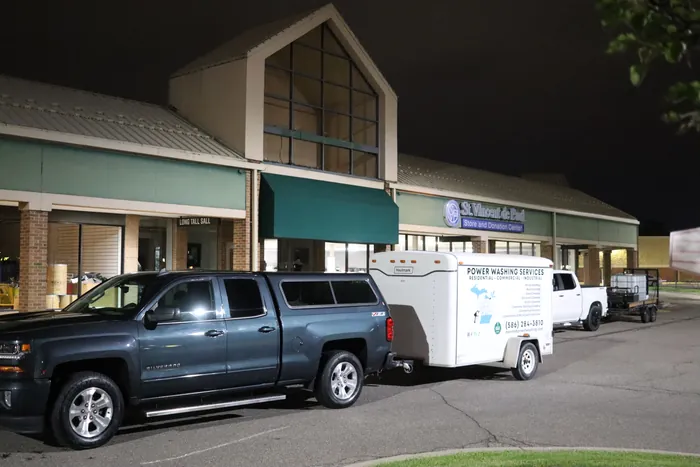
Trucks, vans, trailers & equipment, washed at your lot
Fleet Washing at Your Lot, After the Trucks Come Back
Box trucks, vans, pickups, trailers and equipment washed where they park: in the evening, on a Saturday or overnight, while the keys are on the hook. The wash covers the outside of each unit and its undercarriage and frame. Every fleet is quoted from photos, a satellite view of the yard or a visit, and the written estimate arrives within 24 hours.
Free written estimate within 24 hours Zero travel fees
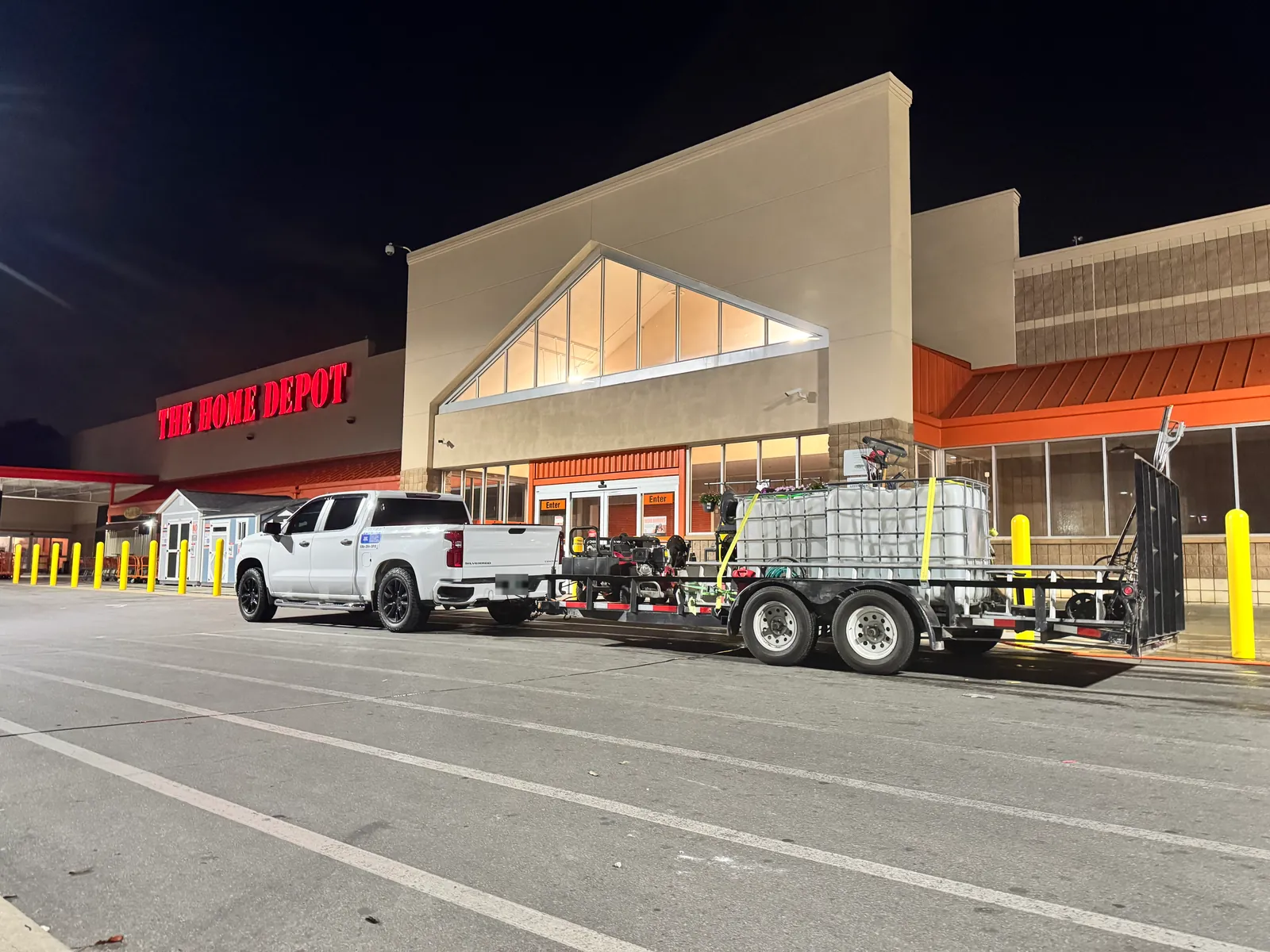
Mobile wash rigWater totes, a hose reel and equipment, strapped to one trailer
- 4.9 from 177 Google reviews
- 1,200+ projects since June 2022
- $2M insured, plus workers' comp
- 24h to a free, written, line-item quote
What a Michigan Winter Leaves on a Work Truck
Every truck that runs Macomb County roads through the winter comes back coated: salt and brine thrown along the body, into the wheel wells and up under the frame, and a gray film of road grime and soot across the cab, the box sides and the lettering. Soot is where heat helps. Kärcher, a pressure washer maker, notes that oils, fats and soot dissolve with added heat and can then be removed more easily.
The film matters because of what it covers. Federal marking rules require a self-propelled commercial motor vehicle covered by them to show the carrier's name and USDOT number on both sides, readily legible in daylight from 50 feet while it is parked, and kept that way. The same doors and box sides carry your phone number and logo into every neighborhood the truck stops in.
We wash fleets on site, at your lot or yard, so the trucks never leave the yard to get clean. Each wash covers the outside of every unit (bodies, cabs, trailers, glass and wheels) and the undercarriage and frame, where salt and road film collect. We don't clean interiors, and plows and salt spreaders are not part of the service. The rig is a pickup and trailer carrying water tanks, a pressure washer and hose reels, and our hot-water equipment comes along for the grease and soot.
Trucks, Vans, Trailers and the Equipment Behind Them
- Box and straight trucks — cab, box sides, roof edge, rear doors and bumpers
- Cargo and service vans — body, glass, wheels and the lettering on both sides
- Pickups and work trucks — bodies, beds, utility boxes and wheel wells
- Trailers — enclosed, flatbed, landscape and equipment trailers
- Equipment & heavy machinery — washed on site, where it is parked
- Dealership vehicles — shuttle vans, parts trucks and service trucks
- Wheels, wheel wells & undercarriages — winter salt and road film washed off the wheels, the underside and the frame
- Wrapped & lettered units — film and decals on doors, box sides and rear doors
Inside the Limits the Paint and Film Makers Publish
Truck and graphics makers publish how their finishes may be pressure washed, and their numbers differ. Freightliner's paint-care bulletin for its trucks keeps the nozzle more than 4 inches from the body, the pressure under 1,700 psi and the water under 120°F. Avery Dennison allows its vehicle graphics up to 1,200 psi and 158°F, with the nozzle at least 30 inches away and aimed straight at the film. Arlon caps its fleet graphics at 1,300 psi and 140°F and keeps the nozzle tip at least five feet back. On a lettered box truck, staying under the strictest of those numbers keeps the wash inside every maker's published limit for that vehicle, so tell us whose film is on your trucks when you ask for a quote.
Order matters too. Avery Dennison and Freightliner both say to rinse loose dirt off first, since grit dragged across the surface can scratch it, and both wash from the top down. Freightliner's reason is simple: the lowest parts of a truck are the dirtiest, and that grime should not travel back onto clean paint. Both film makers end with a thorough rinse: Avery Dennison so no detergent is left on the graphic, Arlon because a fresh-water rinse helps the paint and vinyl last.
Heat earns its place on grease and soot, and our hot-water equipment brings it to your lot. The temperature caps still apply: below 120°F on Freightliner paint, no more than 140°F on Arlon film and 158°F on Avery Dennison film. Our guide to hot versus cold water covers where heat pays off and where it only burns fuel.
Three Ways a Fleet Wash Does Damage
Close, Angled Spray on Graphics
A jet held close or swept at a sharp angle can catch the edge of a decal or wrap panel and lift it. Avery Dennison warns that sharply angled jets may damage the edges of graphics and cause delamination, and Arlon writes its distance and angle limits to keep vinyl from lifting around the edges.
Washing Sun-Hot Paint
Freightliner's bulletin says not to wash a truck whose paint is hot from the sun, and not to let fuel, oil, antifreeze or hydraulic fluid stand on the finish. A truck parked all afternoon on black asphalt in July is a poor candidate; the same truck after sundown is a better one.
Harsh Cleaners on Film and Paint
Freightliner calls for a water-based, non-abrasive, neutral-pH detergent. Arlon sets pH 6 to 8 for its graphics and warns that a more concentrated mix can damage both the adhesive and the vinyl, and Avery Dennison says solvents and abrasive cleaners may damage its decals and wraps.
Washed While the Fleet Is Parked
Driving a truck to a wash bay takes it off its route and puts a driver on the clock for the trip. Washing at your lot removes that trip. Our crews work Monday through Saturday until 10pm, and overnight work is available on commercial jobs, so a fleet can be washed after the last unit is parked and before the first one rolls out. Working after dark also keeps the wash away from sun-hot paint.
The interval follows how hard the trucks work: monthly, quarterly or a custom interval such as weekly, and the written quote prices the one you choose. Two published guides help set it. Avery Dennison recommends cleaning its vehicle graphics at least once a month, or more often depending on conditions, and Arlon recommends regular washing so dirt does not build up into a deep-cleaning job.
Winter washing at an outdoor lot depends on the thermometer. Once pavement reaches 32°F, rinse water freezes where drivers walk, so a winter wash needs a day above freezing, and the first warm stretch of spring is the time to clear a season of salt film. Our winter washing guide explains where that line sits. Year round, rinse water is recovered when the site or local rules require it; otherwise it is kept out of storm drains, ditches, canals, the river or lake, and away from septic drain fields.
What a Fleet Quote Spells Out
- The units — how many, what kind and how big: vans, box trucks, pickups, trailers, equipment
- The scope on each — body and glass, wheels, undercarriage and frame, lettering and wraps
- The interval — one time, monthly, quarterly or a custom schedule
- The window — evenings, Saturdays or overnight, set around your dispatch
- The spot — where on your lot the trucks get washed
- The paperwork — certificates of insurance sent before the first wash
There is no published price for fleet washing, because no two fleets share the same mix of units, scope and schedule. Send photos of the trucks and a satellite view of the yard, or have us come look, and the written estimate arrives within 24 hours. There are no travel fees, and adding the lot, an oil-stained parking row or the dumpster pad to the same visit lowers the combined price.
This page is about the vehicles. For showroom glass, service-drive concrete and lot washing at a dealership or fuel site, see dealerships, fuel & fleet sites; for building and flatwork programs, see commercial power washing. Property managers can check vendor paperwork against our contractor insurance checklist.
Questions, answered
Fleet Washing FAQs
Still wondering about something? Call (586) 284-3810, Mon–Sat, 8am–10pm.
See all frequently asked questionsDo you come to us, or do we bring the trucks to you?
We come to you. Fleet washing happens at your lot or yard, with the rig parked beside the trucks, so no unit leaves the yard and no driver spends the evening at a wash bay. Fleets anywhere in Macomb County, from Warren and Sterling Heights to New Baltimore and Romeo, are quoted with no travel fee.
How much does fleet washing cost?
We don't publish a fleet price. The estimate depends on how many units you run, their size, what gets washed on each one (body, glass, wheels, undercarriage, graphics) and how often. Send photos and a satellite view of the yard, or book a visit, and you get a written, line-item estimate within 24 hours. Booking a lot wash or the dumpster pad on the same visit lowers the combined price.
Can you wash our trucks at night or on a weekend?
Evenings and Saturdays, yes. Crews work Monday through Saturday until 10pm, and overnight scheduling is available for commercial work. We are closed Sunday. That puts the wash after the last truck is back in the yard, so the morning dispatch can leave on clean trucks.
Will pressure washing damage our wraps or door lettering?
The risk is edge lift from a jet that is too close or too angled, and the film makers publish limits to prevent it. Avery Dennison allows up to 1,200 psi with the nozzle at least 30 inches away and aimed straight on; Arlon allows 1,300 psi with the tip five feet or more from the graphics. Tell us whose film is on the trucks, if you know; where the makers differ, the stricter number is the safe one. New graphics need a short wait: Avery Dennison says not to wash its films in the first 48 hours after they go on.
How often should trucks be washed in a Michigan winter?
The interval is yours to set, and the quote prices whichever you pick. Two published guides help: Avery Dennison recommends cleaning its vehicle graphics at least once a month, and Arlon recommends regular washing so dirt never builds up into a deep-cleaning job. In winter the date depends on the weather, since an outdoor wash needs a day above freezing so the rinse water does not ice the lot.
We just took delivery of new trucks. Can they go on the schedule?
Yes, with a wait on the pressure washer. Freightliner's paint-care bulletin for its trucks says to rinse with water only and avoid a high-pressure washer for the first 30 days after the manufacture date, while the finish is fresh. Other makers set their own terms, so check the owner's materials that came with your units and tell us what they say.
Will the wash water run into our storm drains?
No. Rinse water is recovered when the site or local rules require it, and otherwise kept out of storm drains, ditches, canals, the river or lake, and away from septic drain fields. Where on your lot the trucks are washed is part of the quote, so point out drains and slopes when you send photos.
What Clients Say About This Work
Live from our Google Business Profile — 4.9 stars across 177+ reviews, nothing filtered out.
Questions about fleet washing, answered
Hot Water vs. Cold Water Pressure Washing: When Heat Matters
Cold water pressure washing handles dirt, algae and mud. Grease, oil, gum and tire marks are bonded by fats and polymers that cold water…
Read the guide → Planning & PricingCan You Pressure Wash in the Winter? Where the Line Is
Technically possible above freezing; practically wrong for most residential work below about 40°F. Soft-wash chemistry slows to ineffective, rinse…
Read the guide →Services that pair well with fleet washing
Commercial Power Washing
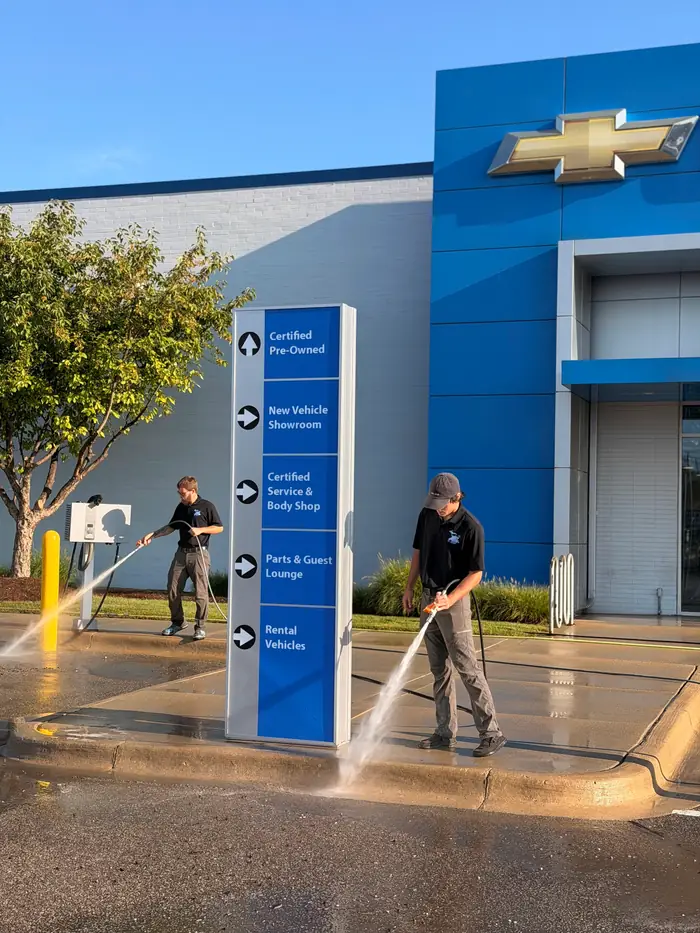
The crew national brands trust: storefronts, fleets, parking structures, and multi-site contracts handled with commercial-grade equipment and zero disruption.
Explore Commercial Services →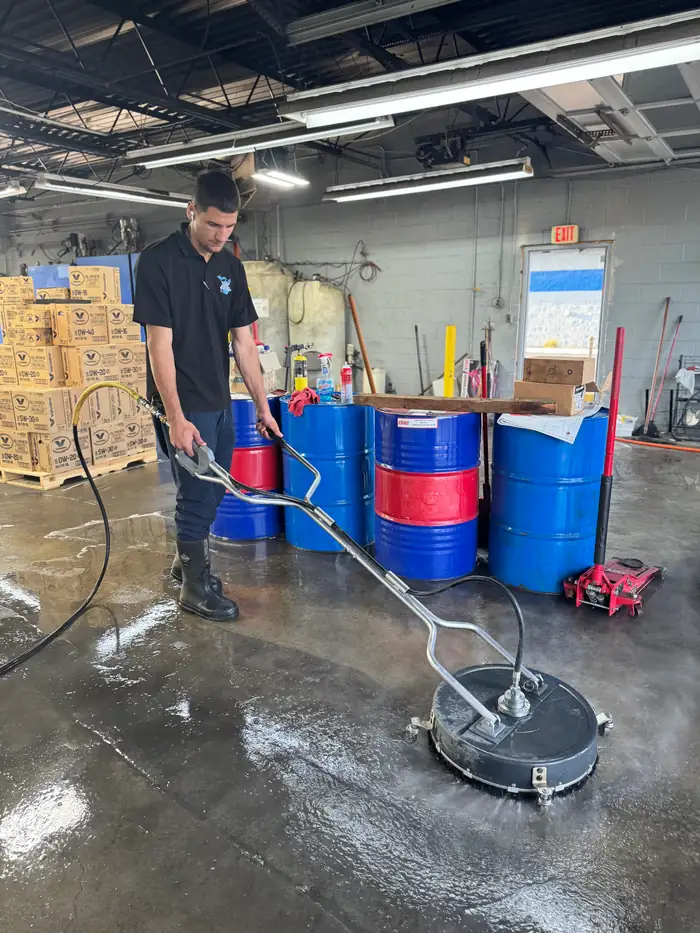
Oil Stain Removal
That black blotch where the car parks doesn't have to be permanent. Hot water, degreasers, and poultice treatments pull oil out of the pores.
Explore Oil Stain Removal →
Dumpster Pad Cleaning
Grease, leachate and food waste lifted off the pad with hot water and degreaser, enclosure walls and gates washed, then the area sanitized and deodorized, after close.
Explore Dumpster Pad Cleaning →Where we work
Fleet Washing across Macomb, Oakland & St. Clair Counties
We bring fleet washing to all 87 communities we serve — zero travel fees in all three counties. Find your city below for local details, or call and we'll confirm your address on the spot.
Macomb County & the Pointes
Oakland County
Troy & the Northeast
Woodward Corridor & South Oakland
Bloomfield & the Lake Belt
West Oakland & the Lakes Area
The Rural North
St. Clair County
Port Huron & the Blue Water Area
The St. Clair River Towns
Inland & Anchor Bay Side
Free estimate
Get Your Fleet on the Schedule
Send photos of the trucks and a satellite view of the yard, or have us come look. Every fleet gets a written estimate within 24 hours.
- Written quoteWithin 24 hours
- Shop21366 Hall Rd,
Clinton Township - Insurance$2M + workers' comp