Paver Repair & Re-Sanding — Port Huron Township, Michigan
Paver Repair & Re-Sanding in Port Huron Township
Township rules keep downspouts and sump pumps off the sanitary sewer, so in Port Huron Township roof water discharges to the yard, a drainage structure or a storm sewer, and paving below an outlet can lose its joint sand. We re-sand joints at full depth with polymeric sand, lift and reset sunken pavers on a corrected base, replace broken units and repair failed edges, with a written estimate within 24 hours.
Free written estimate within 24 hours Zero travel fees
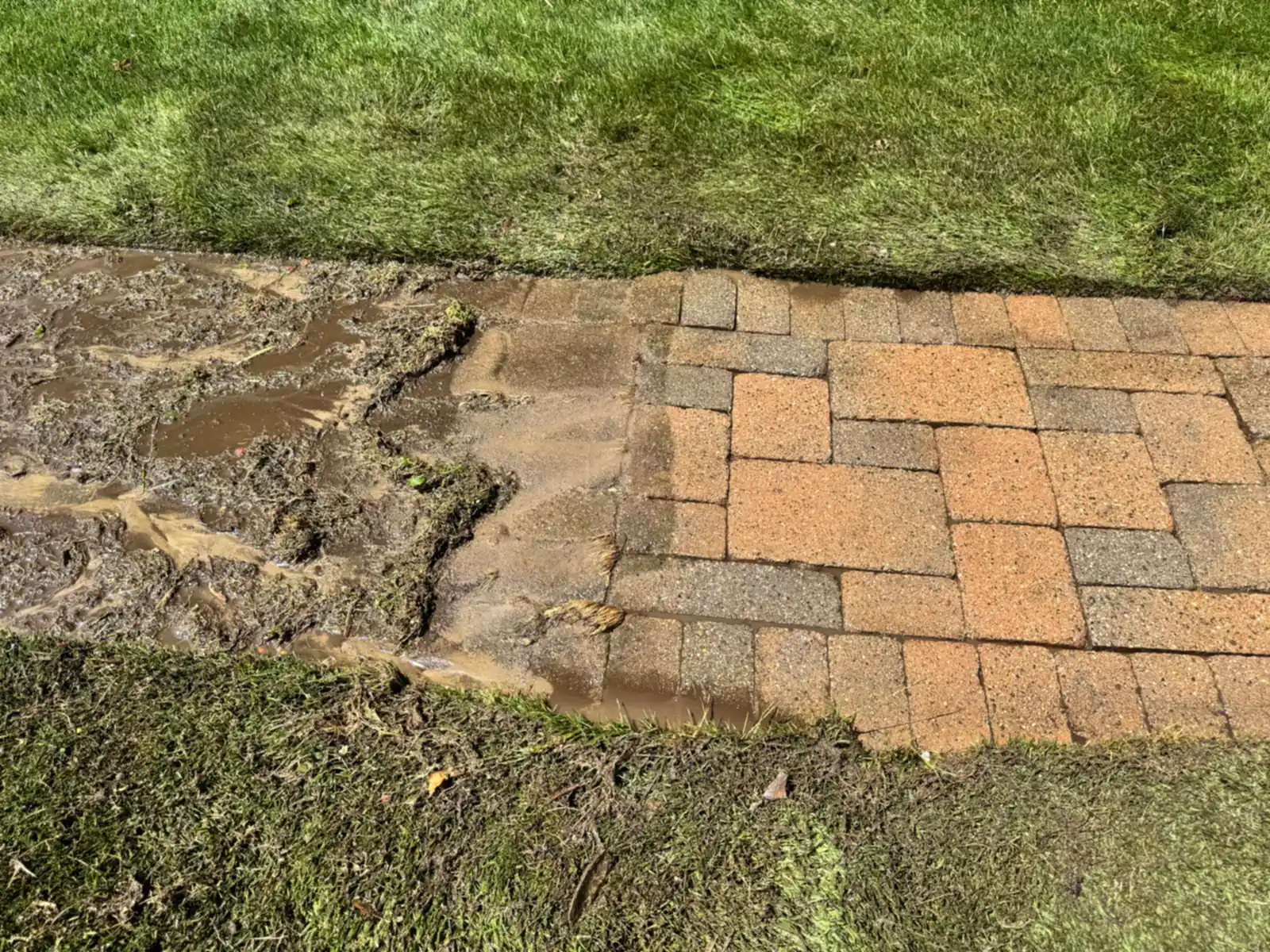
Paver walkwayOvergrown turf and soil washed off a brick paver walk
- 4.9 from 177 Google reviews
- 1,200+ projects since June 2022
- $2M insured, plus workers' comp
- 24h to a free, written, line-item quote
Paver repair & re-sanding in Port Huron Township carries no travel fee, and every job gets a written, line-by-line quote within 24 hours.
| Service | Paver Repair & Re-Sanding |
|---|---|
| Area | Port Huron Township, St. Clair County, Michigan |
| Price | Quoted per job, from photos or in person |
| Travel fee | None |
| Written quote | Within 24 hours |
| Call or text | (586) 284-3810 |
In Port Huron Township
An outlet aimed at a patio or walk sends a concentrated stream across the same few joints every storm. The Concrete Masonry and Hardscapes Association (CMHA) names downspouts, eave drip lines and concentrated runoff among the things that strip joint sand, and those are the places where it recommends stabilized joint sand over plain. Polymeric sand is that kind of material: sand with a binder that stiffens once water activates it. It adds no structural strength, though, and it cannot stand in for a sound base.
The ground is the other half. The county soil survey summarized in the township master plan rates the main soils as somewhat poorly to very poorly drained, very little of the township's soil percolates well, and most of its wetland lies south of I-69, with Stocks Creek, Bunce Creek and the Huffman Drain as the local drainage. CMHA counts a base that stays saturated among the reasons pavers sink, so a low spot just below an outlet usually needs more than new sand.
The sand in a joint does structural work. It passes weight from one paver to the next, and CMHA calls it an essential part of interlock and stiffness; as joints widen, the paving gets less stiff and can overstress the layers underneath. CMHA's maintenance guide says to refill joints once the sand has dropped more than half an inch below the paver tops.
How we work
Clearing, Drying and Filling Joints in Order
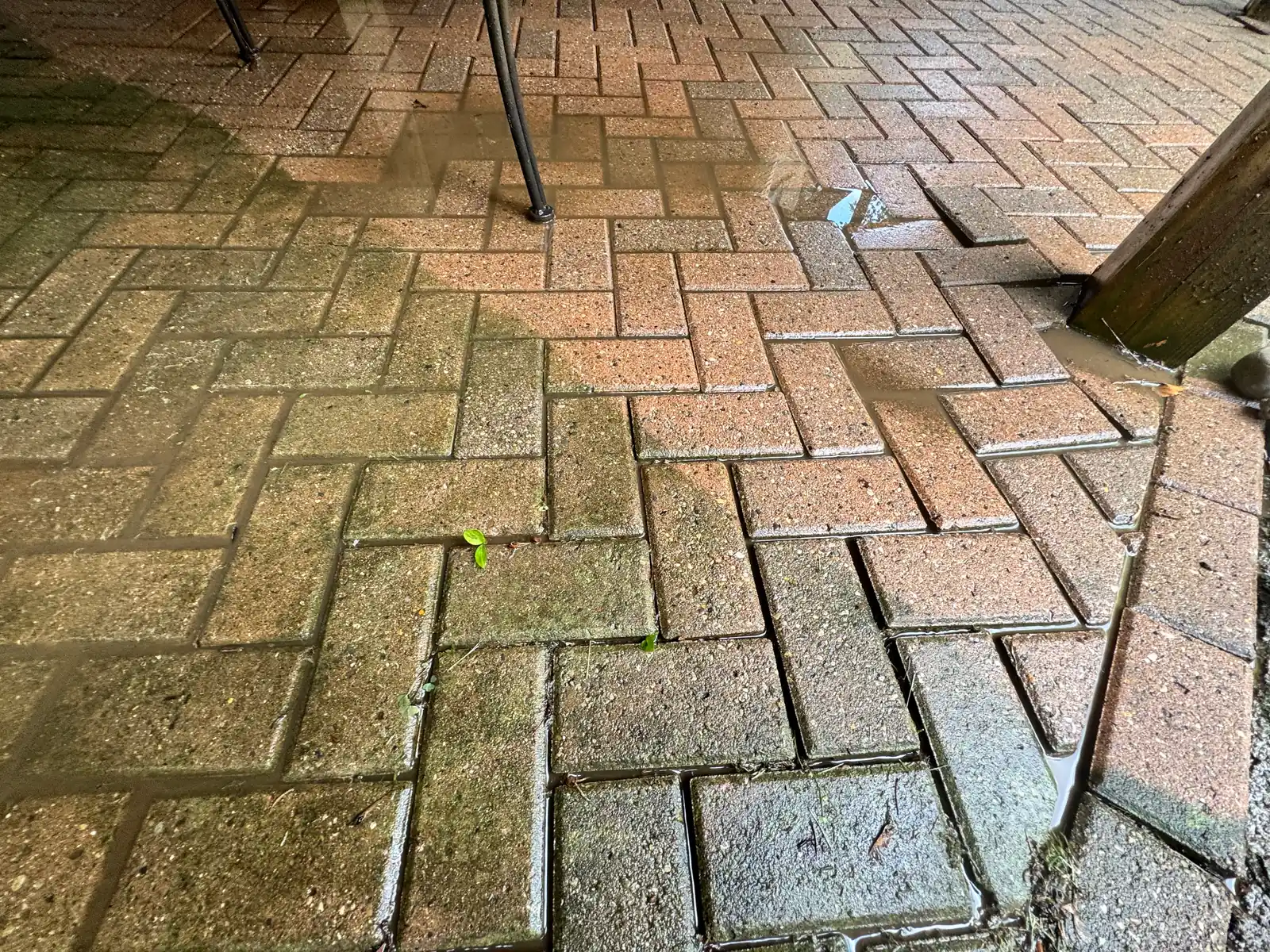
Repairs come before any sand. A paver that has dropped below an outlet is lifted, the base under it is built back with compacted base material, and it is reset on fresh bedding. Then the old joint material is cleared to at least 1½ inches without disturbing the bedding, and the paving dries completely, tops, sides and joints, for 24 hours after the cleaning or the last rain. Polymeric sand is swept in, plate-compacted, swept in again and compacted again until a fingertip will not sink into a joint, then finished about 1/8 inch below the paver tops. Every bit of dust is blown off the faces. The joints are watered with a shower spray from the low end, and a probe confirms the binder set through its depth instead of forming a crust.
Re-Sanding Errors That Peel, Haze or Wash Out
Sprinkling polymeric sand over whatever is left in the joints is the shortcut that fails. Alliance Gator warns that polymeric sand over partly filled joints peels and flakes, Techniseal and SEK-Surebond say never to mix it with other sand, and CMHA's maintenance guide does not recommend it for topping up joints. Sweeping it onto pavers that are still damp leaves it stuck to the faces as a haze, and our post on polymeric sand haze covers getting it off. Sprinklers stay off through the cure, as the Techniseal and SEK-Surebond sheets say. And re-sanding around a sunken paver only locks the dip in place.
When to Book Paver Repair & Re-Sanding in Port Huron Township
Re-sanding is weather work. One maker's data sheet wants temperatures above 32°F for 48 hours after the sand goes in; another wants an average above 35°F over 48 hours and no rain for 12. The pavers must be dry down into the joints, so the date follows a dry stretch, and late-fall work depends on the forecast. Releveling a sunken section can go ahead whenever the ground is not frozen, though its joints then wait on the same weather. Check the joints under each outlet in spring, during or just after a rain, and again in late summer or early fall.
Questions, answered
Paver Repair & Re-Sanding in Port Huron Township: FAQs
Where does the sand in my paver joints go?
Some washes out with runoff, most of all where a downspout or roof edge drops water onto the paving. Wind, tires, aggressive cleaning and pressure washing take more, and seeds and organic matter settle into what is left. Weeds in the joints sprout from windblown seed caught there, not up from the base, CMHA notes, so a weedy joint is a sand problem rather than a sign the base has failed.
Should the downspout be moved before you re-sand?
If it empties straight onto the pavers, redirecting it is worth weighing before the joints are refilled. CMHA recommends stabilized sand such as polymeric for downspout spots, but the joints under an outlet still take that water every storm. Moving downspouts and drainage work are outside what we do. If you're unsure whether a downspout or sump pump ties into the sanitary sewer, the township asks you to call.
We rent the house out. Can you estimate without us there?
Yes. About two in five occupied homes in the township were rented in 2020, and photos are a good start: a wide shot plus close-ups of the low spots, the open joints and any outlet draining onto them. The written estimate comes within 24 hours. If the photos leave a question about the base, we look in person. Add gutter cleaning if the gutters above the paving overflow.
How soon can we use the walk after a re-sand?
The sand needs 24 hours or longer to cure, depending on temperature and humidity, and its label sets the wait for heavier use; one maker keeps vehicles off for 48 to 72 hours and restricts pressure washers on the new joints for the first 30 days. If you plan to seal, the label also sets how long sealer waits, and our post on sealing new pavers explains the range.
What Neighbors Say About Our Work
Live from our Google Business Profile — 4.9 stars across 177+ reviews, nothing filtered out.
Free estimate
Book Paver Repair & Re-Sanding in Port Huron Township
Send photos of the low spot, the loose edge or the empty joints, or have us look in person. Every repair gets a written estimate within 24 hours.
- Written quoteWithin 24 hours
- Shop21366 Hall Rd,
Clinton Township - Insurance$2M + workers' comp