Paver Repair & Re-Sanding — Springfield Township, Michigan
Paver Repair & Re-Sanding in Springfield Township
Beside marsh and headwater streams, under heavy woods, a paver patio can stay damp long after the rain has moved on, and polymeric sand makers want joints dry to the bottom. In Springfield Township, a re-sand that sets properly starts with the shade and the forecast, then the sand.
Free written estimate within 24 hours Zero travel fees
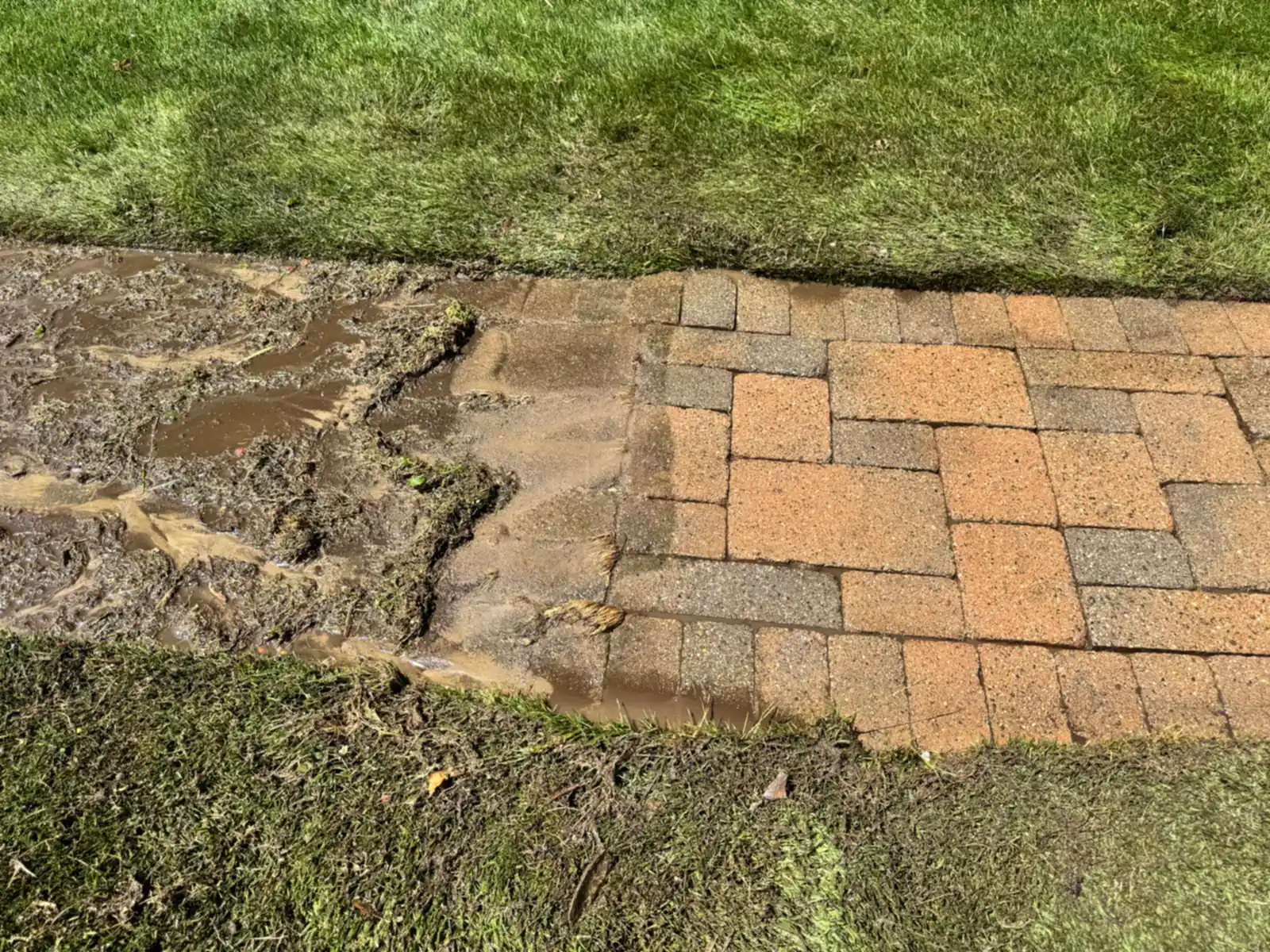
Paver walkwayOvergrown turf and soil washed off a brick paver walk
- 4.9 from 177 Google reviews
- 1,200+ projects since June 2022
- $2M insured, plus workers' comp
- 24h to a free, written, line-item quote
Paver repair & re-sanding in Springfield Township carries no travel fee, and every job gets a written, line-by-line quote within 24 hours.
| Service | Paver Repair & Re-Sanding |
|---|---|
| Area | Springfield Township, Oakland County, Michigan |
| Price | Quoted per job, from photos or in person |
| Travel fee | None |
| Written quote | Within 24 hours |
| Call or text | (586) 284-3810 |
In Springfield Township
Much of Springfield Township is wooded acreage around preserved wetlands. The Shiawassee River rises in the Shiawassee Basin Preserve, Indian Springs Metropark shares the township's southern edge, and Davisburg Rd runs through the old hamlet of Davisburg and past the preserve. Wetland-adjacent ground stays damp, and a patio in the shade of those trees dries slowly. For most repairs that is a scheduling detail. For polymeric re-sanding it can decide how well the joints set.
Polymeric sand is sand blended with a binder that stiffens once water activates it. SEK-Surebond says it sticks to a damp surface and asks for a 24-hour wait after rain or cleaning, and Alliance Gator ties haze to damp pavers and high humidity. Techniseal, Alliance Gator and SEK-Surebond all want the surface and the joints fully dry first.
The woods add a second job. Leaves, needles and seed settle into open joints, and the Concrete Masonry and Hardscapes Association (CMHA) lists organic matter and seeds among the things that rob joints of sand. The weeds that follow sprout from windblown seed caught in the joint, not from below the base. Paver repair clears that material out with the old sand; a patio that is sound but dull belongs to paver restoration instead.
How we work
Repairs, Then a Dry Window, Then Full-Depth Sand
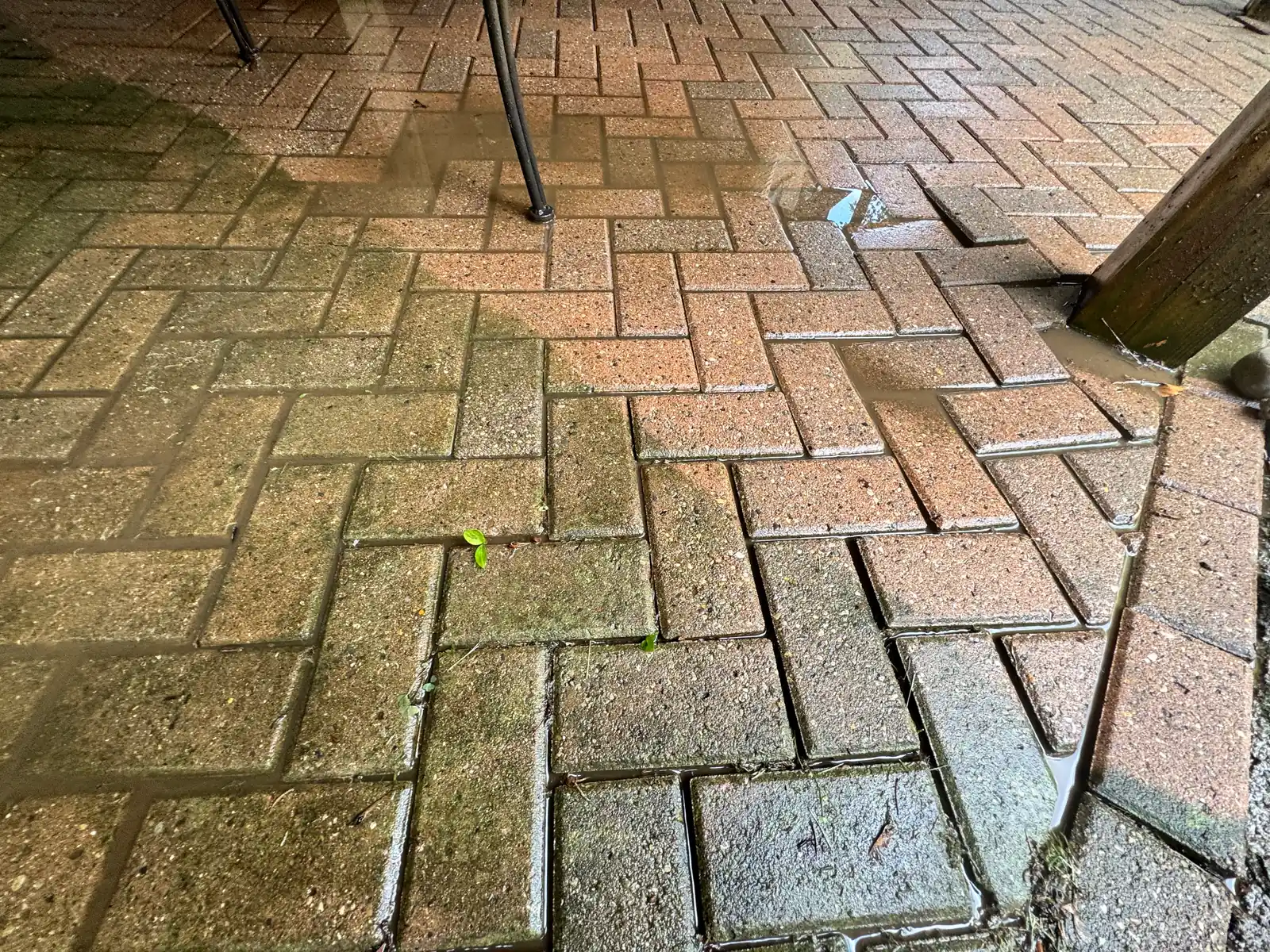
Anything loose or out of level is fixed before new sand goes in, because SEK-Surebond's prep bulletin puts sunken or heaved pavers, cracked pavers and failed edging ahead of re-sanding. Those sections are lifted, the base corrected with compacted base material, and the pavers reset on fresh bedding.
The old joint sand, with the leaf litter and weed roots in it, comes out to at least 1½ inches without disturbing the bedding. Then the patio has to dry, and the forecast has to hold: Techniseal asks for temperatures above 32°F for 48 hours after installation, SEK-Surebond for an average above 35°F over 48 hours with no rain for 12, and sprinklers stay off.
The sand is swept in, plate-compacted, topped up and compacted again until a fingertip no longer sinks into the joint, then finished about 1/8 inch below the paver tops. Every trace of dust, gravel-road grit included, is blown off the faces. The joints are showered lightly from the low point and probed afterward to confirm the binder set deep rather than as a crust.
How Damp Joints Spoil a Re-Sand
Sweeping polymeric sand over pavers still holding the morning's dew is one way haze starts. The sand clings to the damp faces, and once that film cures, CMHA says it takes hot water, and sometimes a wire brush or a pressure washer, to remove. Moist residue comes off easily only if it is cleared right away.
Watering can go wrong in both directions. Techniseal warns against overwatering, and Alliance Gator against letting the joints dry out partway through activation. And stripping moss off a shaded patio with a narrow pressure tip pulls the joint sand out along with it, which is why CMHA calls for a wide, low-angle spray on pavers.
When to Book Paver Repair & Re-Sanding in Springfield Township
On damp, wooded ground, re-sanding waits on dry weather, not the calendar. The National Weather Service office in Detroit puts the end of Southeast Michigan's growing season in October, and cold nights make the 48-hour rule harder to meet. Releveling has a lower bar: thawed ground and bedding sand that isn't frozen or saturated. Repairs have no published price; send photos or ask for a visit, and a written estimate follows within 24 hours. Our Clinton Township shop is about 46 minutes away, and there is no travel fee here or in neighboring Independence Township or White Lake Township.
Questions, answered
Paver Repair & Re-Sanding in Springfield Township: FAQs
Our patio sits under big trees and never seems to dry out. Can it still be re-sanded?
Yes, once it is dry to the bottom of the joints. SEK-Surebond asks for 24 hours after rain or cleaning, and the other makers also want it dry. On a shaded lot near wetland, we wait for a dry spell with two days above freezing in the forecast, not the first sunny morning. If the joints are still damp, the job moves.
Why do weeds keep coming up between our pavers?
CMHA's maintenance guide says weeds in paver joints grow from windblown seed caught in the joint sand, not from the soil under the base, and wooded lots drop plenty of seed and leaf litter. Clearing the joints to 1½ inches and refilling them with polymeric sand at full depth helps, though no sand keeps out every weed. Our post on weeds in polymeric sand explains why.
Someone re-sanded our walk and left a white film. What is it?
It may be polymeric haze: dust left on the faces, or sand that stuck to damp pavers and hardened when watered. Caught while moist, it clears easily; once cured, it takes real scrubbing. Alliance Gator notes that some white residue is efflorescence brought out by the activation water instead. Our guide to removing polymeric sand haze helps tell the two apart.
Part of our walk rose over the winter. Should we reset it now?
Wait for the thaw. Frost heave takes freezing temperatures, frost-susceptible soil and water, and damp ground at a wetland edge can supply the water. Lifted ground can settle back as it thaws, and base work never goes onto frozen soil. A reset levels the section without changing the soil beneath it; CMHA's remedy for frost heave is a frost-resistant subbase. Photos taken after the thaw show what is left to fix.
More in Springfield Township
Service overviews
What Neighbors Say About Our Work
Live from our Google Business Profile — 4.9 stars across 177+ reviews, nothing filtered out.
Free estimate
Book Paver Repair & Re-Sanding in Springfield Township
Send photos of the low spot, the loose edge or the empty joints, or have us look in person. Every repair gets a written estimate within 24 hours.
- Written quoteWithin 24 hours
- Shop21366 Hall Rd,
Clinton Township - Insurance$2M + workers' comp