
The short answer
Clean pavers around a pool like a patio: sweep, wash with a mild cleaner and a plastic or brass brush, and rinse with a wide, low spray. Plan the runoff first so cleaner, rinse water and joint sand stay out of the pool. Rinse salt off with fresh water, and keep acids, vinegar included, off travertine or limestone coping.
How do you clean pavers around a pool?
You clean pavers around a pool much as you would a patio, with one extra job at the start: deciding where every gallon of cleaner and rinse water will go, since whatever drains toward the pool ends up in the water people swim in. Stone coping adds a second rule, because acids, vinegar included, can dull or etch travertine and limestone.
The order that works on a paver pool deck:
- Move furniture, planters and pool chemicals off the deck, and tie back or cover the plants along its edges.
- Sweep or blow off leaves, grit and loose sand.
- Turn off the sprinklers, then run plain water across the deck to see which way it drains.
- Treat individual stains first, then clean the full deck.
- Wash with a cleaner suited to the surface and a plastic or brass brush, never steel.
- Rinse with plenty of water and a wide, low spray, moving the runoff away from the pool.
- Let the deck dry, then check the joints for missing sand.
Several of those steps come from the Concrete Masonry & Hardscapes Association (CMHA), whose tech note on cleaning pavers puts stains first, protects nearby plants, tests drainage with plain water and rules out steel bristles.
What builds up on a pool deck that a patio doesn't see?
A pool deck collects the same dirt and leaves as any patio, plus four that come with having a pool next to it.
- Salt crystals. Around a saltwater pool, CMHA says the sodium chloride in the water can leave white crystals behind as it evaporates, dulling or fading the paver surface over time.
- A damp splash zone. Pavers splashed and crossed by wet feet all summer stay damp, the condition our post on why pavers turn green links to algae. Oregon State University Extension calls algae on walkways a slipping hazard, and a pool deck is walked on wet and barefoot.
- Pool chemicals. CMHA names acidic pool cleaners as the kind of low-pH product that can affect the oxide pigments in pavers, and says acid spills are far more damaging to a paver surface than saltwater. Acid can break down the concrete and permanently change its color, so keep acidic pool products off the pavers.
- Moving joint sand. CMHA lists flowing water and aggressive cleaning among the forces a joint sand stabilizer is meant to resist, and says stabilization benefits pavements subject to regular, aggressive cleaning. Sand that leaves a joint beside the coping can end up in the pool.
How do you keep cleaner and wash water out of the pool?
You keep cleaner and wash water out of the pool by finding the drainage before you clean, then working so the runoff always moves away from the water. CMHA's advice fits a pool deck well: anticipate where cleaning fluids will drain, across the pavement rather than onto grass or plants, and if unsure, test with ordinary water first. Sediment or cleaner left to pond in low spots may stain the pavers, so rinse those spots well, and keep automatic sprinklers off through cleaning, sealing and drying.
On the deck itself:
- Aim away from the water. Work each section's runoff across the pavers and away from the pool, and rinse it before moving on.
- Spray wide and low, and rinse with volume. A wide, low spray leaves the joint sand in place, and sand that stays in the joints never reaches the pool. For the rinse, in CMHA's words, "a large amount of water is more important to rinsing than high pressure."
- Watch the drains. Keep cleaner and rinse water out of storm drains and street gutters, and out of any deck drain until you know where it leads. Michigan's Department of Environment, Great Lakes, and Energy (EGLE) notes that outdoor drains and gutters usually flow to storm sewers that lead directly to a stream or lake, and its power washing guidance says not to discharge to one whose destination you cannot verify.
Chemistry needs the same planning, because bleach and acid can both end up on a pool deck: the Natural Stone Institute (NSI) suggests a mild bleach solution for algae on pool stone, and CMHA warns about acidic pool cleaners. The New Jersey Department of Health says never to mix bleach with ammonia or with acid products, since chlorine bleach mixed with an acid produces chlorine gas. Use one cleaner at a time and rinse it off completely before anything else goes on.
On our jobs, rinse water is kept out of storm drains, ditches and canals.
What is the white residue around a saltwater pool?
The white residue around a saltwater pool is often salt left behind as splashed pool water dries, and on concrete pavers it is mainly a matter of looks. Robert Bowers, CMHA's vice president of engineering for hardscapes, wrote in 2025 that it is "largely a cosmetic issue" and that the surface changes are not permanent. He says salt does not react chemically with the oxide pigments in quality pavers, and that a rinse with warm, fresh water is often enough to restore their appearance.
So start with water, not chemicals. White that remains once the deck dries may be efflorescence from the pavers themselves, covered in how to remove efflorescence from pavers.
The salt issue Bowers flags is winter: salt combined with freezing and thawing can speed the deterioration of concrete in cold climates, though summer sprinkler use and fall rains tend to rinse and dilute the buildup. He rates the structural risk to pavers made to ASTM or CSA standards as minimal, and a fresh-water rinse before closing does what he credits those rains with, leaving less salt on the deck going into the dozens of freeze-thaw cycles a Michigan winter brings.
How is travertine or limestone coping cleaned differently?
Travertine and limestone coping is cleaned without acids of any kind, vinegar included. NSI classes both as calcareous stone, made mainly of calcium carbonate, which is sensitive to acidic solutions, and it recommends mild, non-acidic cleaners. Its care guide warns that products containing lemon, vinegar or other acids may dull or etch calcareous stone.
For outdoor pool, patio and hot tub areas, NSI's advice is to flush the stone with clear water and use a mild bleach solution to remove algae or moss. For routine washing it suggests a neutral cleaner, a stone soap or a mild dishwashing detergent in warm water, followed by a thorough rinse. Bleach strengths are compared in can you use bleach on pavers.
One more caution from the same guide: skip household rust removers, many of which contain trace hydrofluoric acid that NSI says attacks every stone.
Unsure what your coping is? NSI describes limestone and travertine as typically light gray, tan or buff and suggests asking a stone professional. Concrete coping follows the paver steps above; a poured concrete deck falls under our concrete cleaning service.
When should pool deck pavers be cleaned during the season?
Clean pool deck pavers at two points in the season: when the pool opens and again before it closes.
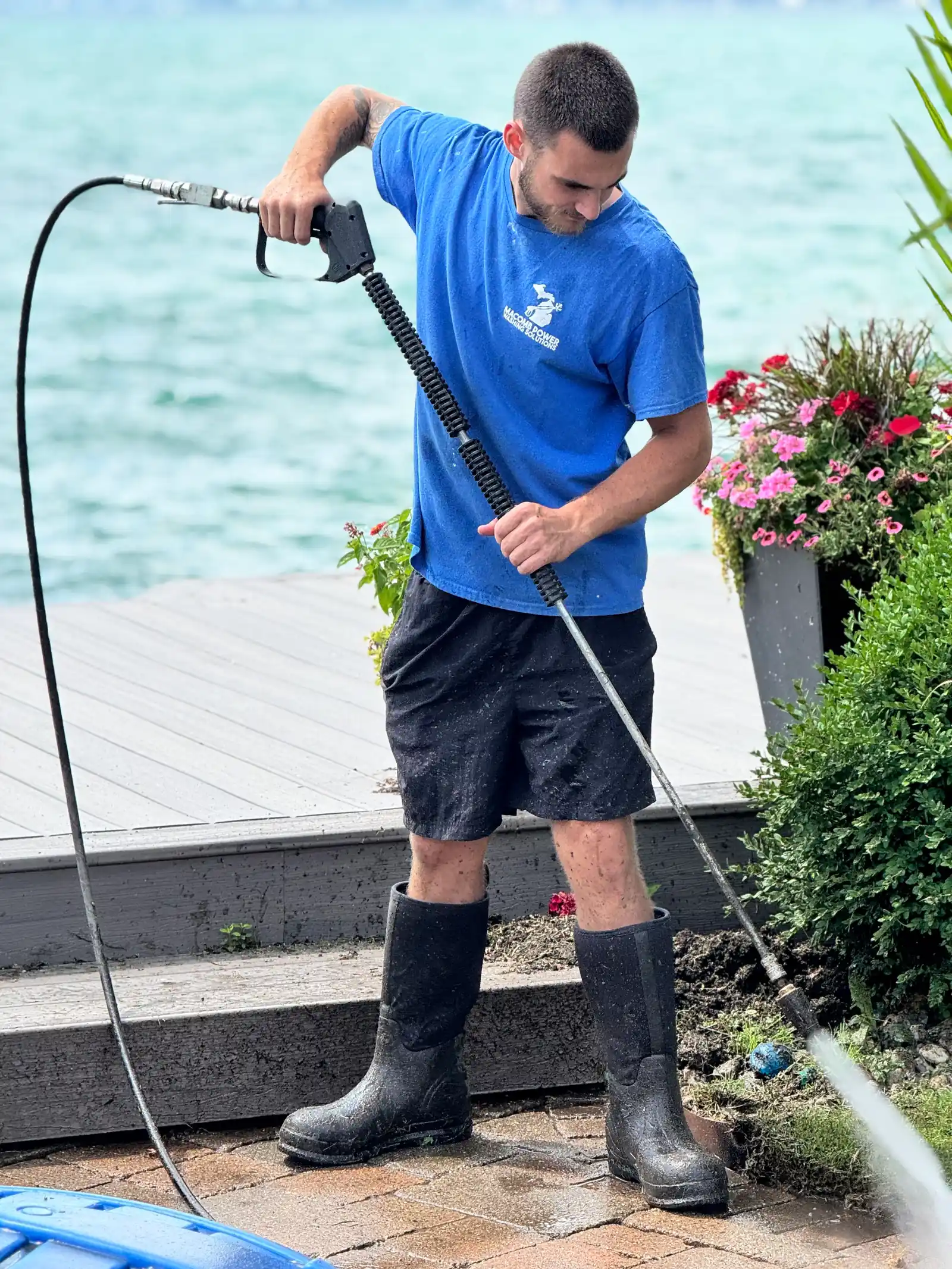
At opening, the deck carries the off-season's leaves, grit and any green film in shaded corners. Oregon State University Extension advises pressure-washing algae growing on patios, and clearing it before swim season removes a slip risk. Check for low joints or settled pavers near the coping too.
Before closing, rinse the salt off with fresh water ahead of freezing weather, for the reason Bowers gives, and sweep up leaves before the cover goes on. Pressure washing has limits once temperatures drop (see can you pressure wash in winter), and re-sanding after power washing covers joints that lost sand.
Our brick paver restoration covers pool surrounds as well as patios and walks: clean, polymeric re-sand and seal, from $399 for all three. Sunken pavers or failing joints by the coping go through paver repair and re-sanding, quoted from photos or in person. Every quote is written and itemized within 24 hours.
Sources
- Concrete Masonry & Hardscapes Association (Robert Bowers, 2025): Using Pavers Around Saltwater Pools, What You Need to Know
- Concrete Masonry & Hardscapes Association: PAV-TEC-005-22, Cleaning, Sealing and Joint Sand Stabilization of Interlocking Concrete Pavement
- Natural Stone Institute: Care & Cleaning of Natural Stone (PDF)
- Oregon State University Extension, Solve Pest Problems: Moss on Roofs & Walkways
- Michigan EGLE: Mobile Power Washing Environmental Compliance Guidance (PDF)
- New Jersey Department of Health: Hazard Alert, Mixing Bleach with Other Cleaning Products Can Be Deadly (PDF)
Want This Handled Properly?
Macomb Power Washing Solutions holds a 4.9-star rating across 177+ Google reviews, and free estimates go out within 24 hours. We carry $2M general liability plus workers' compensation.