
Brick Paver Restoration in Auburn Hills
Pavers fail at the joints before the bricks. Sand washes out, weeds and moss move in, and the pavers start to shift and rock. Restoring a paver patio or walk in Auburn Hills means cleaning the face, refilling the joints with polymeric sand and sealing it so the sand stays put.
Brick paver restoration in Auburn Hills starts at $399, with no travel fee and a written, line-by-line quote within 24 hours.
| Service | Brick Paver Restoration |
|---|---|
| Area | Auburn Hills, Oakland County, Michigan |
| Starting price | From $399 |
| Travel fee | None |
| Written quote | Within 24 hours |
| Call or text | (586) 284-3810 |
A paver surface is hundreds of separate units held in place by the sand between them. When that sand washes out, a little with every hard rain and every winter thaw, the pavers lose their grip on each other. Weeds root in the empty joints, ants carry out more sand, and single pavers begin to settle or tip. Once a few pavers tip, water runs into the gaps and softens the base beneath them, so small movement grows larger over a few winters. The color fades as well, because sun and weather wear the pigment at the surface, and a white haze called efflorescence can rise from inside as moisture carries salts up to the face.
Auburn Hills pavers age according to where they sit. A patio on a newer lot near Oakland University that gets full sun mostly fades and loses joint sand to storms. A walk on a shaded lot near the Clinton River corridor or Hawk Woods Nature Center stays damp, grows moss and algae in the joints, and turns slick in wet weather. Paver areas close to busy streets like Opdyke Rd and Squirrel Rd pick up the same oily road grime that grays siding near M-59 and I-75, and salt tracked onto front walks each winter speeds up the haze.
Restoration covers all of it in one job. The surface is cleaned with a rotary cleaner at controlled pressure, efflorescence and stains get their own treatment, the joints are refilled with polymeric sand that hardens when misted, and a sealer goes on to lock the sand and bring back the color. Paver restoration starts at $399. A sealed patio needs a light clean and a fresh coat every three to five years to keep the joints tight. Sealing also makes the next cleaning easier, because dirt sits on the surface instead of soaking in. Our guide to restoring faded pavers shows what the process can bring back.
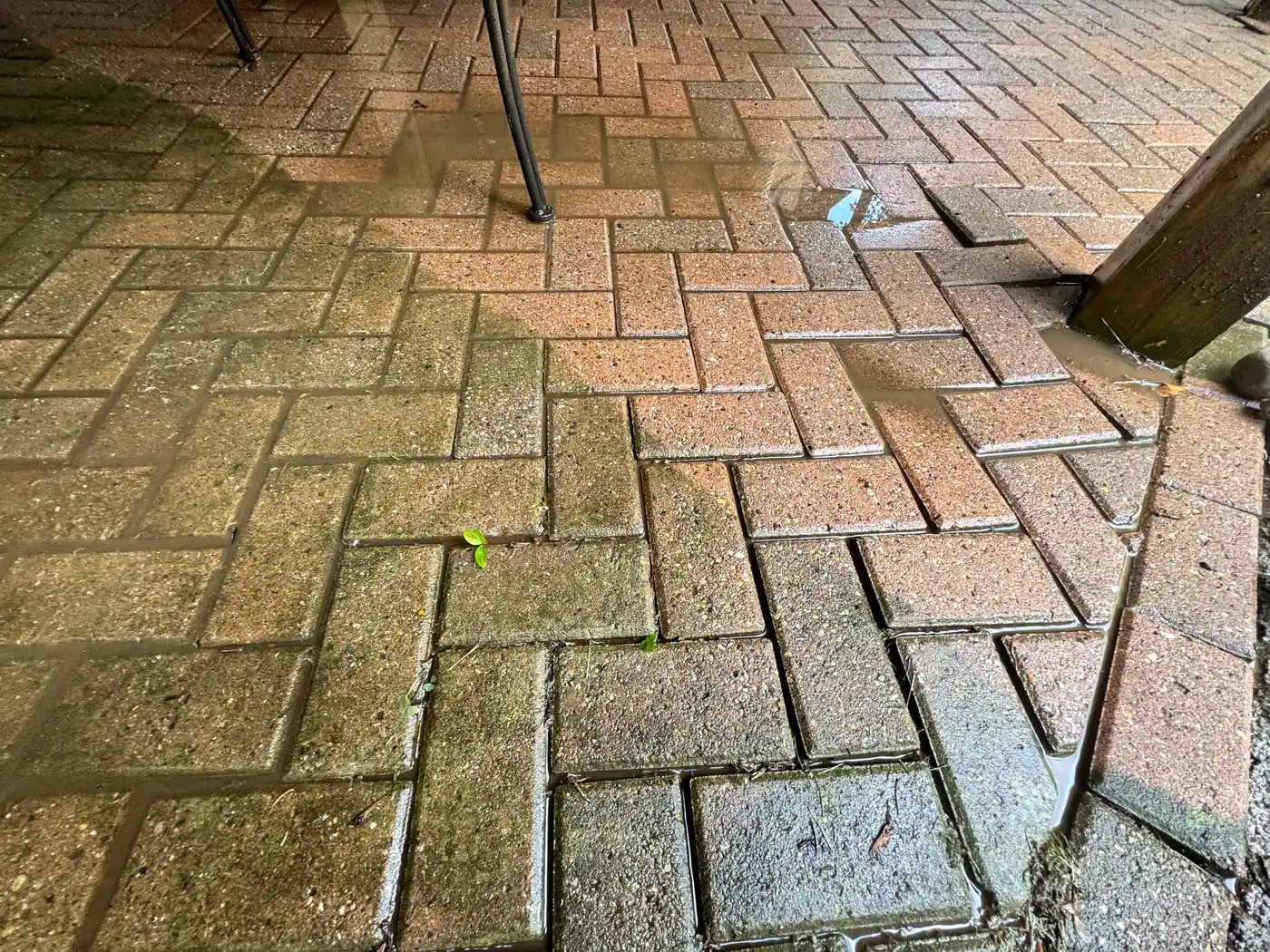
Weeds Out, Joints Filled, Surface Sealed
We start by pulling weeds and checking for pavers that have sunk or lifted, which are noted before cleaning. The surface cleaner then clears dirt and loose joint sand from the full area, since the old sand is being replaced. Stains and efflorescence are treated separately. When the surface has dried completely, polymeric sand is broomed into every joint, worked down until the joints are full, topped up, and blown off the paver faces. A light mist sets the sand. After it cures, the sealer goes on in even coats that soak into both the pavers and the joints.
Why Joint Sand and Sealer Fail
The common failure is sealing before the joints are dry. Moisture trapped under the sealer turns it cloudy white, and polymeric sand that gets wet before it sets can leave a hazy film on the paver faces. Blasting with a narrow tip digs the joints out and chips paver edges. Refilling with plain sand instead of polymeric sand looks the same on the first day, then washes out in the first heavy storms, and the weeds are back by midsummer.
When to Book Brick Paver Restoration in Auburn Hills
Paver restoration needs dry weather on both ends: a dry surface before the sand and sealer go down, and a day or two without rain afterward so they can set. Late spring through early fall is the working window in Michigan. Spring restoration gets a patio ready for summer, and early fall restoration seals the joints before winter thaws can wash sand out.
Price Brick Paver Restoration for Your Auburn Hills Home
Pick your property size and condition for a real range in about twenty seconds — bundle other services to watch the visit price drop.
1 · What do you need?
2 · Home size
3 · Condition
Brick Paver Restoration in Auburn Hills: FAQs
Why do my pavers get a chalky white film every spring?
That film is efflorescence: salts carried up from inside the paver by moisture and left behind when the water evaporates. Winter salt on front walks adds to it. Plain rinsing only moves it around, so we treat it with a cleaner made for mineral deposits before sealing. Our efflorescence guide explains why it returns on unsealed pavers.
Why is moss growing between our patio pavers?
Because the joints stay damp and have lost sand. Shade from trees along the Clinton River corridor or near Hawk Woods Nature Center keeps the joints wet, and spores settle into the gaps. Pulling moss by hand leaves the roots. Cleaning out the joints, refilling them with polymeric sand and sealing the surface gives moss much less room to return.
How long does polymeric sand hold up?
Several years when it is sealed over. The sand hardens into a firm joint that resists washout and weeds, and the sealer shields it from water and sun. Joints on shaded lots may grow a little moss again sooner because they stay damp. A light clean and a reseal every three to five years keep the joints tight.
What does it cost to restore a paver patio?
Paver restoration starts at $399. The quote depends on square footage, joint condition, and whether stains or efflorescence need extra work. A small front walk costs less than a large patio with steps. There is no travel fee for the drive from Clinton Township, and you will have the written quote in hand within 24 hours to compare line by line.
More in Auburn Hills
Brick Paver Restoration in Nearby Towns
Book Brick Paver Restoration in Auburn Hills
Request a free, no-pressure estimate today. Most quotes are delivered within 24 hours, and every job is backed by our satisfaction guarantee.
Get My Free Estimate or call (586) 284-3810 — Mon–Sat, 8am–10pm