
The short answer
To get oil and grease out of pavers, blot the spill, cover it with an absorbent such as kitty litter for a day, then scrub with liquid detergent and rinse with hot water. An old motor oil stain needs a remover made for pavers, often applied more than once. If the stain still shows, replace that paver.
How do you get oil and grease stains out of pavers?
You get oil and grease out of pavers by starting fast and gentle, then stepping up only as far as the stain demands. The Concrete Masonry and Hardscapes Association (CMHA) says in its maintenance guide, PAV-TEC-006, that oil stains should be treated as soon as possible, because the longer they stay on the surface, the deeper they penetrate. The order:
- Blot up the liquid and cover the spot with an absorbent.
- Scrub what is left with liquid detergent and rinse with hot water, more than once if needed.
- Treat an old, set-in stain with an oil remover made for pavers, after a test on a hidden spot.
- If the stain survives all of that, replace the paver.
That last step is one a poured driveway doesn't have. Oil on a poured slab is covered in our guide to oil and rust stains on concrete driveways, and orange marks on pavers are a different stain with different removers, covered in rust stains on pavers.
What should you do in the first hour after a spill?
In the first hour after a spill, get the liquid off the pavers and put an absorbent on what has already soaked in. CMHA's cleaning guide, PAV-TEC-005, lists the steps for oil or grease that has penetrated: mop up the excess with rags, cover the area with an oil absorbent such as kitty litter, leave it on the stain for a day, then sweep it up. It names talc, fuller's earth and diatomaceous earth as other absorbents. Unilock, a paver maker, gives the same first move for grill grease and vehicle drips on driveways: blot with a cloth before anything else.
If a shadow remains once the paver is dry, move on to detergent. CMHA's maintenance guide says to wipe the oil from the surface, apply liquid detergent, let it soak for several minutes, scrub, then rinse with hot water, and it warns that stubborn stains may take several treatments. Scrub with plastic or brass bristles, not steel, which can trade an oil stain for rust specks.
How do you lift grill grease and cooking oil from a patio?
Grill grease and cooking oil lift from a patio with full-strength detergent, time to work, and a hot rinse. For stubborn grease drippings from food, PAV-TEC-005 says to apply liquid detergent full strength, let it penetrate for 20 to 30 minutes, then scrub and rinse with hot water, and it notes that these stains come out more easily when they are treated right away. An olive oil spill under the table gets the same treatment.
Unilock adds two kitchen-cabinet options. For food spills and light oil, sprinkle baking soda over the damp spot, work it in with a stiff brush, let it sit, then rinse. For grease spots under a grill, blot with a cloth, then scrub with warm, soapy water and repeat until the spot clears.
A food stain that detergent won't lift can go to an oil remover: SEK-Surebond says its Oil Extractor removes petroleum and food-based oil and grease. And if the grill lives on the pavers, CMHA names barbecue areas among the places where a sealer is useful.
What removes an old, soaked-in motor oil stain?
An old motor oil stain usually takes a commercial oil remover made for pavers, and often more than one round of it. CMHA says deep set oil stains often need repeated applications of a remover, and that the first application should be a test on a small, inconspicuous stained area. Read the label before buying; two removers sold for pavers differ on method, surfaces and temperature:
| Label detail | Techniseal Professional Grade Oil & Grease Remover | SEK-Surebond Oil Extractor |
|---|---|---|
| How it works | A liquid that lifts and absorbs the oil as it dries to a powder, which is swept up; no scrubbing or rinsing | A solvent cleaner poured on the stain and covered with rags soaked in it, scrubbed between dwells, then rinsed off |
| Temperature | Dries in 5 to 8 hours above 15°C (59°F) with good ventilation; slowed and may be inhibited when colder | Air and surface at 40°F or above; a frozen surface must thaw first |
| Surfaces named | Concrete and natural stone pavers, poured or stamped concrete, masonry; not asphalt | Concrete and clay pavers, concrete, masonry, natural stone; caution on wet-cast pavers, manufactured stone and stamped concrete, where it may damage the color; not asphalt |
SEK's directions show how a rag poultice works. Pour the cleaner 1/2 to 1 inch past the visible stain, cover it with saturated rags for 30 minutes, then lift a corner: oil should show on the underside. Scrub, flip the rags, wait another 15 to 30 minutes and rinse. SEK prefers a hot-water pressure washer for the rinse, allows a cold-water one or a garden hose, and says to use only as much pressure as needed, since excessive pressure can damage the surface.
Both data sheets set temperature limits, which matter in late fall. Techniseal recommends using its remover between 15°C and 25°C, about 59°F to 77°F. Check the forecast against the label: if it won't reach the range, put absorbent down now and save the remover for a day that does, even if that day is in spring. SEK's data sheet also calls for gloves and eye protection and says to avoid release to the environment, so keep the oily rinse out of the storm drain.
Can an oil remover damage sealed pavers?
Some oil removers dissolve sealer, so on sealed pavers, plan to reseal the spot they treat. Techniseal's data sheet lists sealed surfaces among its uses but warns that the product will dissolve sealants. SEK says its Oil Extractor is safe on surfaces sealed with its own Surebond sealers; the sheet says nothing about other brands.
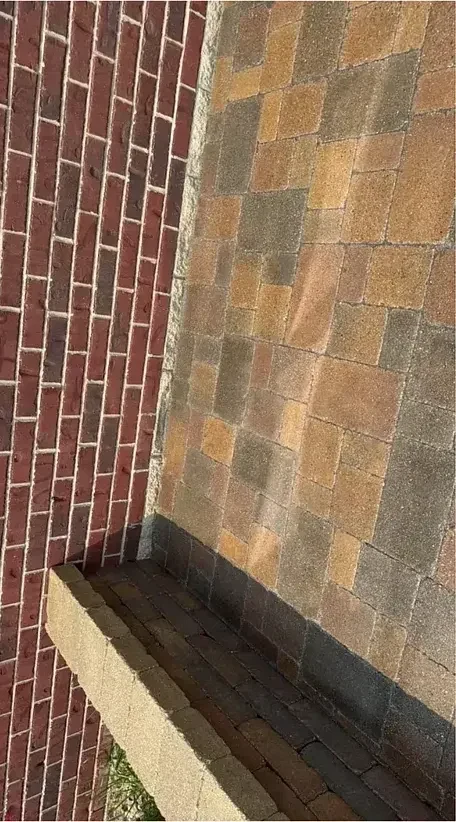
A bare spot can stand out, because CMHA says sealers intensify paver color and some add a glossy or wet look. Reseal only once the spot is clean and completely dry; Unilock warns against sealing over damp areas.
CMHA's maintenance guide says oil stains are easier to remove from sealed pavers, because sealer keeps stains from soaking into the surface. Not every sealer resists oil, though: CMHA notes that silane and siloxane sealers don't resist petroleum stains unless they carry additives for that purpose, while acrylic sealers provide good stain resistance. The case for and against sealing is in is sealing pavers worth it.
Our brick paver restoration covers the clean, polymeric re-sand and seal together, from $399. Once we seal, keep feet and furniture off for 48 hours and cars off for 72 hours, longer when the label or cold, damp weather calls for it.
When is replacing the paver easier than cleaning it?
Replacing the paver is easier than cleaning it once a stain has outlasted absorbent, detergent and a couple of rounds of remover. CMHA's maintenance guide says that because pavers are modular, replacing stained ones might be simpler and less expensive than fighting stubborn stains. Its cleaning guide adds the other side: cleaning is usually easier and cheaper, but pavers with stains too difficult to remove can be replaced with the same type of unit.
A new paver may stand out at first. CMHA says a replacement may differ in color from the pavers around it and that the variation should eventually disappear; where it is unacceptable, controlled use of proprietary cleaners made to improve the color of concrete pavers can narrow the gap. CMHA also recommends keeping a small stockpile of spares from every project, while warning that weathering, wear and stains can change how pavers in service look next to spares kept in storage.
Taking out a paver, setting a new one, and refilling and compacting the joints around it is the work our paver repair and re-sanding service does for cracked and broken pavers. It is quoted from your photos or in person, with a written estimate within 24 hours, and we don't promise an exact color match, because weathered pavers and discontinued colors differ. For a spot that may still lift, our oil stain removal treats it, and we tell you before you spend anything how far we expect the stain to come out.
Sources
- Concrete Masonry & Hardscapes Association: PAV-TEC-005-22, Cleaning, Sealing and Joint Sand Stabilization of Interlocking Concrete Pavement
- Concrete Masonry & Hardscapes Association: PAV-TEC-006-22, Operation and Maintenance Guide for Interlocking Concrete Pavement
- Unilock: Removing Stains From Pavers
- Techniseal: Professional Grade Oil & Grease Remover for Pavers, Technical Data Sheet (PDF)
- SEK-Surebond: Oil Extractor, Technical Data Sheet (PDF)
Want This Handled Properly?
Macomb Power Washing Solutions holds a 4.9-star rating across 177+ Google reviews, and free estimates go out within 24 hours. We carry $2M general liability plus workers' compensation.