
The short answer
Ten minutes covers it: close windows tightly, move vehicles off the driveway, clear the walls by a few feet (furniture, grills, toys), unlock the gate, turn off sprinklers for the day, and keep pets inside. The crew handles landscaping protection, outlet covers and fixture care. You do not need to be home, and you do not need to pre-rinse anything.
What to Do the Night Before or Morning Of
Good preparation for a wash day is minimal, because the crew brings the equipment and handles the protection. What we need from you is access and a clear perimeter to work in. This is the homeowner side of the job:
- Close and latch every window and storm window. The single most important item. A window that looks shut but is not latched will let solution and rinse water find the sill.
- Move vehicles out of the driveway and away from the house, into the street or garage. This is about overspray drift and about giving the crew the concrete.
- Clear a few feet from the walls: patio furniture, grills, planters, hoses, kids' toys, doormats, seasonal decorations. It does not need to go far, just off the work surfaces.
- Unlock the gate (and mention the code or the dog-latch trick when booking).
- Kill the irrigation for the day so heads do not fire mid-wash and re-wet drying surfaces. A head that hits the house every day is also the usual cause of orange sprinkler stains.
- Pets and kids stay inside for the duration, and off treated areas and runoff until the crew has rinsed them.
- Flag the fragile: the wobbly downspout, the antique porch light, the window that leaks in storms, the koi pond. Thirty seconds of pointing beats any assumption.
What you should NOT do: pre-rinse, pre-scrub, or buy any product. Homeowner pre-treatment usually wets surfaces the cleaning solution needs to contact directly, which slows the job. Your house is supposed to look dirty when we arrive; that is the point of the appointment.
What the Crew Handles (So You Don't)
- Landscaping protection: beds and shrubs pre-wetted before solution, rinsed after; delicate plantings covered where needed
- Exterior outlets and fixtures: worked around at low pressure, with no stream aimed into any opening; flag any outlet missing its cover
- Water supply: we run from your outside spigot (the water for a full wash costs little); tell us in advance if your spigot does not work so the crew can plan around it
- Doors and thresholds: low-pressure technique near seals; nothing aimed at weatherstripping
- Cleanup: hoses coiled and debris bagged before the crew leaves
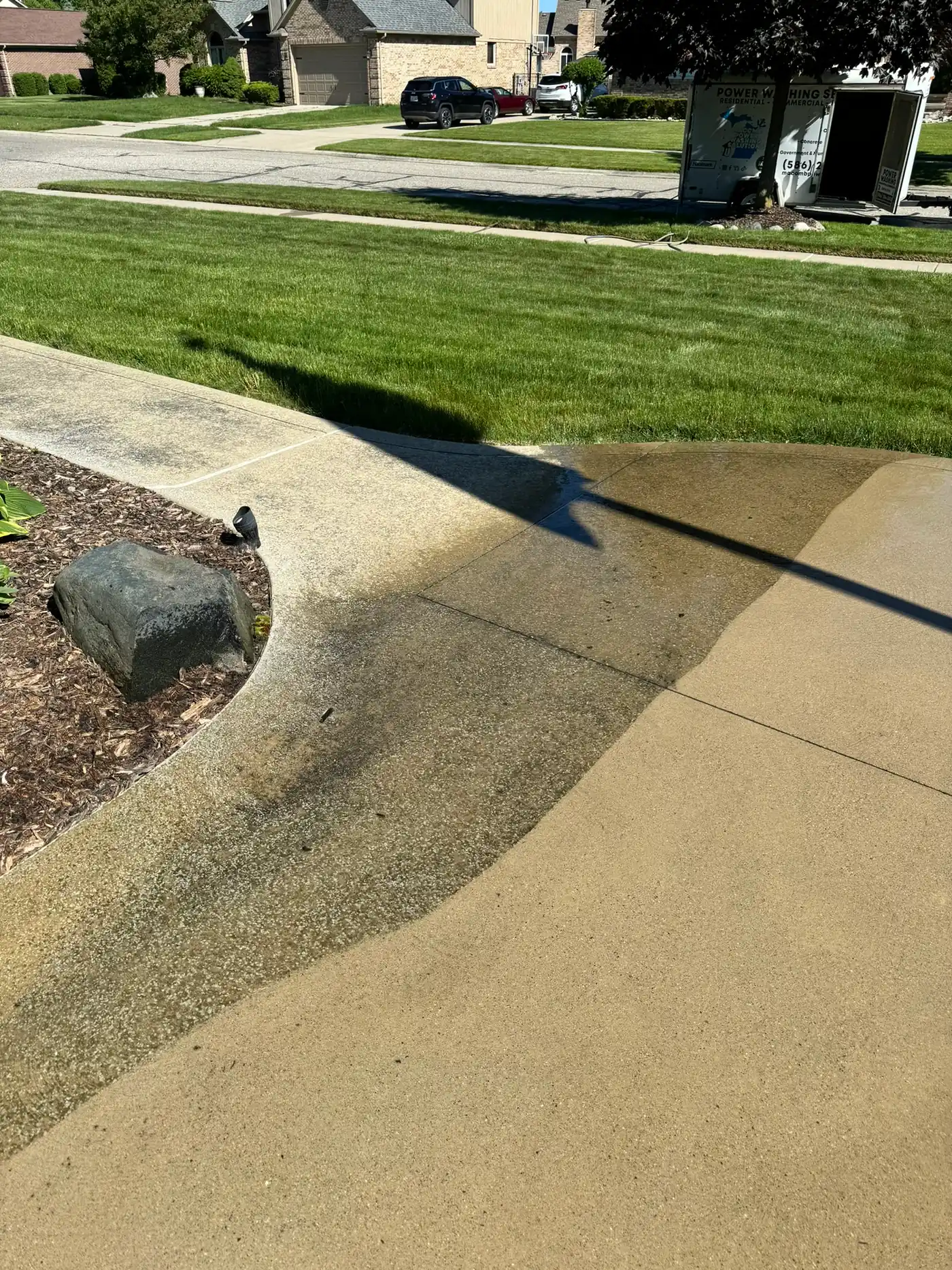
Do You Need to Be Home?
No, and many clients are not. With access sorted and water on, the crew can do the full job without you. Being home is welcome, especially for a first service, but the job does not require an audience. Details on timing are in how long the work takes.
A Note on Windows After the Wash
Rinse water can dry with mineral spotting, so a washed house with water-spotted glass is normal, not a defect. If you want glass detailed to streak-free, book window cleaning as part of the same visit, quoted together in the same written estimate. Our guide to window cleaning cost per window shows how that work is usually priced.
The Bottom Line
Close, move, clear, unlock, pets in, sprinklers off: ten minutes, and everything else is the crew's job. The best preparation is simply telling us the quirks of your property when you book, so the plan fits the house before anyone unrolls a hose.
Sources
Want This Handled Properly?
Macomb Power Washing Solutions holds a 4.9-star rating across 179+ Google reviews, and free estimates go out within 24 hours. We carry $2M general liability plus workers' compensation.