
The short answer
Choose solvent-based sealer if you want the darker wet look on stamped concrete or pavers and accept a strong odor, high VOCs and flammable fumes. Choose water-based sealer for low odor and low VOCs, in natural to glossy finishes but without the wet look; it can dry milky below 45°F. Concrete sealing from Macomb Power Washing Solutions begins at $299.
What is the difference between water-based and solvent-based concrete sealer?
The difference between water-based and solvent-based concrete sealer is the carrier, the liquid that holds the acrylic resin until the coat is spread and then leaves the slab as the coat dries. Euclid Chemical, a concrete products maker, describes a solvent-based acrylic as acrylic polymer held in solution by a petroleum solvent, xylene being a common one. A water-based acrylic is an emulsion: tiny polymer beads suspended in water, with additives called coalescing solvents that help the beads form a film.
The two carriers dry in different ways. A solvent-based film forms as the solvent evaporates, and Euclid notes that it stays re-dissolvable afterward, which is why xylene can rework a whitened solvent coat and a gasoline spill can damage one. A water-based sealer dries by coalescence: the water leaves, the coalescing solvent fuses the beads, and then it evaporates too. Euclid calls that process irreversible.
Both carriers are used mostly for film-forming acrylics, the clear coats on stamped concrete, colored concrete and pavers. The American Society of Concrete Contractors (ASCC) sealer guide for homeowners describes the coat on decorative concrete as a solvent or water based acrylic. Penetrating silane and siloxane sealers are a separate family that soaks into the pores, and our guide to penetrating vs. film-forming sealer covers that choice.
Which sealer carrier gives a wet look and which gives a natural finish?
Solvent-based acrylic sealer gives the wet look, the deep, darkened color that makes stamped concrete look freshly hosed down. Western Interlock, a paver manufacturer, says solvent-based paver sealers leave a glossy, wet-looking finish even after they dry, while water-based ones give a matte finish. Alliance Gator, which makes paver sealers of both types, says a water-based product cannot achieve the wet look.
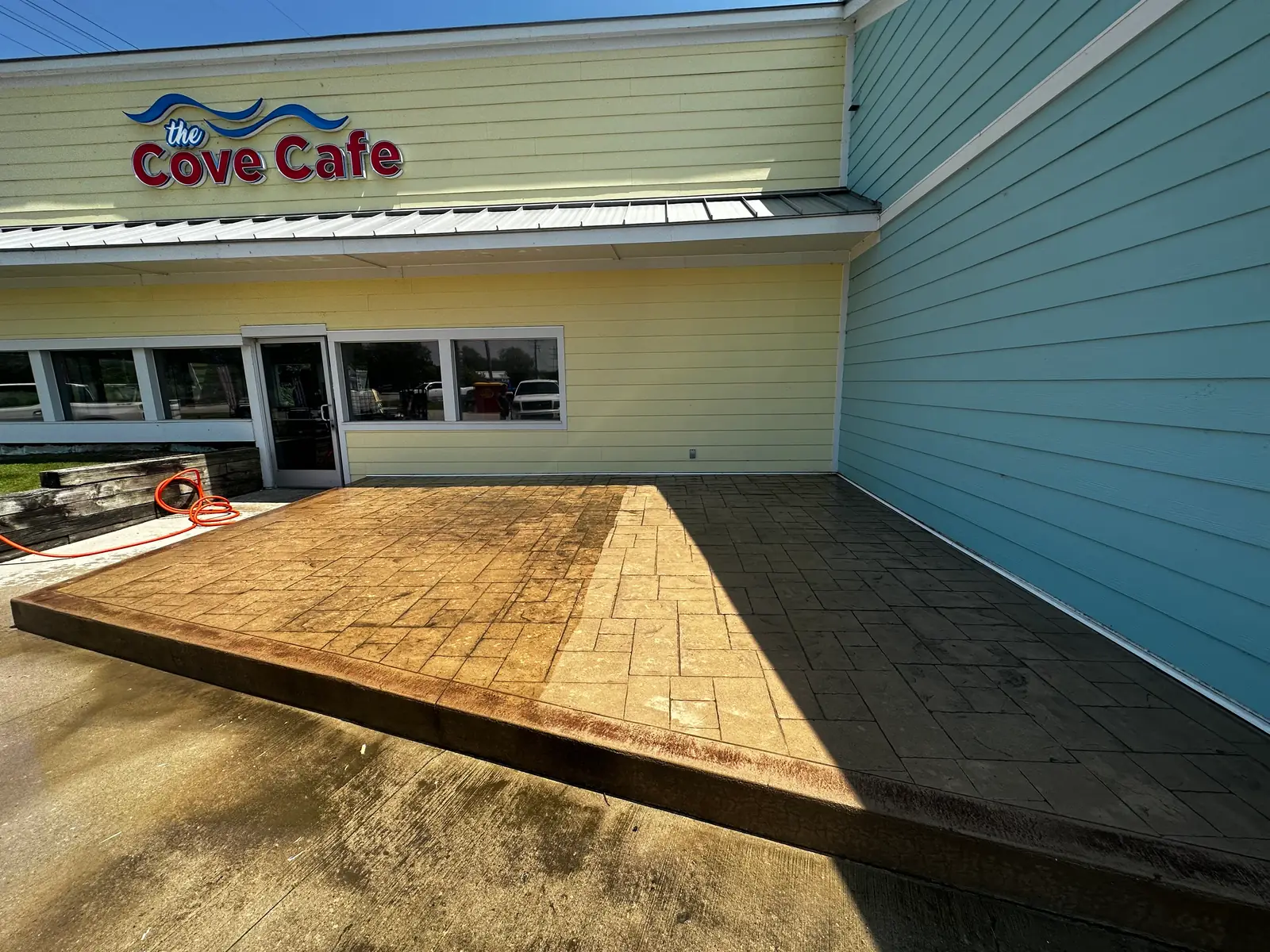
A water-based sealer is not limited to a flat finish, though. Gator's own water-based line runs from a no-gloss natural look to high gloss, with color-enhancing versions at both ends. The ASCC guide notes that sealers come in gloss levels from flat to high gloss and that a matte sealer still enhances color. Higher gloss products carry slightly more resin, the guide adds, yet their long-term performance is about the same as lower gloss ones.
How do odor, VOCs and flammability differ between the two sealer types?
Solvent-based sealer has a strong odor, high VOC content and flammable fumes, while water-based sealer has a mild odor and low VOC content. VOCs, or volatile organic compounds, are the carbon-based chemicals that evaporate into the air as a coating dries. Alliance Gator and Western Interlock both list high VOCs, strong odor and a harder cleanup for solvent-based products, and low VOCs, mild odor and easier cleanup for water-based ones.
Flammability decides where a solvent product can go. The ASCC guide says solvent-based sealers should not be applied in any occupied dwelling, especially near an open flame such as a water heater pilot light or gas logs, and that a respirator and adequate ventilation are mandatory in a confined space. That makes a solvent product a poor match for an attached garage with a gas water heater. Euclid recommends low-odor water-based products for interior concrete. The ASCC guide says water-based sealers smell like latex paint or glue, and that installers should protect their skin with either type.
Federal rules cap VOC content by coating category. Under 40 CFR Part 59, Subpart D, waterproofing sealers and treatments are limited to 600 grams per liter and concrete curing and sealing compounds to 700 grams per liter. Section 59.405 of the same rule requires each container's label or lid to show either the product's VOC content or the category limit it meets, so a label does not always give the exact figure. Some states and air districts set lower limits than the federal ones.
How does cold or humid weather affect each sealer type?
Cold or humid weather makes water-based sealer dry milky white or powdery, while solvent-based sealer turns white mainly when coats are too heavy or stacked and moisture is trapped under them. Euclid's water-based application guide explains the first failure. Below 45°F, or when the temperature drops during the first 24 hours, the water evaporates too slowly, the coalescing solvent leaves ahead of it, and the polymer beads harden before they fuse. High humidity, or rain before the film forms, traps extra water in the coat with the same milky result.
Euclid says weather affects both types, but water-based sealers are especially sensitive. Its troubleshooting bulletin traces a whitened solvent-based coat to heavy application or too many coats, with moisture trapped underneath breaking the bond to the concrete. Our guide to cloudy, white or peeling sealer covers the repair once either failure has happened.
Both types need dry concrete and a dry forecast. The ASCC guide sets a 12-hour window, with no sealing if rain or condensation is expected in that time. Alliance Gator calls 60 to 80°F the usual ideal range and wants no rain for at least 24 hours after sealing. The product label sets the limits for that sealer and overrides any general rule, and our guide to how long sealer needs before rain covers the rain and dew windows in detail.
Can a water-based sealer go over a solvent-based one, or the other way around?
A water-based sealer should not go over a solvent-based sealer, according to Alliance Gator, which states that a water-based sealer cannot be applied on top of a solvent-based one. A xylene drop on a low-traffic spot tells the two apart, and our guide to identifying the sealer already on your concrete walks through it.
The reverse case, solvent-based over water-based, is where sources differ. Alliance Gator's FAQ says a solvent sealer can be used on top of another solvent or a water-based sealer. Foundation Armor tells owners to recoat like with like and says switching types may mean removing the old sealer first, and ASCC's best-practice sheet on stamped concrete says the exact same sealer as last time always gives the best results. The safe default is like over like, confirmed with a crosshatch tape test on a small patch before the full slab. Gator also warns against mixing two sealers in one batch. A thick or failing film changes the plan for either carrier, since Euclid blames too many coats for trapped moisture and peeling and advises waiting until old coats wear away or are stripped.
Which sealer type suits stamped concrete, pavers and plain driveways?
Stamped concrete suits either sealer type, and the deciding question is whether the owner wants the wet look. A solvent-based acrylic gives the darker, saturated color. A water-based acrylic gives a softer finish with far less odor during application, which matters on a patio beside open windows or a back door.
Pavers take either carrier too. A glossy film on a pool deck, step or sloped walk needs grip, and the ASCC guide says slip resistance must be addressed at the first application and at every reseal, using an anti-skid additive made for that specific sealer type and bought from a concrete supply house. The same guide warns that adding sand or silica can make the sealer deteriorate. Our brick paver restoration service covers the cleaning, the polymeric re-sanding and the sealer coat.
A plain gray driveway is often better served by a penetrating sealer than by either acrylic film. Euclid's troubleshooting bulletin says cure-and-seal products last one to three years, with some peeling and flaking expected as they wear, especially in high-traffic or sunny areas, and notes that plasticizers in tires can react with sealers and leave marks. A penetrating sealer has no surface film for tires to wear or mark.
How do water-based and solvent-based sealers compare side by side?
Water-based and solvent-based acrylic sealers differ most in look, odor, weather sensitivity and what can go over them later. The table sums up the published guidance cited above.
| Factor | Solvent-based acrylic | Water-based acrylic |
|---|---|---|
| Look | Wet look, darkened color | Natural to high gloss, no wet look |
| Odor and VOCs | Strong odor, high VOCs | Mild odor like latex paint, low VOCs |
| Safety | Flammable; not for occupied dwellings or near flame | Preferred for interior concrete; protect skin |
| Cleanup | Harder; Gator specifies acetone | Easier |
| After drying | Film stays re-dissolvable in xylene | Film cannot be re-dissolved in water |
| Weather failure | Whitens or peels under heavy or stacked coats | Milky or powdery below 45°F, in high humidity or rain |
| Recoating | Water-based should not go on top; solvent over solvent is the safe choice | Gator allows solvent on top, others advise like over like; tape-test a patch |
| Anti-skid additive | Made for solvent sealer | Made for water-based sealer |
Which sealer type fits a Michigan fall sealing date?
A Michigan fall sealing date fits either sealer type on a mild, dry day once the slab has dried out, but water-based sealer needs a closer look at the overnight forecast. Euclid warns that daily temperature swings are especially pronounced in spring and fall, and it wants the air and the slab to hold above 45°F for a full day after a water-based coat is applied. A 65°F October afternoon followed by a 38°F night fails that test even when the application itself went well.
Timing within the day matters too. A coat applied late in the afternoon meets falling temperatures and evening dew before it has set, so a late-morning start on a dry day gives it the most drying time. Solvent-based products have a floor as well, and Gator's solvent-based Satin Look sealer lists 60°F as its minimum.
Macomb Power Washing Solutions offers concrete sealing starting at $299, and paver restoration starting at $399, across Macomb and Oakland County, with no travel fee. Each quote comes in writing, itemized, within 24 hours.
Sources
- Euclid Chemical Technical Bulletin CP-24: Water Based Sealers, Guide to Successful Application
- ASCC Decorative Concrete Council: Concrete Sealer Expectations & Maintenance Guide
- Alliance Gator: FAQ, Gator Paver and Stone Sealers
- Gator Studio: 6 Sealer Don'ts
- Western Interlock: Water-Based or Solvent-Based Sealer, Which Should I Use for Pavers?
- 40 CFR 59.405: Container labeling requirements (architectural coatings)
Want This Handled Properly?
Macomb Power Washing Solutions holds a 4.9-star rating across 177+ Google reviews, and free estimates go out within 24 hours. We carry $2M general liability plus workers' compensation.